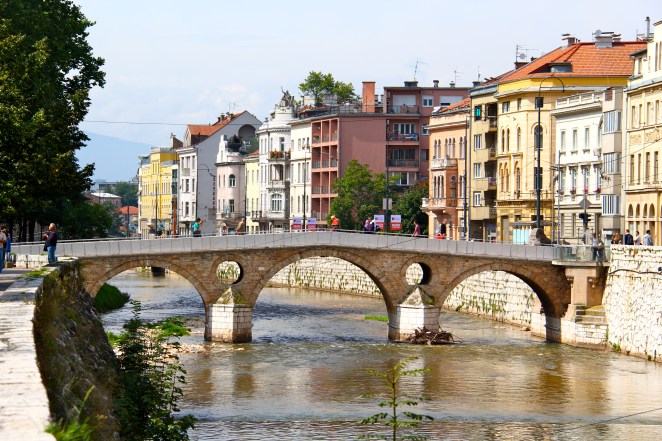
Day 1: Leaving on a Jet Plane

Welcome to the DeCaigny Abroad trip blog for 2018: Windmills, Wallonia, World Wars and Waffles!  This year is a very special trip for me because I get to visit the land where the DeCaigny’s come from – Normandy and Flanders – and we get to meet some relatives.

Our trip started off pretty easily – got the YVR with plenty of time, breezed through check in and security, had some late lunch and a coffee, then found our gate with a myriad of other silver haired folks (I joked with Ma and Pa that they must feel like they’re flying with their people).  At one point and woman approached me and asked ‘Are you Kelly?’  As it turns out, one of my girlfriends at work has a friend who was taking the flight, and told her to ‘look for the girl with the blue hair’.  We chatted with Anya for a bit and then it was time to board.  The flight was pretty uneventful and after 8 1/2 hours and 2 subpar meals for what we’re used to from KLM, we landed at Amsterdam Schiphol Airport at noon.  We did the usual airport stuff – disembarked, went through customs (‘you’re here for a month?  You’re going to be here for your birthday!’) grabbed our luggage and bought our train tickets for our first home base – Delft.  When we started planning this trip, we quickly discovered that staying in Amsterdam would cost a small fortune, so we chose to stay in Delft – known as “Little Amsterdam” – it has all the charm and canals of the big city, just smaller, less busy and much less expensive.

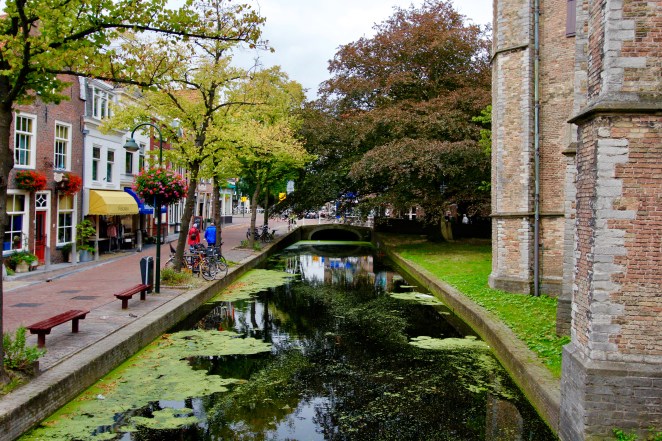
The trains in the Netherlands are plentiful and efficient – like those in Germany.  Our jaunt to Delft took about 45 minutes and we even spied a beautiful old windmill!  We grabbed a taxi and told him the name of our hotel – De Emauspoort.  The first thing he said was ‘Perfect location!’  We drove past old brick houses and snaking canals and took a turn down an absolutely adorable street:

9CD330C3-4EDC-46EB-92DD-AF57C7CBBBC0

This is the street our hotel is on and it was everything I was hoping and dreaming it would be = quaint, with bikes and flowers everywhere you looked.
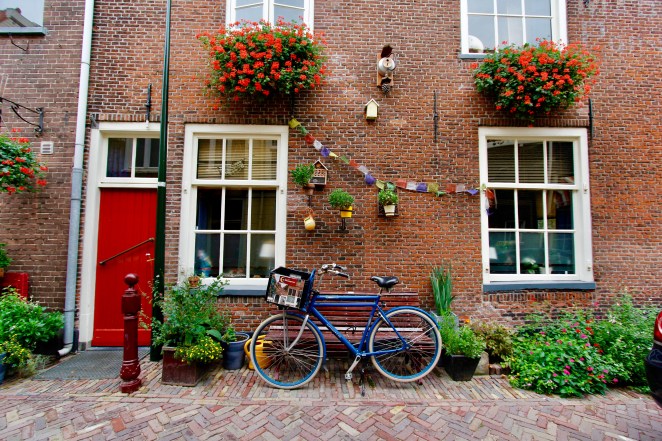
34B5219B-A348-4AA0-BC28-D38A2D7A9EC5

We checked in and found that we were staying in the ‘Vermeer Suite’.  One of the things that Delft is famous for is the birthplace (and famous resting place) of painter Johannes Vermeer, whose greatest hit is probably The Girl with the Pearl Earring.  The room is decorated in the old Dutch style, up a flight of very challenging stairs, and adorned with prints by the Dutch master himself.  We dropped our gear and hit the town in a attempt to stay vertical for as long as possible.
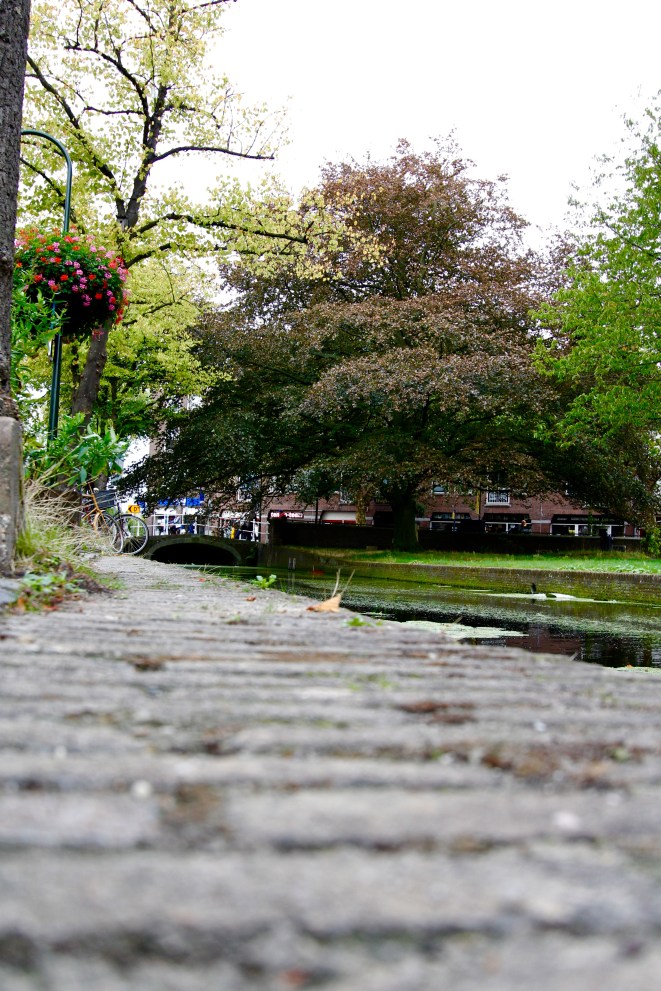
CC9D2DB7-B0B7-416E-ACAB-A852E848D3CF4983A9D5-DDD2-4871-BBA3-613239BAF716C8370A7C-BFA2-4340-A75B-FB5649371EE6

The other thing that Delft is famous for is ‘Delft Blue’ or ‘Royal Delft’ – a style of pottery characterized by blue ink on white porcelain.  There were shops all around the main square (or Markt) filled to the brim with dishes, tiles and other trinkets depicting very Dutch scenes (windmills, row houses, clogs).
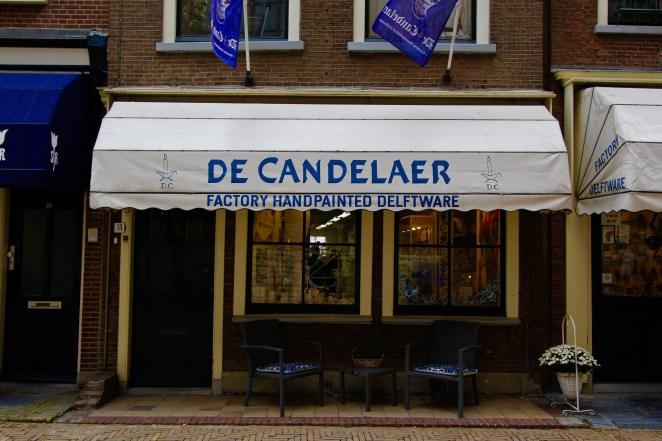
1094CFC7-0DFA-45E5-A923-EAA7267EF550529C9C8D-B1CE-4FF4-8B3F-EAB3905A0B057FDD38CE-ED4A-4C41-8821-CD0EA8D26548754EA736-CFC4-4350-AC97-085E2F47044A823A5DD7-8DE3-41B6-9AE5-DB33406D5E392CA76F25-8276-4227-B0E0-05D02F405B9E

We picked a little restaurant and Pa and decided to indulge in our first brews (of what will be many, many brews) on the square.

A note about Dutch people so far – I was nervous because I had read a BBC article about how the Dutch are known for being very direct, and I’m very sensitive, but so far the Dutch people we’ve met have been very friendly, eager to chat and interested in Canada.

8288004F-EE10-4218-9B04-6D5A8E19DEAA5FB4E2D8-644E-4983-8B6E-622D923C1651

We finished our drinks and took a brief walk around the square.  Pa and I decided we wanted to check out a cheese shop, because we both really enjoy Gouda.  As it turns out, this cheese shop was the place to be, the Baskin Robbins of cheese as they had 31 different flavours of Gouda, all available to sample.

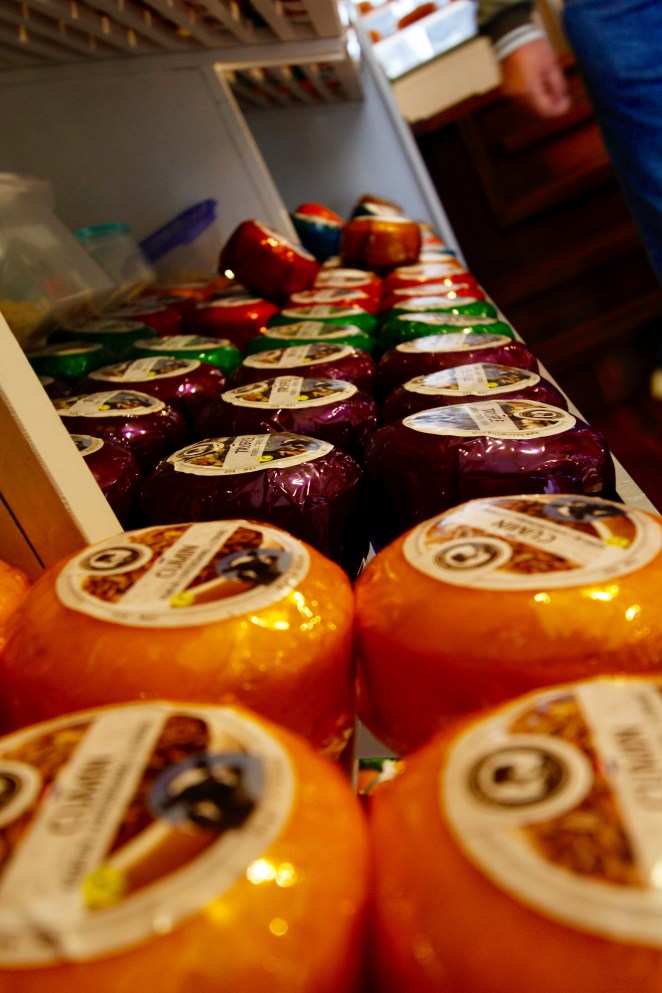
F40E1858-4F36-47B4-B2F1-52FDD2695C044BBF425E-83C2-4EFB-ADB9-03BAE3997E75

After sampling some delicious Gouda (we’ll be back there) I bought some postcards from a Delft Blue shop and we tucked in for some dinner, which I could barely stay awake through.  After a 2 minute walk back to our hotel, I uploaded some photos to instagram between nodding off and hitting my head on the table.  I gave up on the idea of a blog post for that night, and apparently climbed into bed (which I don’t remember doing).

C673D831-08F3-4728-B1F3-E572BBD209FB

Germany, Day 21: Don’t Worry About a Thing

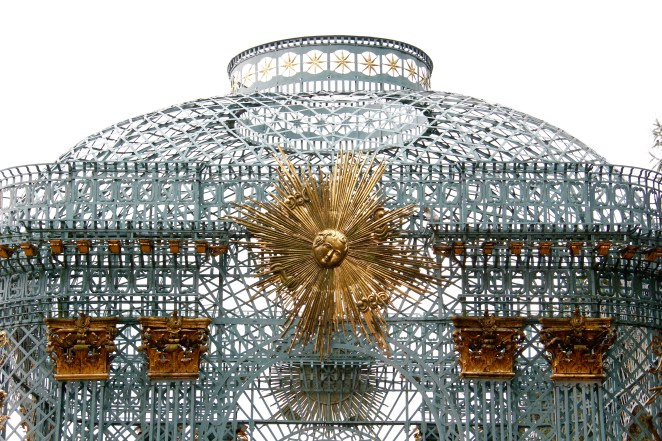
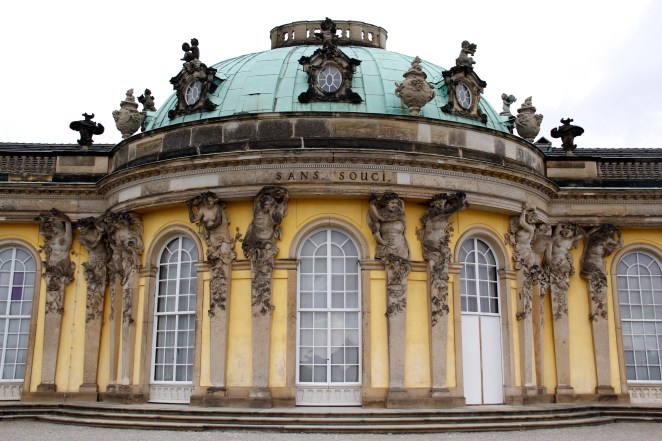
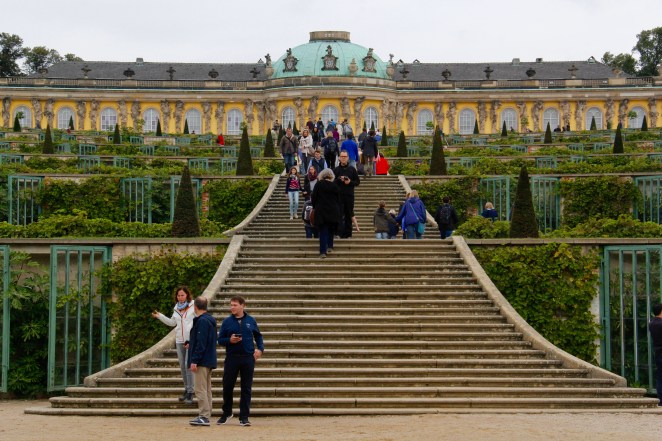
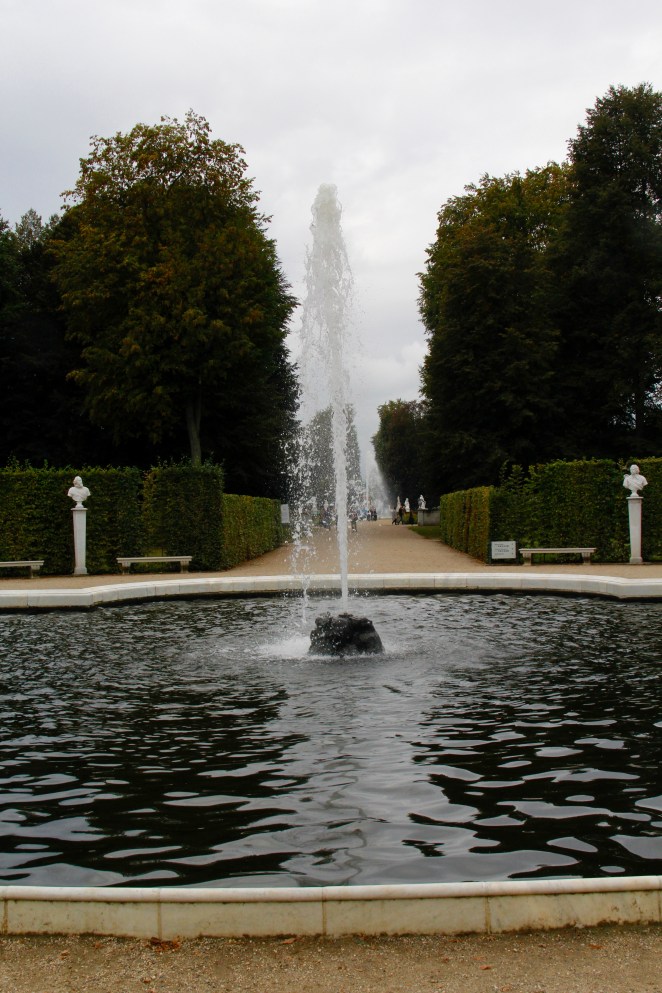
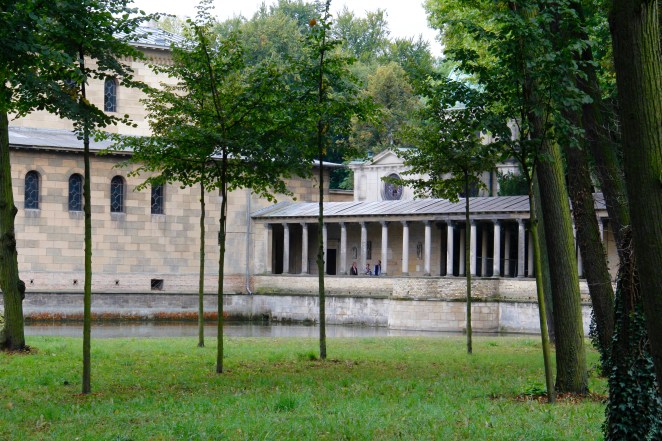
Today we headed out to the suburbs of Berlin, to the town that houses many palaces and a lot of charm (and apparently a really excellent film museum): Potsdam.  We went to Potsdam because Pa wanted to check out the summer palace of Prussian king Frederick the Great.  Frederick wanted a palace that he could go to to get away from the hustle and bustle of Berlin, so he had Sans-Souci (“Without Cares”) built in Potsdam in the mid 1700s.  Luckily for us, Potsdam was only a half hour on the S-bahn and a 10 minute bus ride away from Berlin.

_mg_8059_mg_8060_mg_8062_mg_8070

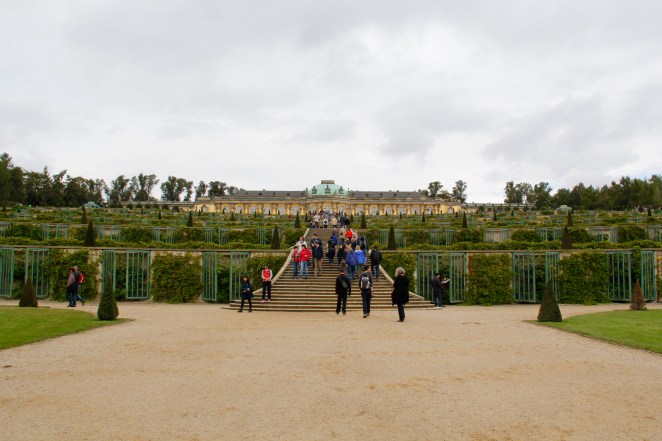
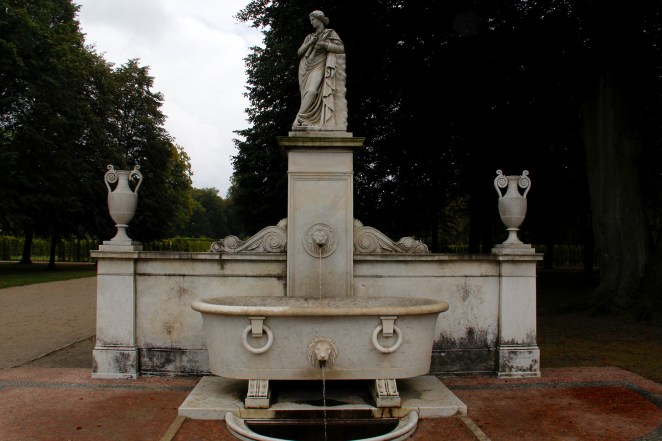
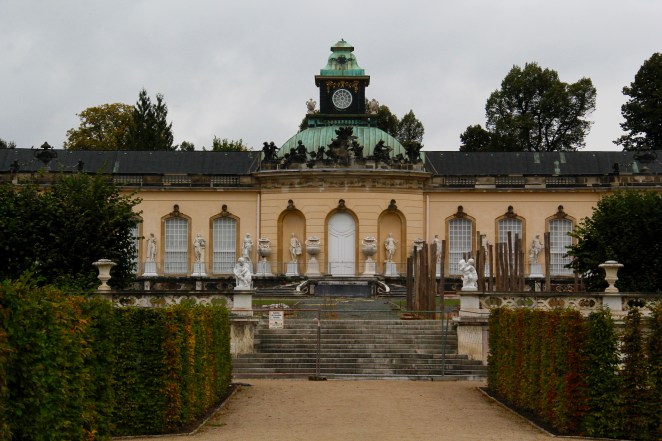
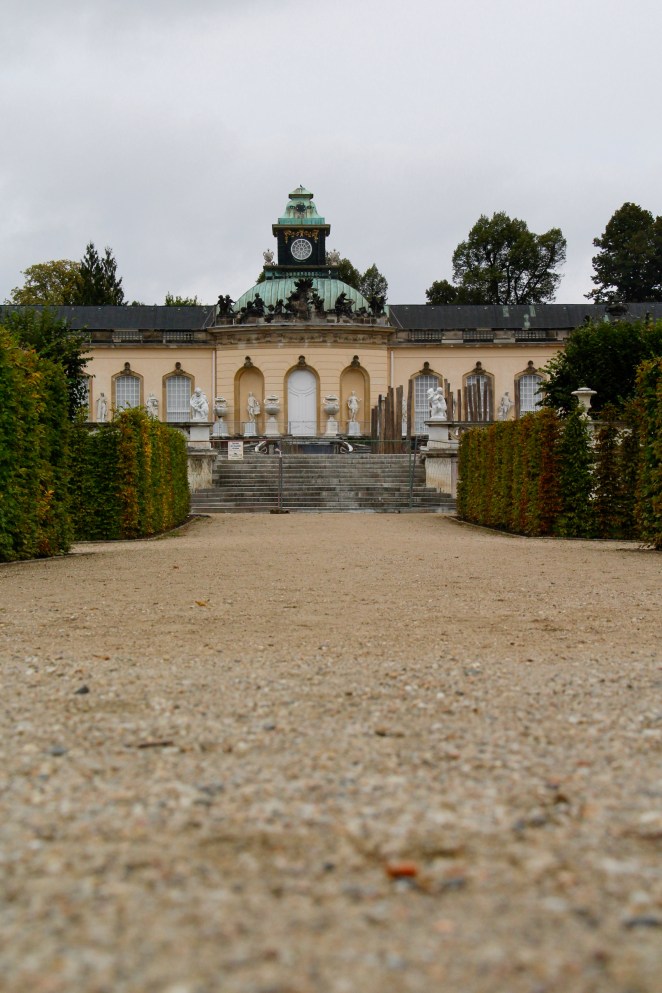
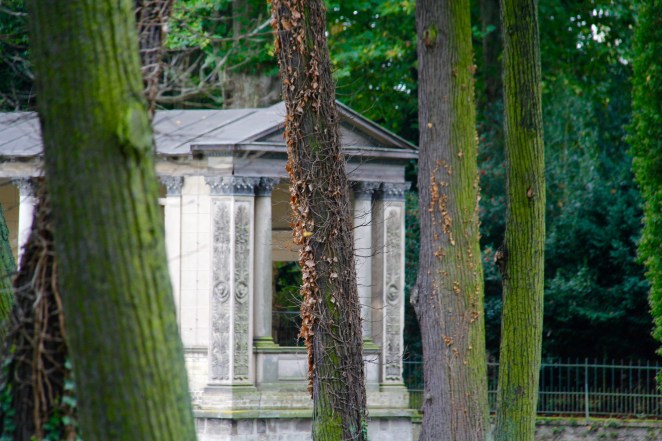
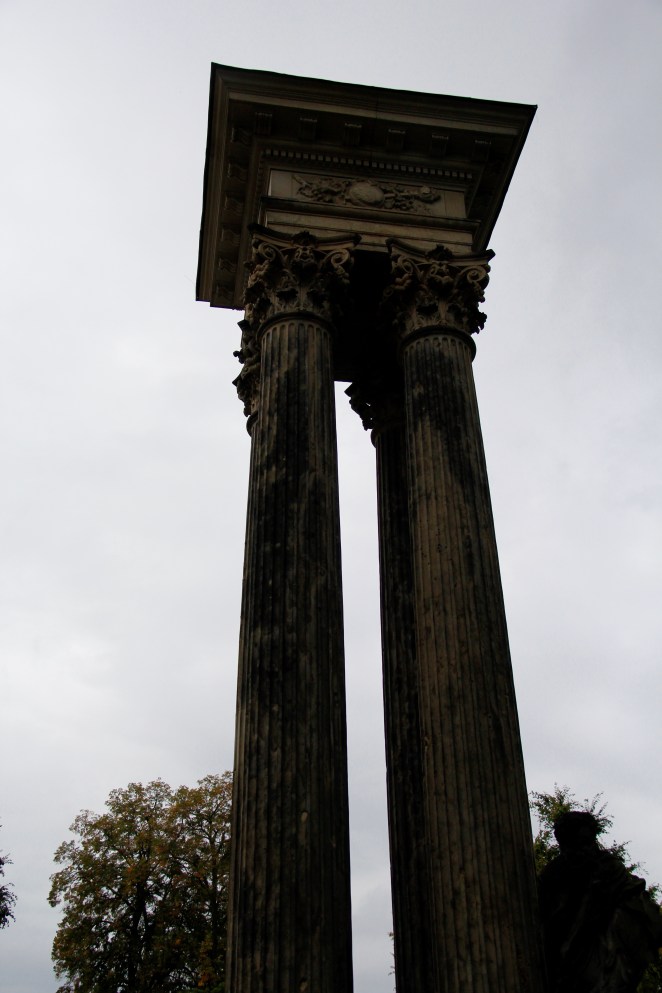
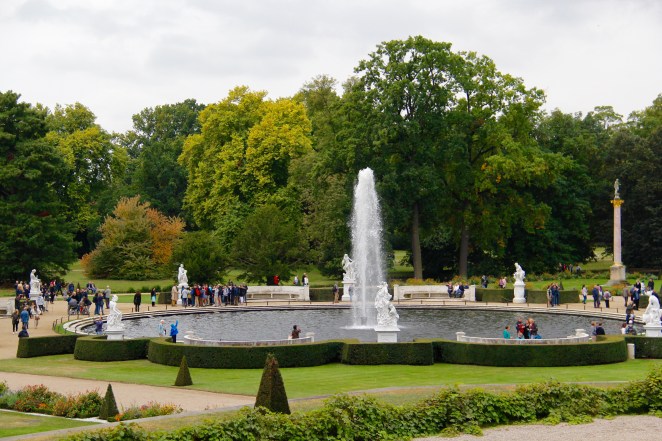
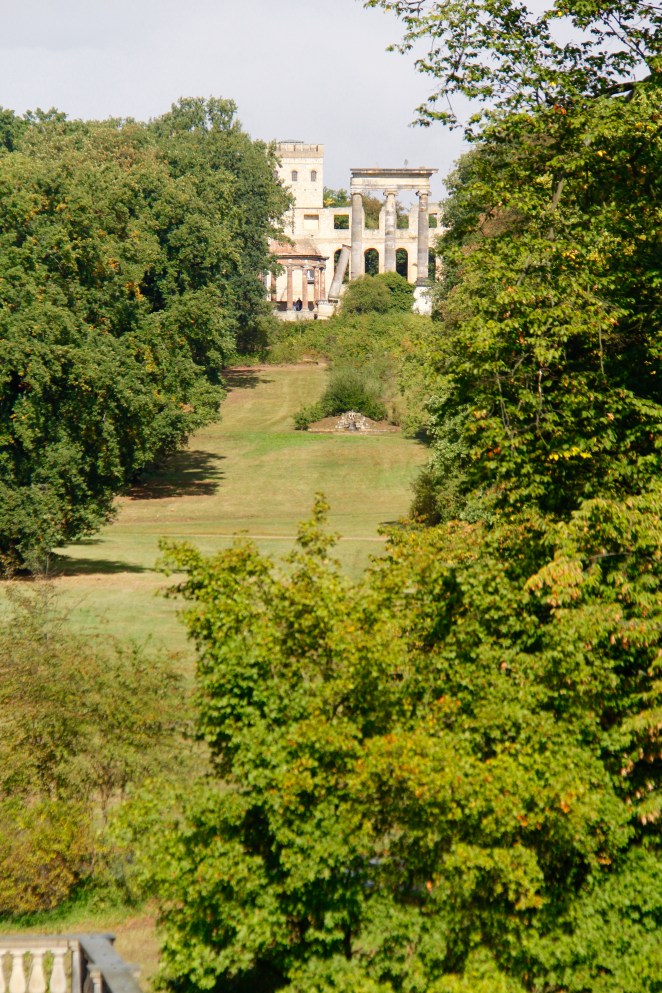
Sans-Souci is probably most famous for its gardens, and as we had little interest for the inside, we decided to forgo the 10 room interior and explore the extensive gardens with the fountains, temples, sculptures, woods and terraces.

_mg_8076_mg_8078_mg_8082_mg_8088_mg_8089_mg_8097_mg_8099_mg_8102_mg_8104_mg_8109_mg_8112_mg_8117_mg_8118_mg_8120_mg_8138_mg_8153_mg_8183_mg_8187_mg_8193

The gardens are extensive and we had to grab some shelter when a rain cloud rolled in._mg_8202

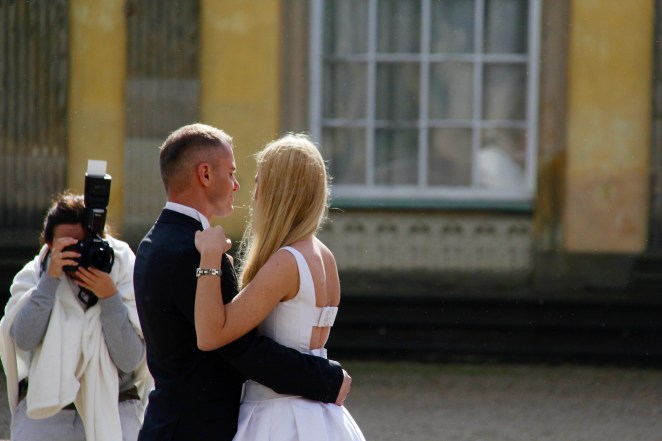
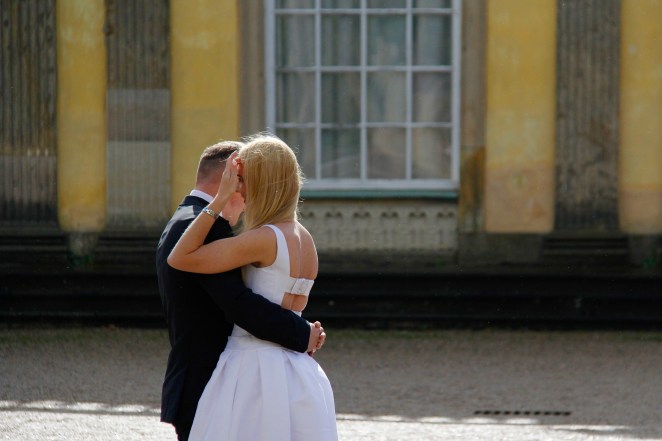
There was a wedding shoot being done on the grounds, so naturally I had to be a creeper.

_mg_8206_mg_8209_mg_8211

After spending several hours in the gardens and dodging the weather, we found a beer garden across the street so we had a delicious lunch of hot chocolate, beer and bratwurst.  We got back on the bus and S-bahn and headed back to our hotel to get a final load of laundry done.

_mg_8214

Dinner time rolled around so we hemmed and hawed and settle on a literal hole in the wall called Cafe Schwarz, a hip and vibrant place that serves all day breakfast and has an extensive cocktail selection.  We dined on scrabbled eggs, bruschetta, toast, beer, bitter lemon, apple strudel, banana cake and whisky before walking home and turning in.

Germany, Day 18: And She Shows You Where To Look

Today is our last full day in Dresden before we leave tomorrow morning for our final leg on this German Odyssey – Berlin.  We’re pretty sad to say goodbye to Dresden because it’s a beautiful, vibrant and sumptuous city, perfect for exploring, relaxing and people watching.

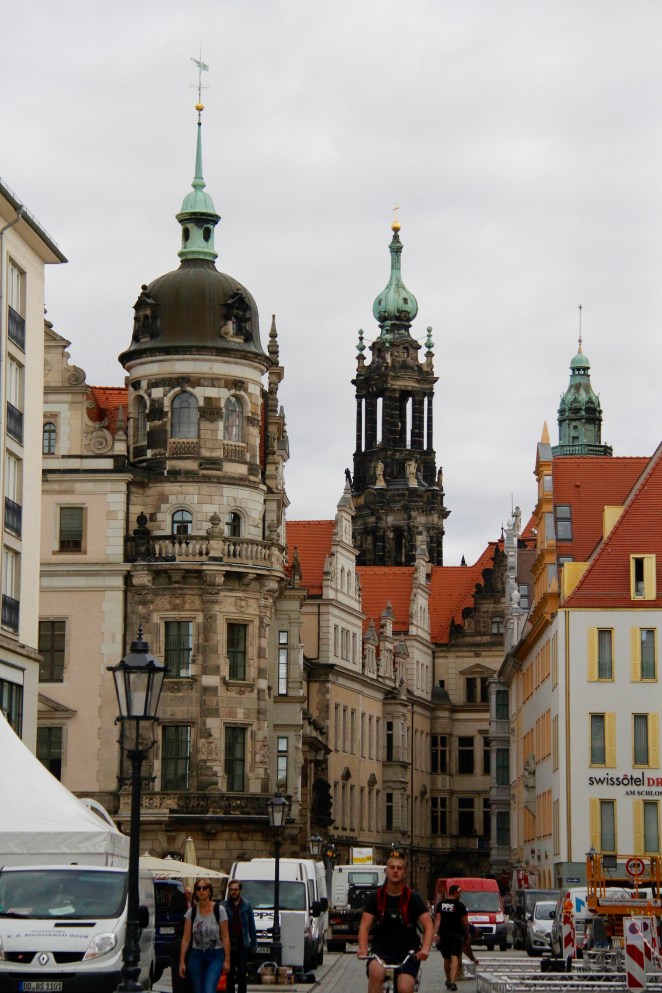
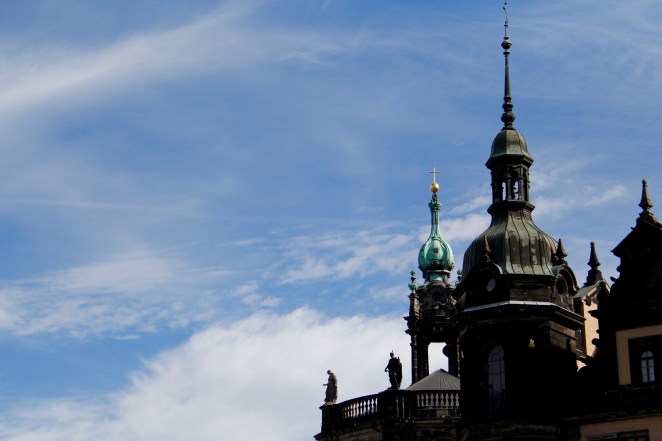
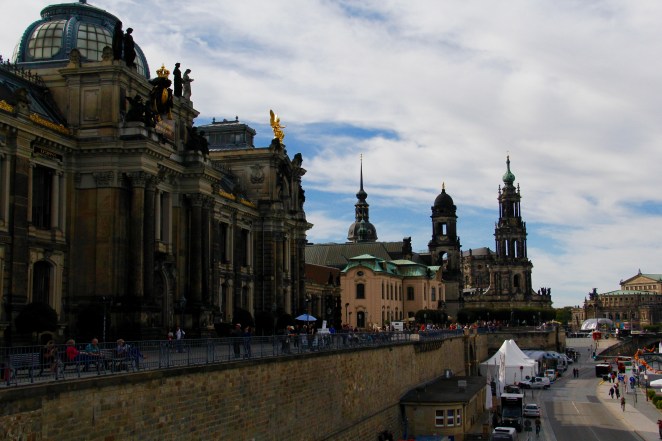
I love all the different spires of the city, so on our way to Dresden’s “Green Vault”, I decided to indulge myself:

_mg_7820_mg_7824_mg_7828_mg_7834_mg_7840

We entered the palatial complex called the Zwinger that houses the Green Vault – a series of rooms that their 18th century Prince Elector, Augustus the Strong filled with different treasures and delights.

_mg_7842_mg_7845_mg_7848

There is only a certain amount of people allowed inside the Green Vault at the same time, so you have to buy a ticket for a certain time.  Security was the tightest I’ve ever experienced at a museum as we had to lock up ALL bags (including Ma’s tiny purse), cameras and phones.  You then line up at two sets of doors that a guard lets you in, two at a time, you wait, then the doors on the other side open.  Everything is alarmed and behind glass, but it is easy to see why – all the rooms are different themes (amber, ivory, jewels, sculptures, bronze, coat of arms, silver) and contain many priceless treasures, big and small – ornate crystal drinking vessels, paintings, amber chess sets, diamond-hilted swords, etc.  After an excellent hour-long audio tour, we decided to embark on one of our favourite travel events, the self guided Rick Steves walking tour.

_mg_7849_mg_7852_mg_7853_mg_7855_mg_7857_mg_7860

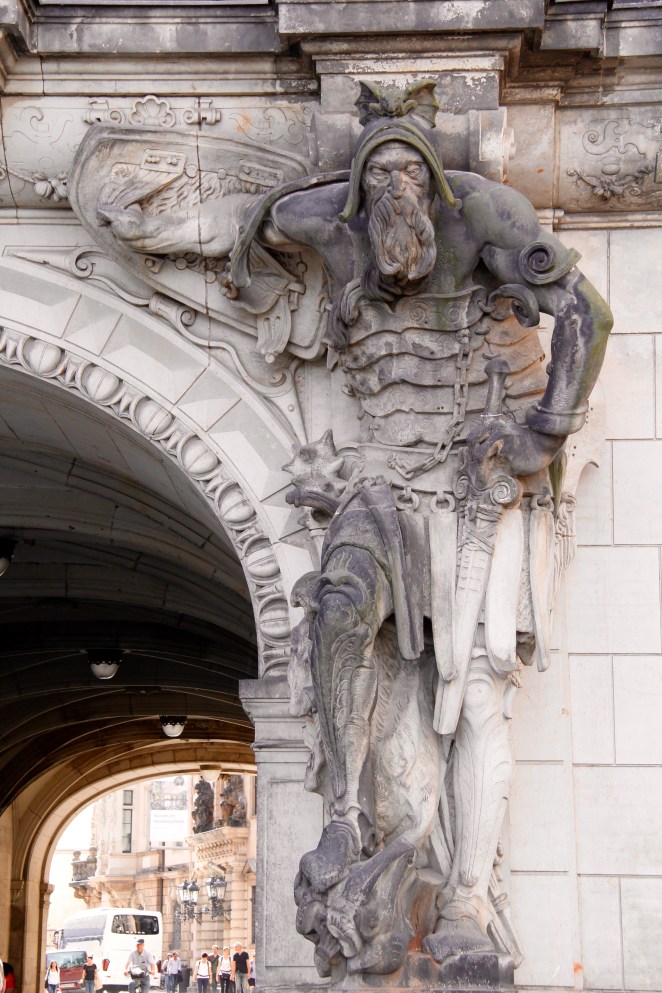
Before we started the tour we had to get to the starting point, and that meant cutting through the Zwinger’s stately gardens.

_mg_7865_mg_7868_mg_7870

The tour started at Dresden’s Opera House, known as the Semperoper as Semper built it.  It burned down twice – once in the 19th century and then again, sadly, in 1945 as did many many other of the fine structures and treasures in the city.

_mg_7873_mg_7875_mg_7877_mg_7879_mg_7887

The last opera performed at the Semperoper in 1945 was Der Freischutz by Carl Maria von Weber and the first opera performed when it was rebuilt almost 40 years later, so they honoured Weber with a statue in front of a cafe.

_mg_7889_mg_7893

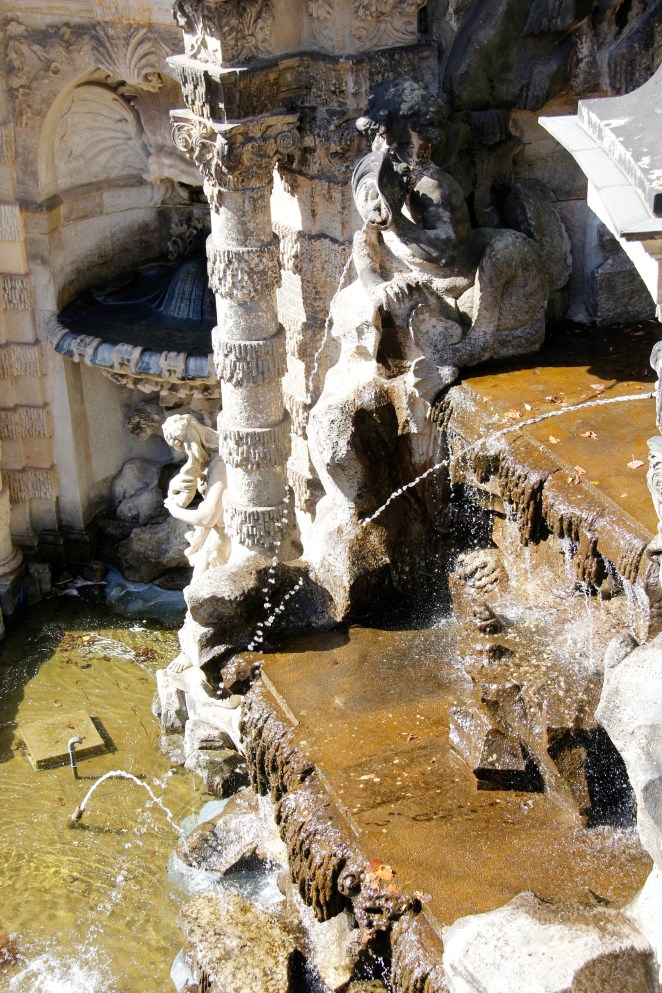
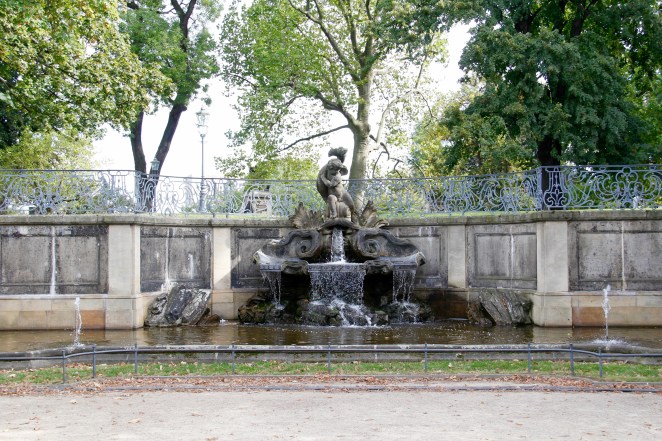
We crossed back into the Zwinger’s gardens and marvelled at the beautiful fountains and stonework.

_mg_7897_mg_7899_mg_7901_mg_7904_mg_7906_mg_7909_mg_7914

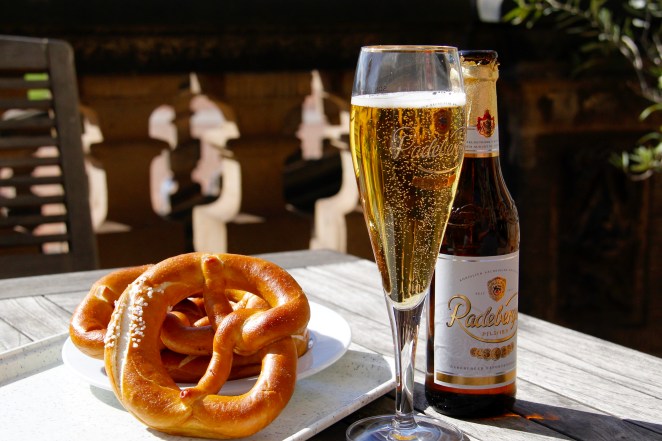
Part of our instructions were to cross from the fountains into the main garden through an orangery, but we noticed that this glassy atrium sold beer and pretzels and it was lunch time, so we stopped and had a beer overlooking the gardens before moving on.

_mg_7917

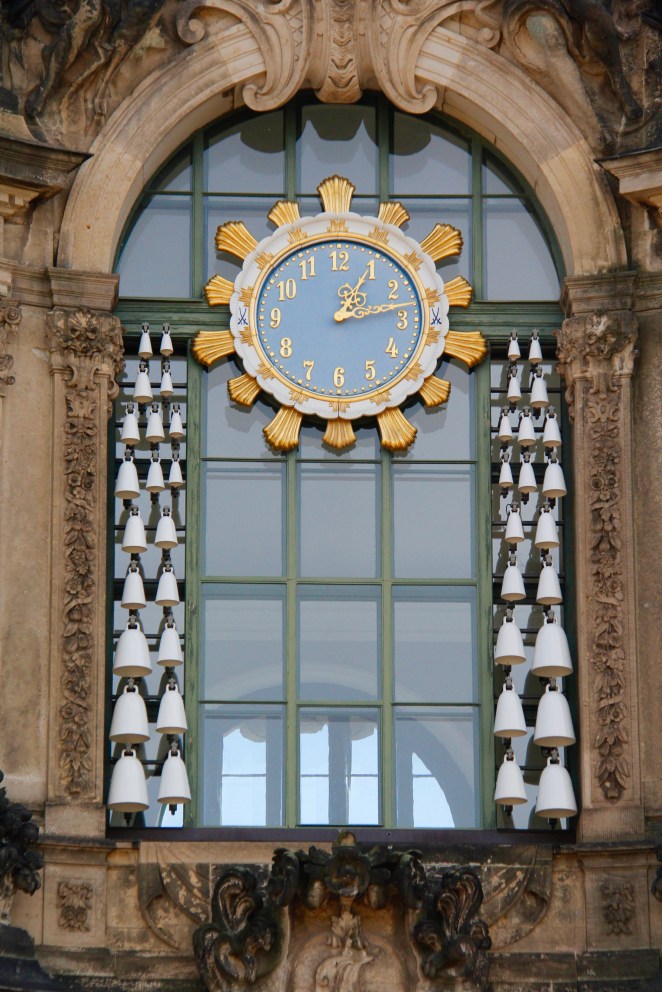
The Zwinger gardens are also home to this beautiful glockenspiel, outfitted with porcelain chimes that emit a much sweeter sound that the usual brass bells.

_mg_7919_mg_7922

We left the Zwinger and headed north towards the river Elbe, reading stories of Augustus the strong and some of the pre and post war history of the city.

_mg_7928_mg_7931

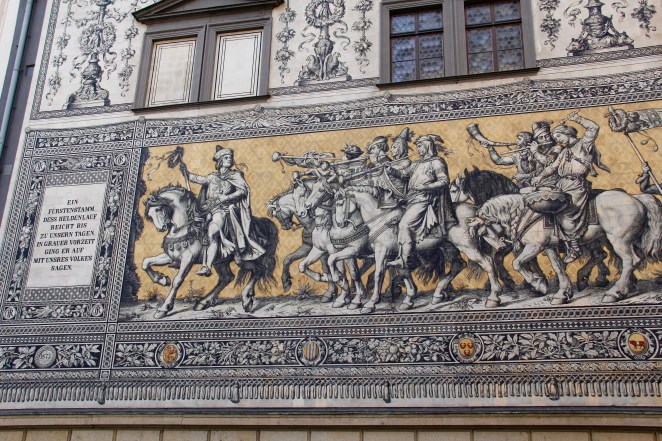
One of our favourite pieces was this 250 foot long porcelain-tiled mural showing a parade of the rulers of Dresden.  This piece miraculously survived the 1945 firebombing.

_mg_7936_mg_7940

Our walking tour ended along the river on a balcony walk that overlooks the Elbe.  We decided to have a sit and watch all the activity at the other side of the river.

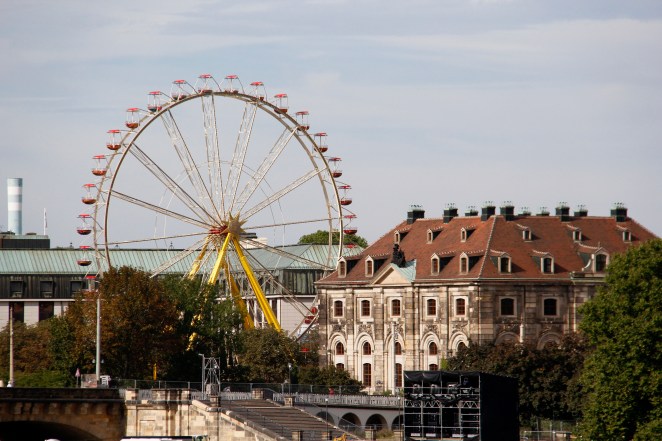
It turns out Dresden is setting up a huge party – it’s the anniversary of Germany’s reunification and every year a different state’s capital hosts the bash – this year it’s Dresden’s turn as the capital of Saxony.  Huge white tents are set up everywhere as well as sound and lighting systems.  The festival starts this weekend, in time for us to just miss it.

_mg_7943_mg_7944_mg_7949_mg_7951_mg_7954_mg_7956

We found a beautiful river-side cafe where we treated ourselves to ice cream confections and fizzy water, ambling back into town where we bought our mandatory post cards and fridge magnets, grabbed some coffees, relaxed in the old market square before headed to dinner.  Again, Dresden spoiled us as we ate a delicious dinner on a beautiful sunlit square in the shadow of the majestic Frauenkirche while the local busker serenaded us with Leonard Cohen classics.

Germany, Day 8: Like A Bridge…

_mg_6971_mg_6975

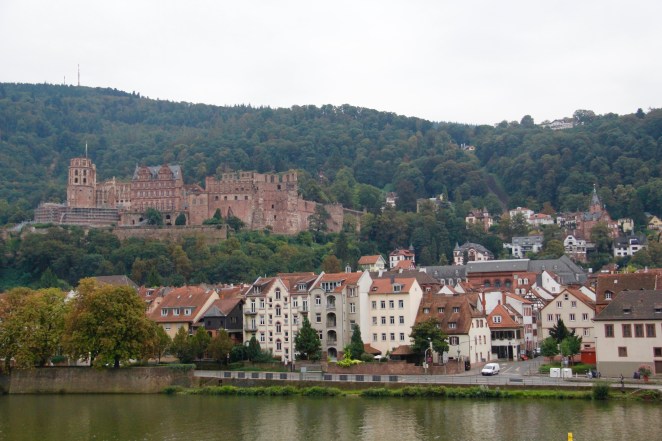
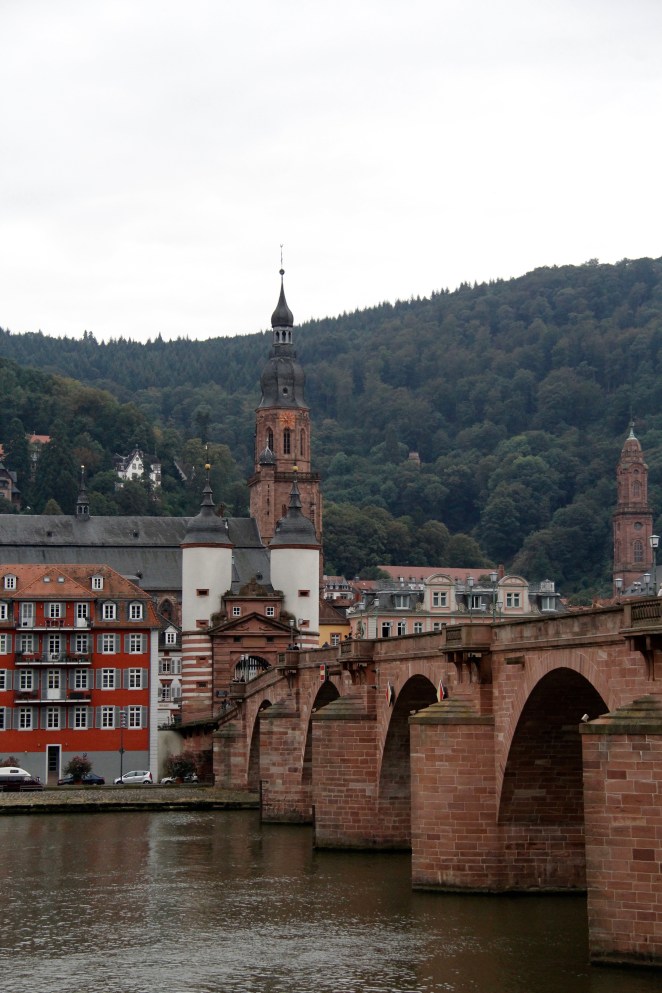
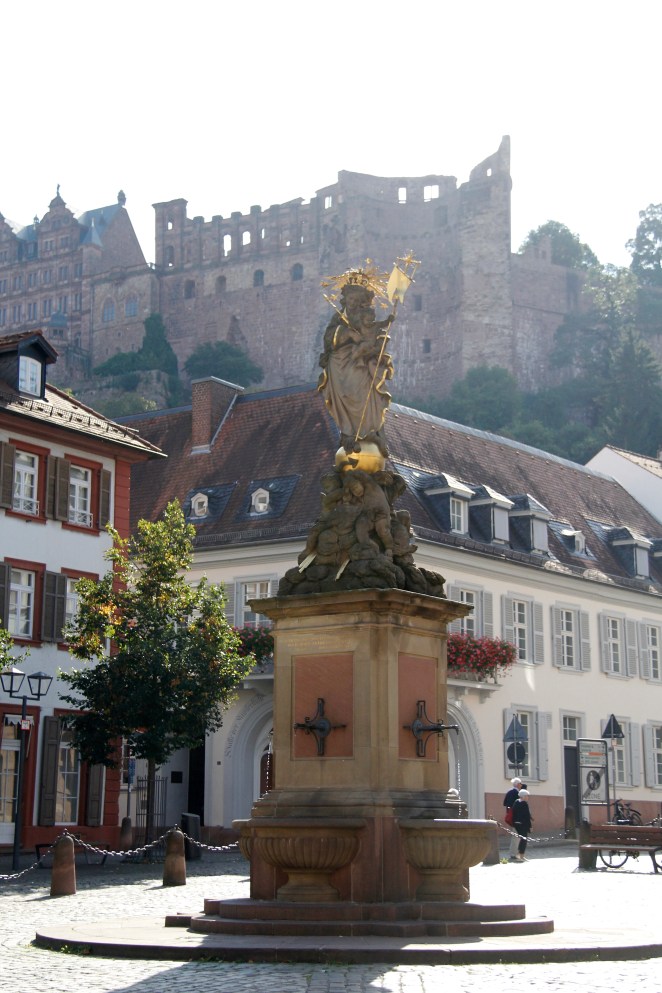
Today was our last full day in Heidelberg, so the the four of us (me, Ma, Pa and Argie) decided to check out the previously undiscovered parts of the old town, starting with the old bridge.  The bridge is old and mostly pedestrian so we had a good chance to amble around and take photos of the city, castle and bridge itself.

_mg_6982_mg_6989_mg_6994_mg_6997_mg_6999_mg_7002

The one end of the bridge houses a love lock fixture at a peaceful riverside point with a beautiful view of the castle.

_mg_7005

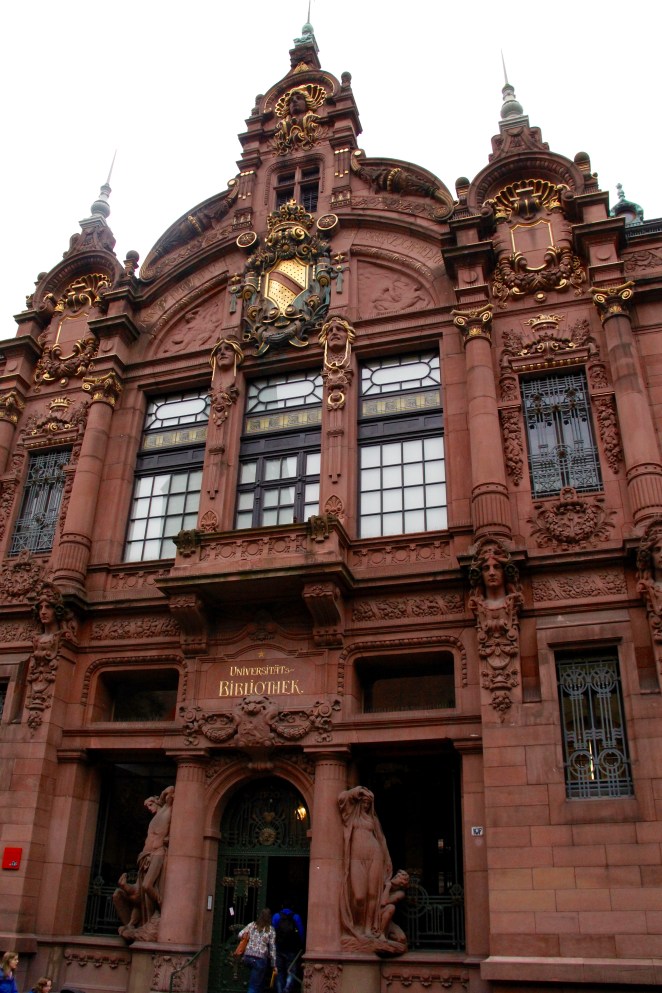
Following our time on the bridge, we headed over to check out parts of the old university.  Heidelberg houses one of the oldest universities in Europe and is still a popular institution today.

_mg_7008_mg_7010

The rest of the day was pretty much a day for relaxing.  We learned that gummy bears and gummy candy come from the west part of Germany, so we filled up with gummy bears and gummy Heidelbergs, bought some Christmas ornaments, sampled some Schnapps native to the region, ate some cake, sent off a parcel and lots of postcards, had dinner at a burger joint decorated with birch trees and finally watched the sun set over the square while drinking hot chocolates and cointreau, sad to say goodbye to Heidelberg but excited to find out what’s in store in Rothenburg.

Germany, Day 7: Raindrops Keep Falling on my Head

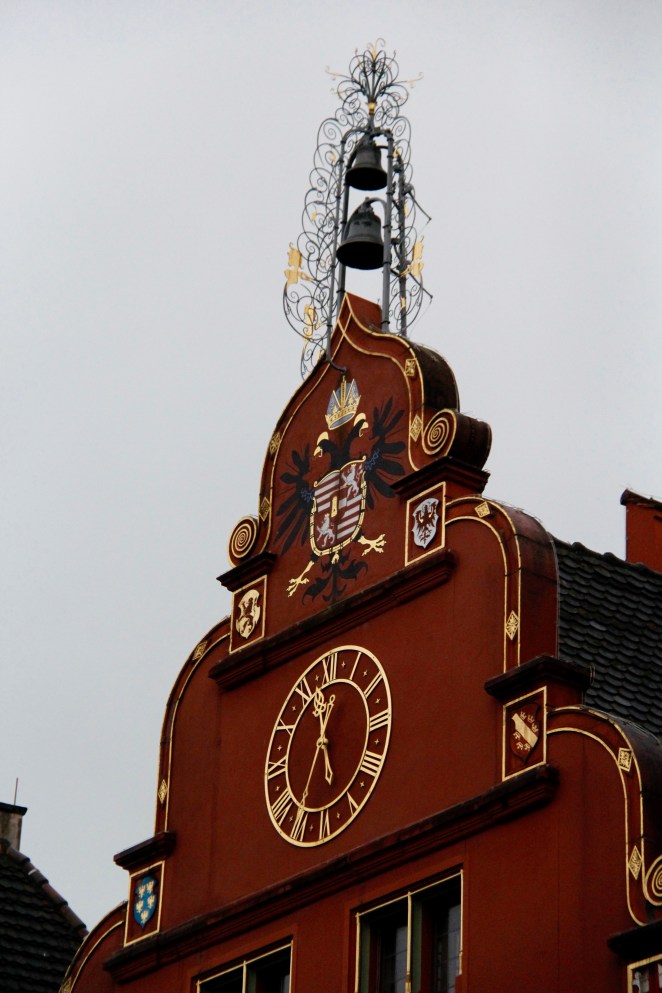
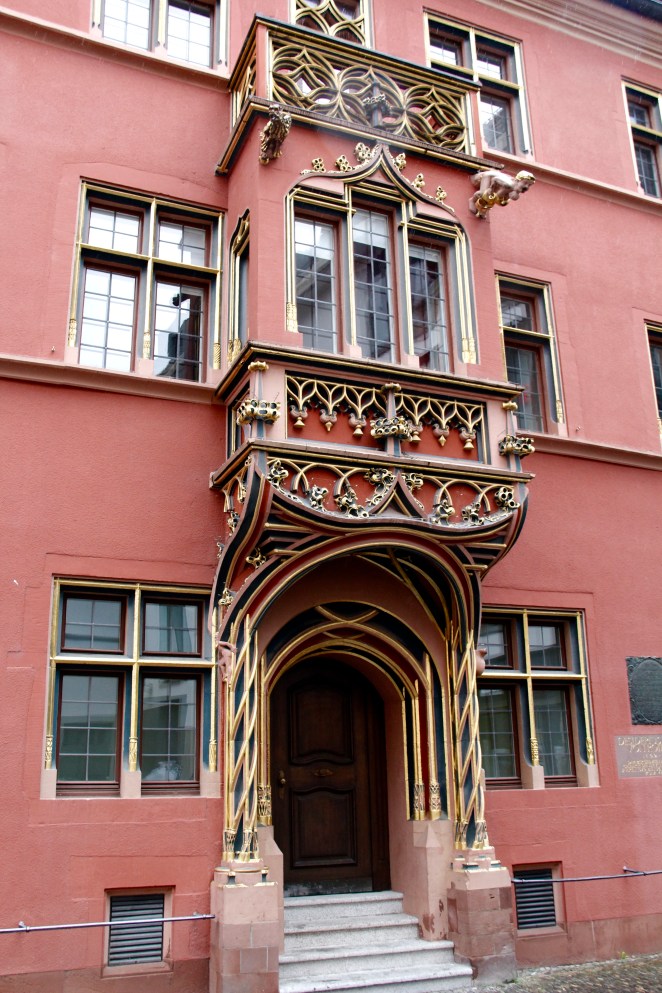
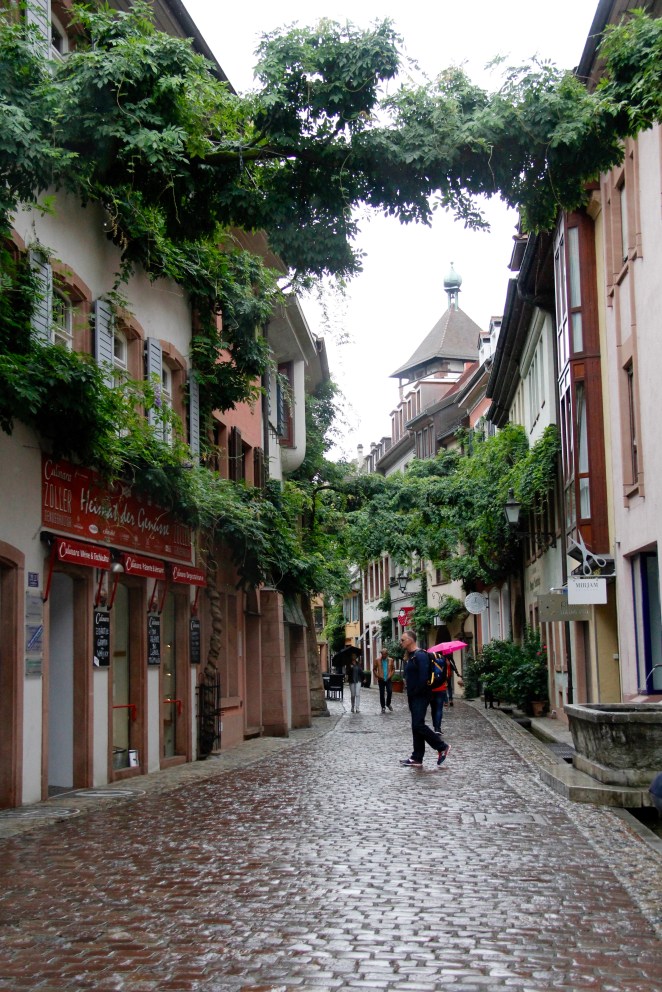
This morning we woke up early to grey skies and wet cobblestones – looks like we brought a piece of Vancouver with us after all.  After a 2 hour train ride via Mannheim we arrived in the cozy Black Forest town of Freiburg in Breisgau.  This town is famous for two things – its UNESCO World Heritage cathedral and minster (pictured later), and little canals that wind through the city called bachles.  In the summertime you can find people cooling off their feet in these canals and children pulling toy boats on string.

_mg_6870_mg_6895

Legend has it that if you fall into one of these, you will marry a Freiburger and judging from the men’s style in the area, I wouldn’t turn that down.  Minus the man buns.  So many man buns…

After a short walk from the train station, we were in the historic old town, ready to do our Rick Steves walking tour.

_mg_6875_mg_6881_mg_6885_mg_6890_mg_6891_mg_6898_mg_6900_mg_6902_mg_6904

After learning about the downhill and adjacent buildings, we came upon the historical and visual focal point of the city, the Freiburg Munster (minster).  Its giant, spiny tower can been seen from everywhere in town and is as tall as it is wide. It occupies the middle of a huge square.

_mg_6908_mg_6916_mg_6918_mg_6922_mg_6914

We came to the front door right at noon and the giant bells chimed, calling the faithful to mass.  We decided to come back to it when mass wasn’t in session, so we moved on.

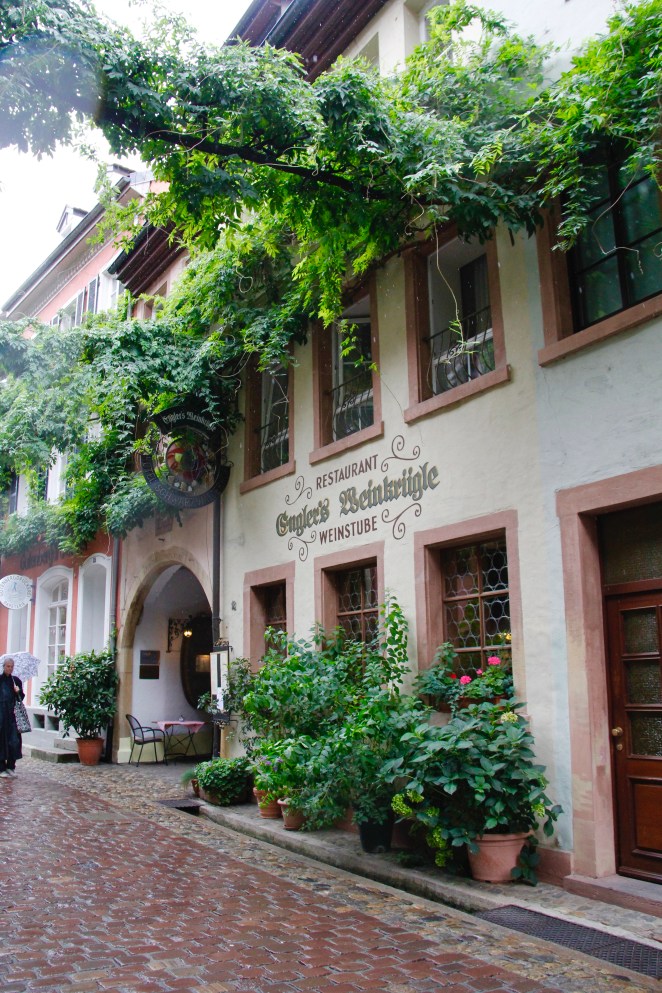
We walked down what originally looked to be a side street, but turned into a beautiful cobblestoned street, draped in arbour which blooms wisteria in the summertime.  Because it was Sunday most of the shops were closed, but we still found a lot of things we would spend our pennies on, including a new hat for Pa and a beautiful wool coat for Ma.  They will have to wait for another day.

_mg_6930_mg_6932_mg_6936

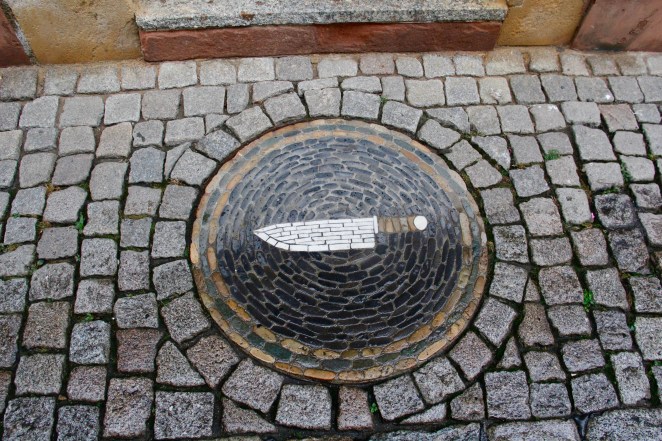
An interesting part of the cobblestoned road is that in front of a lot of the businesses are mosaics that indicate what kind of shop is there:

_mg_6926

A more sobering thing we noticed in the ground stones were a few seemingly random copper ‘stones’ with writing on them in front of some of the old apartments.  They were in German, but we could make out names, birth dates, death dates (usually between 1940 – 1944) and one chilling word that ended all of them: Auschwitz.

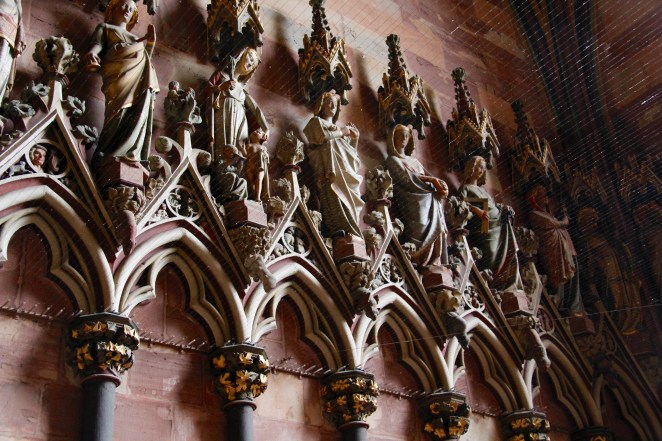
By the end of our walk we had worked up quite a hunger and decided to try the recommended Hausbrauerei Feierling for lunch and beer.  I ordered a beer which was slightly smokey and flavourful, and had possibly some of the best bratwurst I’ve ever tasted.    We settled up and headed back towards the Munster so we could get a look inside.  The rain had let up and we liked the walk we took before so much, we walked past the same way.  When we had gotten back to the Munster mass was done so we were free to walk about the church.

_mg_6955_mg_6956_mg_6958_mg_6964_mg_6966

The church’s stained glass was sponsored by different workers, tradesmen and craftsmen back in the medieval time, so a portion of the window is dedicated to that worker’s profession (bakers, tailors, cobblers, etc).  After our walkabout the castle it was time to hit the road and headed back to Heidelberg, sharing a train car with a bunch of drunken football rowdies (go St. Pauli, I guess).

We ate a delicious dinner at the Italian restaurant next door to our hotel and then moved over to our hotel for some hot chocolate.  The sky cleared up and the air chilled and we sipped our hot drinks in anticipation of a special guest on our trip, my friend Argie.  Argie works with me in the tower of terror known as our job and is hanging out with us for a few days on her way back from Budapest.  At 1900hrs a black Mercedes pulled up and Argie stepped out excited to be done her 11 hour train sojourn.  She met Ma and Pa and we chit chatted until it was time for bed.

Germany, Day 6: I Can See For Miles and Miles

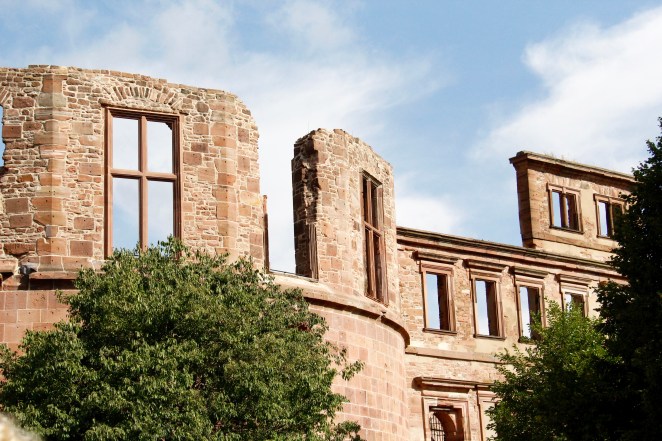
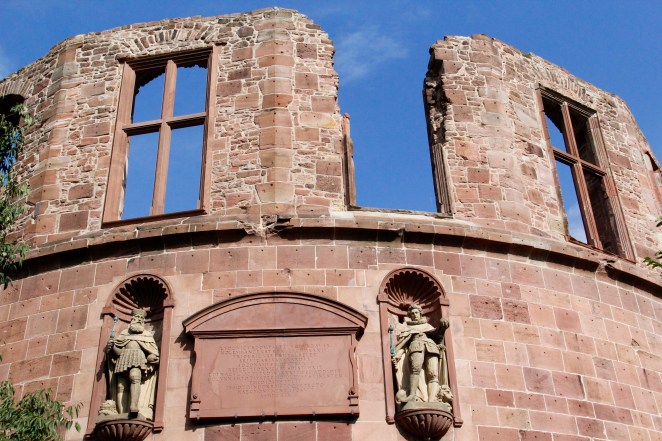
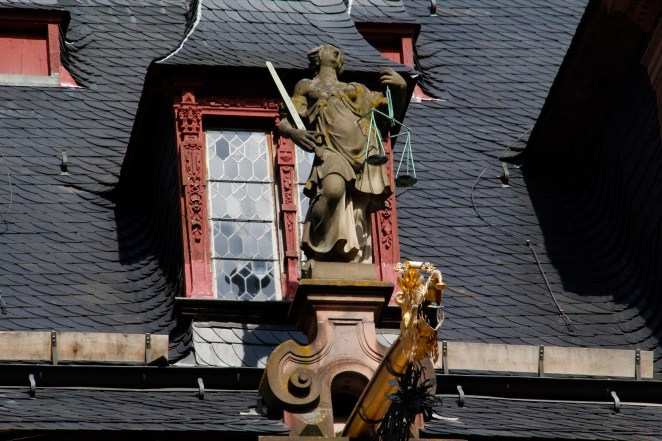
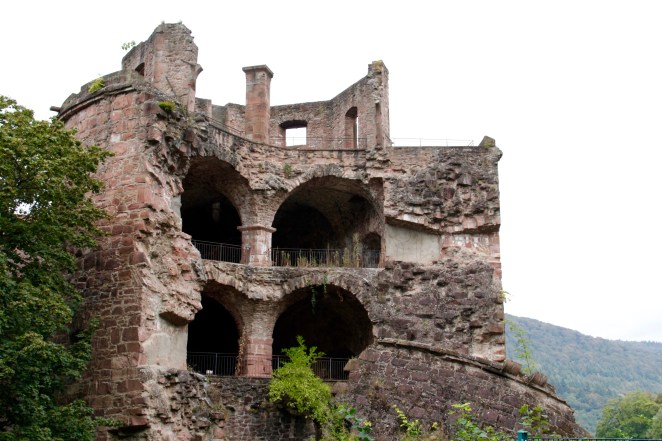
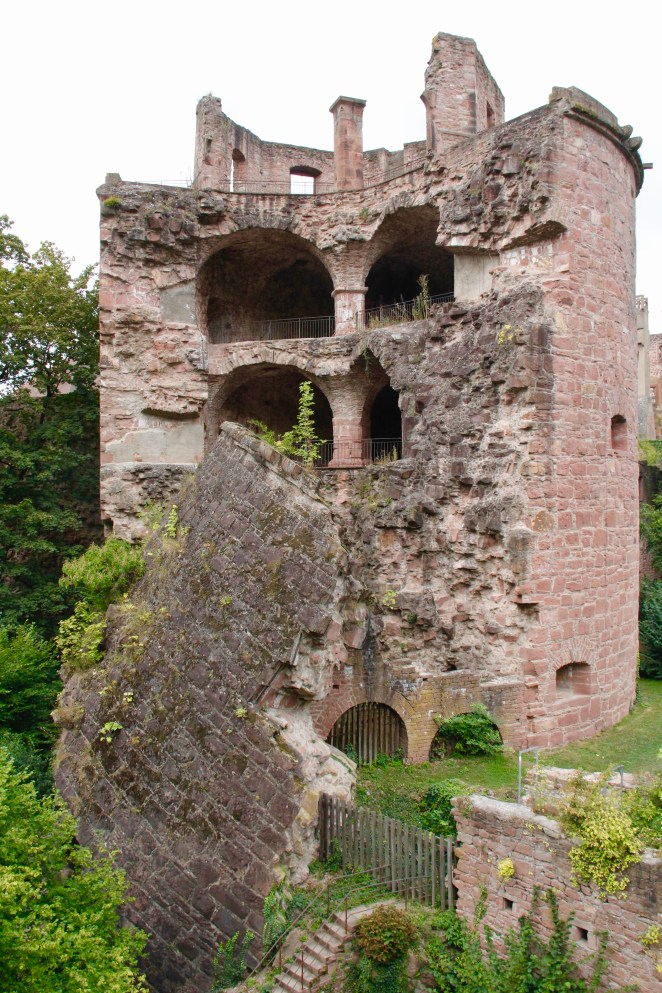
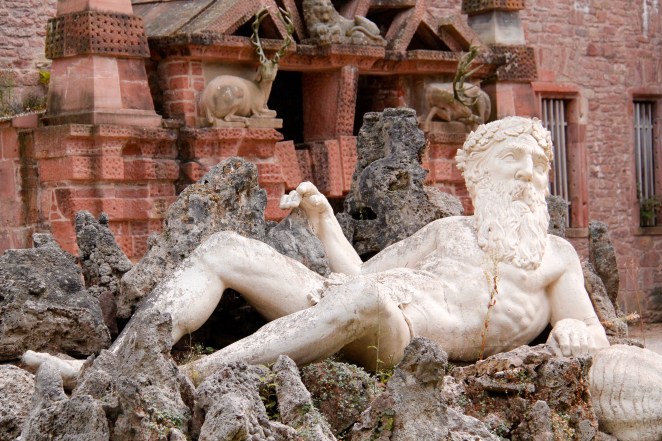
Today was our first full day in Heidelberg.  We had planned to go to Stuttgart to visit the Mercedes Benz Museum, but we all woke up late, I had a, uh, headache, and Pa wasn’t previously as excited to go as he was before, so we made the decision to stick around Heidelberg instead.  Heidelberg is mostly famous for its partly ruined castle, Schloss Heidelberg, which is perched on the side of the high hills that surround the city, and is accessible by way of one of Pa’s favourite contraptions, the funicular.  We had a lazy breakfast in the hotel restaurant and ambled over to the funicular, conveniently located next to the square over from our hotel.

_mg_6680_mg_6690

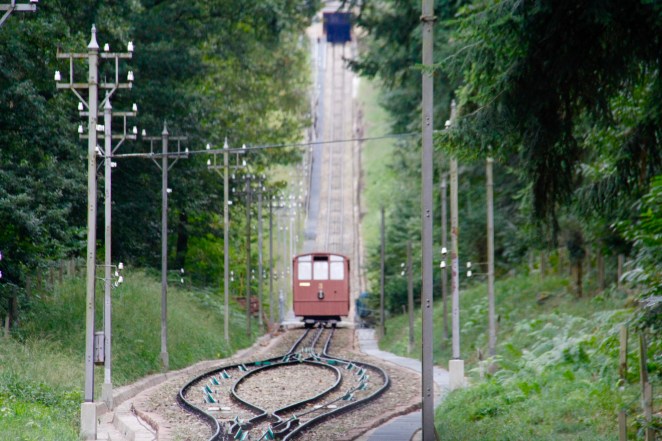
There are actually two funiculars on the hill – a newer modern one that takes you from the bottom to the castle and halfway up the mount, and then a creaky wooden 125 year old one that takes you to the top.  We decided we wanted to see the castle first, so we exited the funicular and headed down the marked path, past a couple of small shops and cafes to the partly ruined castle.

_mg_6708_mg_6710_mg_6722_mg_6726

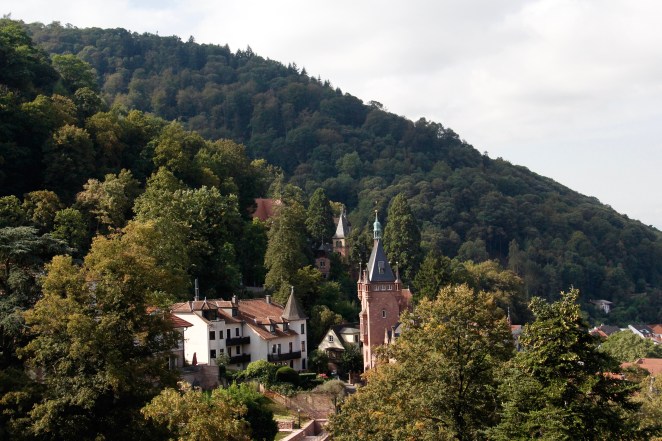
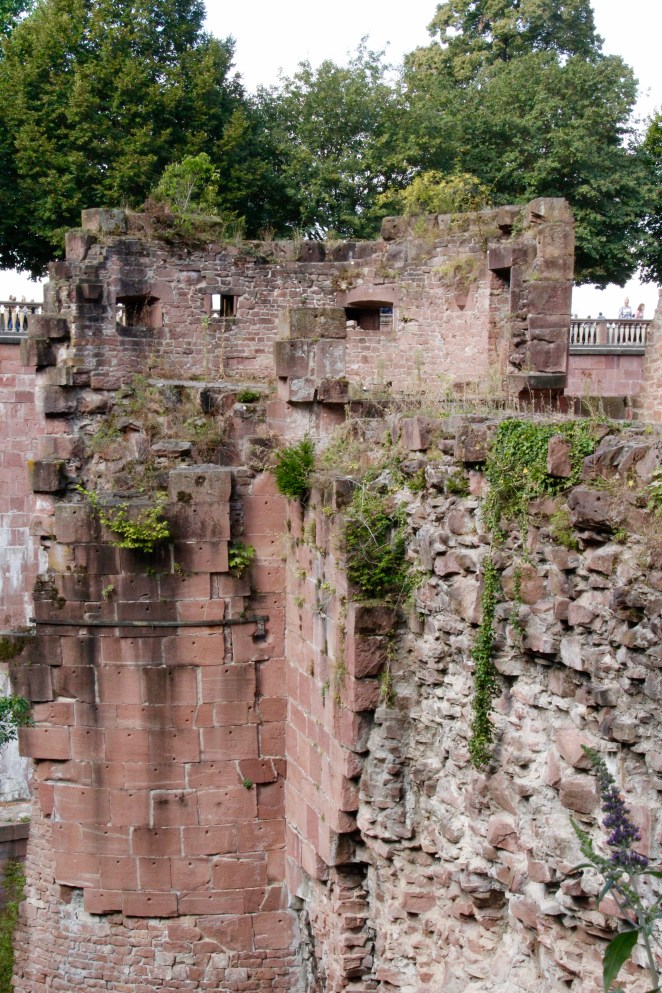
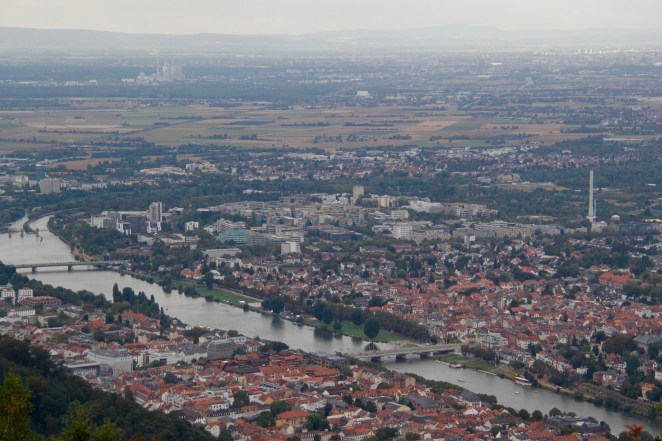
The castle is cool and different – its a mishmash of different styles as it was chronically being hit by lightning and parts of it got damaged.  Construction started in the Renaissance and eventually stopped, leaving half of it ruins and the other parts in differing states of crumble.  The castle overlooks the city and on a clear day (like the first part of today), you can see all the way to Mannheim.

_mg_6714_mg_6774

The castle is enormous.  We spent the better part of the morning and afternoon wandering around the grounds, with a brief stop in the castle cafe to have our standard beer/pretzel/apple strudel.

_mg_6716_mg_6731_mg_6737_mg_6746_mg_6750_mg_6764_mg_6767_mg_6806_mg_6808_mg_6810_mg_6821_mg_6826

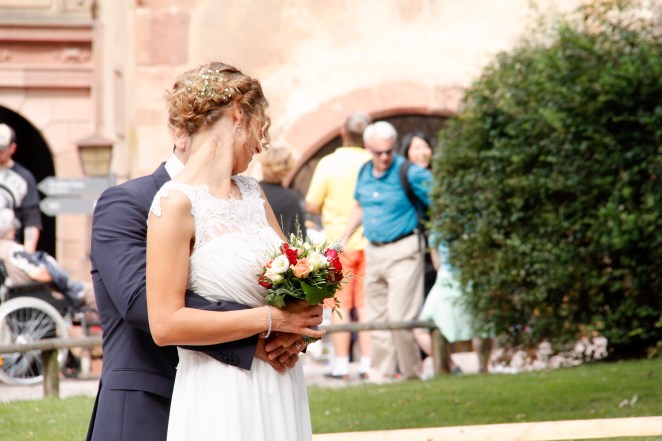
A relatively recent feature of the castle is you can get married in a sacred or civil ceremony there, so we got to see a few different bridal parties of varying fanciness.  I am a creeper at heart, so I had to get a couple of snaps in.

_mg_6789_mg_6793_mg_6798

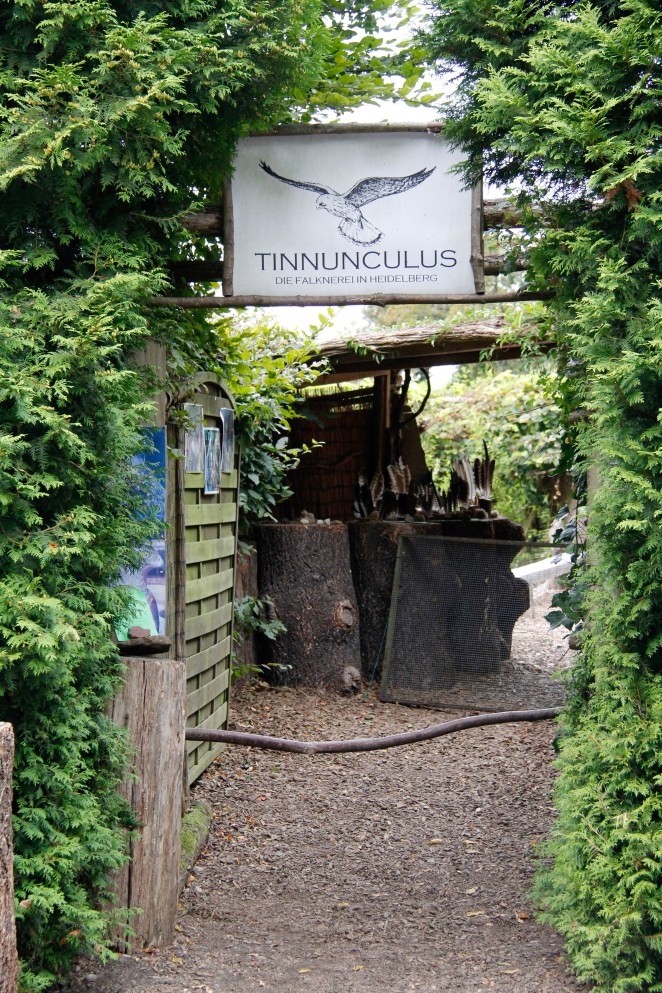
We had had our fill of castle so we headed back to the funicular station and got on board ye olde funicular.  The funicular cars are adorable and shake and sigh through the 10 minute ride to the top of the hill.  The top of the mount didn’t have much to offer – a closed falconry, a derelict boarded up restaurant and more spectacular views.

_mg_6839_mg_6848_mg_6853_mg_6854

We decided that it was time to head back and got on our little shaky funicular, then the smooth modern funicular and headed to the hotel restaurant patio for beers and so that I could write out some postcards.  The next few hours were filled by dinner, ice cream, and a frantic shop at the Lindt chocolate shop and as the rain started, we headed in for the night.

_mg_6864

Croatia (Part 5: Zadar)

IMG_8347

Our pleasant-est of pleasant surprises on our trip to the Balkans was the coastal town of Zadar.  We decided to stay in Zadar randomly – it was a coastal town almost a straight line from the more inland Plitvice Lakes.  We read that it had a pretty old town and a newer interesting waterfront feature – the Marine Organ.

IMG_8350

After most of our day in Plitvice lakes we decided to head into town to check out the Organ and get some dinner.  We wandered through the old town and marvelled at the beautiful Venetian stone work – it was like a miniature, less crowded version of Dubrovnik.  The city is very clean and the stones shiny, like they polish them on a regular basis.  Little art galleries and pizzerias were strewn about the town.

IMG_8363

When we made our way outside of the old wall we were thrust upon a vision of utter majesty – the orange-red sun setting on the restless, white-capped Adriatic Sea, the sound of Nikola Basic’s award winning urban art instalment – the Marine Organ.  As mentioned in a previous post, the Marine Organ is a set of polyethylene pipes of varying lengths and widths set into the concrete seafront with slats on one end to allow the wind, waves, and water in and an opening on the other to the let the chance music out.

IMG_8365

We sat on the steps, watched the sailboats pass by in the choppy waters and the sun set, and listened to the music.  The music was enchanting, harmonious, hypnotizing.  I could have listened to it all day.  We noticed that there were a few cafes set back from the concrete steps and decided that some day, one day, when we return, we will spend more time in Zadar and sit at one of those cafes for a day, drink the delicious coffee and listen to the music of the ocean.

IMG_8404

Croatia (Part 1: Dubrovnik)

Croatia is becoming a pretty popular travel destination, and for good reason.  One of its most recognizable cities is the walled fortress called Dubrovnik.  Ma, Pa and I travelled there in September 2014 as part of our month-long sojourn to the Balkans.  The first day and a half that we were there Pa was holed up in the Klinika Ortopedia in Sarajevo having 13 screws put into his elbow while Ma and I explored the city.

IMG_7909

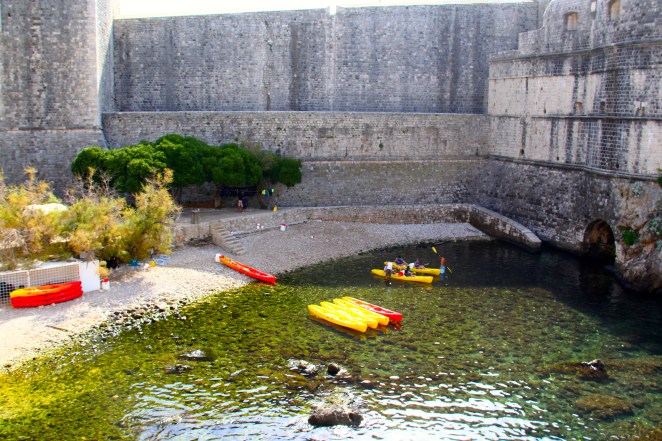
Dubrovnik was really fun to explore.  There are all sorts of laneways, staircases, doorways, the kind of adventure that you crave when you’re a kid.  It’s also a photographers dream (when you’re not overrun by cruise ship tourists).  Every lane is different, a plethora of different colours, shops, lights, people.

IMG_7923

The walled part of the city is a peninsula that juts out into the blue-green Adriatic Sea.  I felt like I could not get enough photos of the water.  Don’t get me wrong, I love B.C. but the waters of the Adriatic were like nothing I had ever seen.  They were so clear and enticing.  We were drawn to the outer parts of walls, not just because of the bountiful gelato shops, but because the sea was there.

IMG_7960

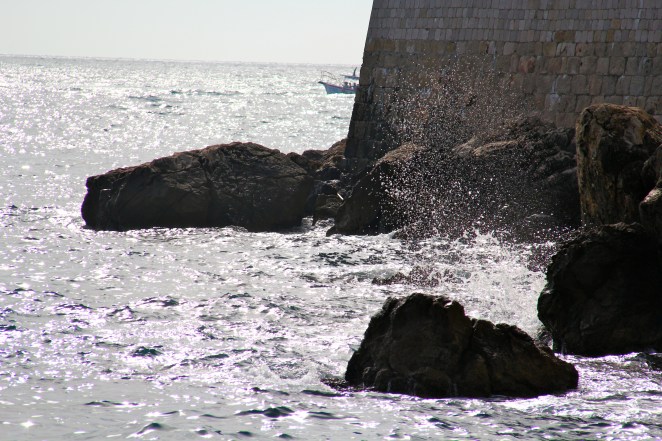
The sea is a fantastic combination of being calm and playful.  A decent amount of wind makes it perfect for sailing and the smooth bits make it ideal for sea kayaking.  I like the way the water hits the rocks, like an aquatic firework.

IMG_7981

Croatia mostly identifies itself as catholic, but inside Dubrovnik’s walls are several different churches of different christian denominations including eastern orthodox and, as seen in this wedding here, jesuit.  Although I don’t identify as being “religious” or theist or deist of any kind, I do love photographing churches and I enjoy the grandiosity of this scene.

IMG_7988

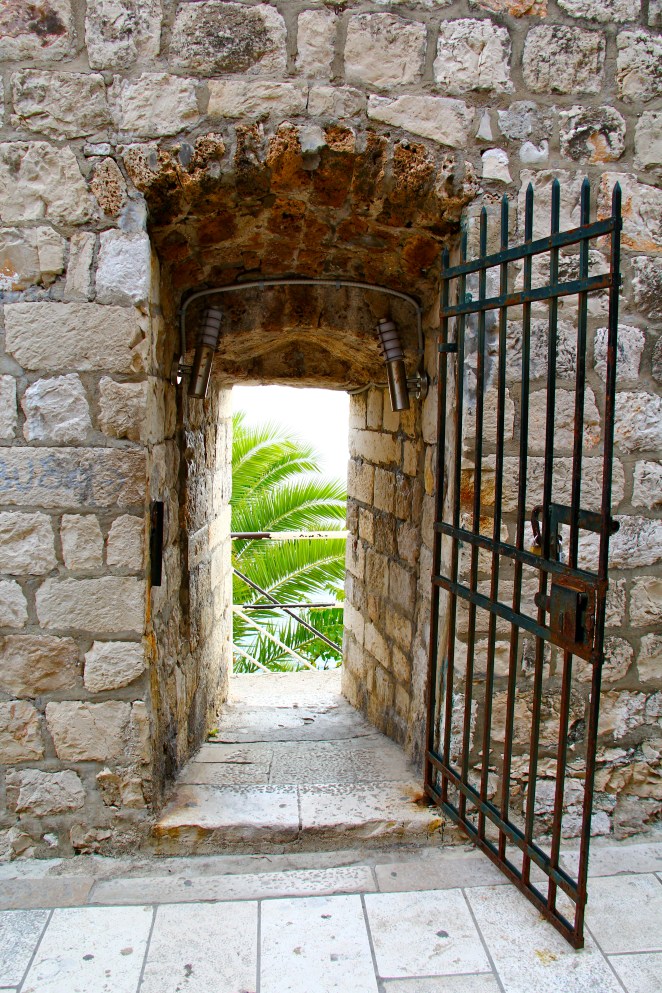
When we were exploring we came across this: an open gate framing a green palm frond and the wall with painted blue letters “Buza ->”.  I like the mystery behind what’s on the other side of this.  A balcony?  A walkway?  Maybe nothing.

What’s on the other side of this doorway is a steep staircase leading down to a bar perched precariously on the westernmost tip of the wall where you could enjoy an overpriced beverage in a plastic cup.  Worth it.

IMG_7993

Might As Well Jump

IMG_7850

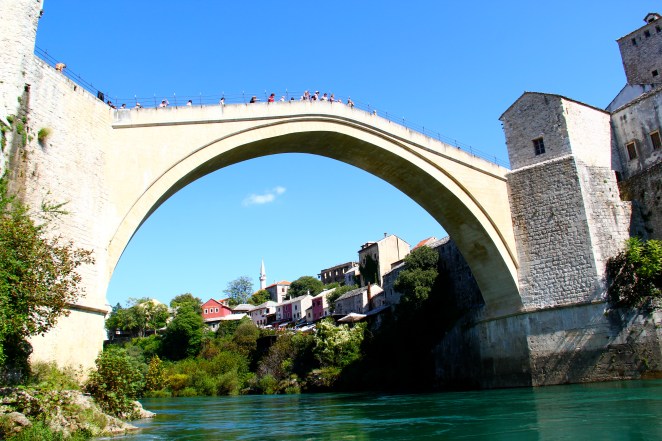
The Story: This is the famed Stari Most, the Old Bridge of Mostar, the simple, historic piece of architecture that sparked my interest in the city of Mostar, the country of Bosnia and the whole Balkan area.  The story behind the bridge itself both broke my heart and warmed it.  The people of Mostar see the bridge as more than just a structure, they consider it an old friend and when it was bombed into the river in November of 1993 the water ran red (it was made from local pinkish stone called tenelija) and the people cried, ‘Our old friend is bleeding!’.  The bridge was reconstructed in 2004 using some of the original materials fished out of the river and was opened with the releasing of doves to symbolize peace not only in Mostar, but for the world.

One of the more popular spectacles is watching locals dive off the bridge.  They will tease and posture until they’ve raised enough money, and after what seems like a hopeless debacle, they jump.

Why I Love It: My favourite part of this the action of the diver’s body – arms open and outstretched and heels kicked up so there is a clear space between the jumper and the bridge.

IMG_7792

The Story: See above

Why I Love It: this is the quintessential bridge shot that everyone gets, but I still love mine and think it’s unique.  I love the blue sky against the emerald river, and I love how powerful and stoic the bridge looks, a truly captivating piece of architecture.

War and Peace

IMG_7576.JPG

The Story: So my dad is a big time history buff including everything from Genghis Khan to Alexander the Great, the American Civil War to Napoleon and so on.  When we decided we were going to Sarajevo, we all decided that it was a priority that we visit the Latin Bridge: the historical span on which Austro-Hungarian Archduke Franz Ferdinand and his wife Sophie were assassinated in 1914 by Serbian anarchist Gavrilo Princip, sparking a chain of events that led to the start of World War 1.  We got to the bridge in mid afternoon and the weather had held up.  I was surprised at how shallow the Milijacka River was and how pretty the bridge itself is.  There used to be a plaque with Princip’s footsteps embedded on one side of the bridge, but it was removed at some point when the Siege of Sarajevo start in 1992.

Why I Love It: I can’t believe this was once a scene of great chaos not once (WWI) but twice (Siege of Sarajevo), because this photo shows this scene to be not only peaceful, but beautiful!  I love the way the 16th century bridge takes the centre stage among the Viennese Hapsburg-Style buildings, and shows how truly stunning the historic city actually is (you should all visit.).

IMG_7649.JPG

The Story: We paid a cab driver $20 to take us up Trebevic Mountain and hang out for a half an hour so that I could get some shots of the long abandoned, overgrown and graffiti-riddled bobsled and luge track from the 1984 Winter Olympics, that Sarajevo hosted.  There was no one else up there so we had the entire length to ourselves.  It was covered in moss and graffiti top to bottom and was eerily quiet – difficult imagine the roar of the crowds 30 years previous.  During the Siege of Sarajevo Serb snipers would bore holes in the track for their rifles and then abandoned after the war until people (like me) started discovering how cool and interesting the whole structure is.  Like modern art.

Why I Love It:  I love the colours in this one.  I love how vibrant the moss is in the foreground and the red and blue graffiti is in the background.  It was a sunny day but the forest was dense enough to block out the direct sun.  I like the story this one tells with the moss, fungus and graffiti overtaking the cement structure.  It’s like a complete transformation.