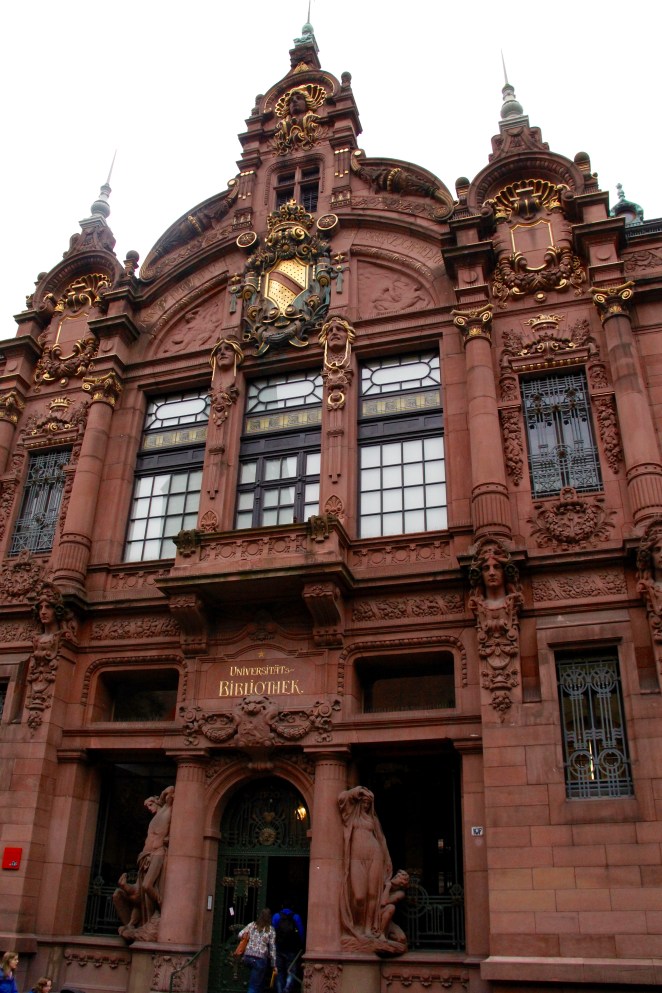
Germany, Day 18: And She Shows You Where To Look

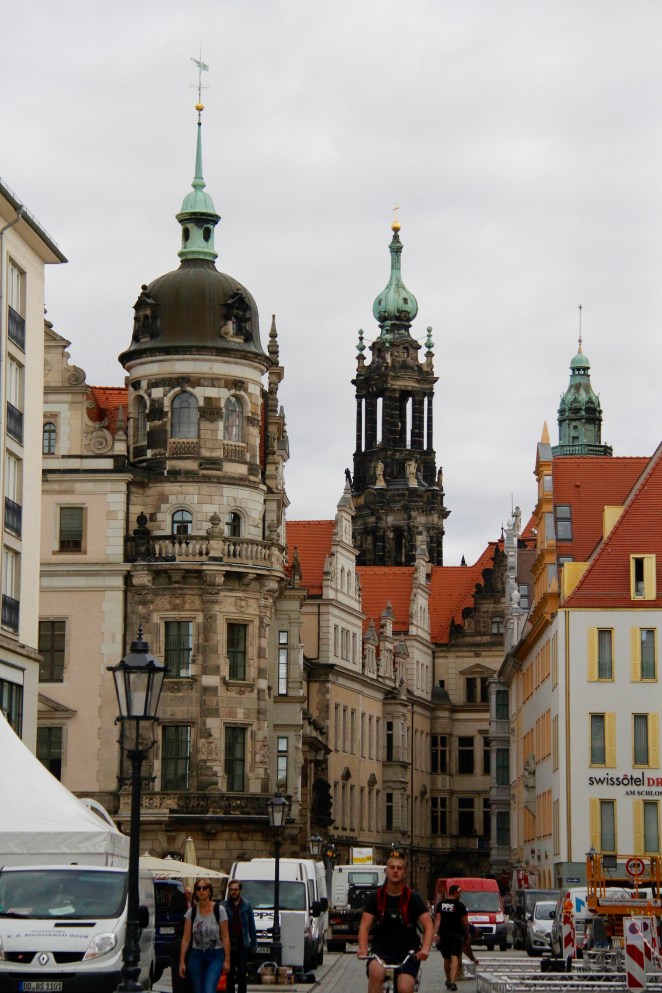
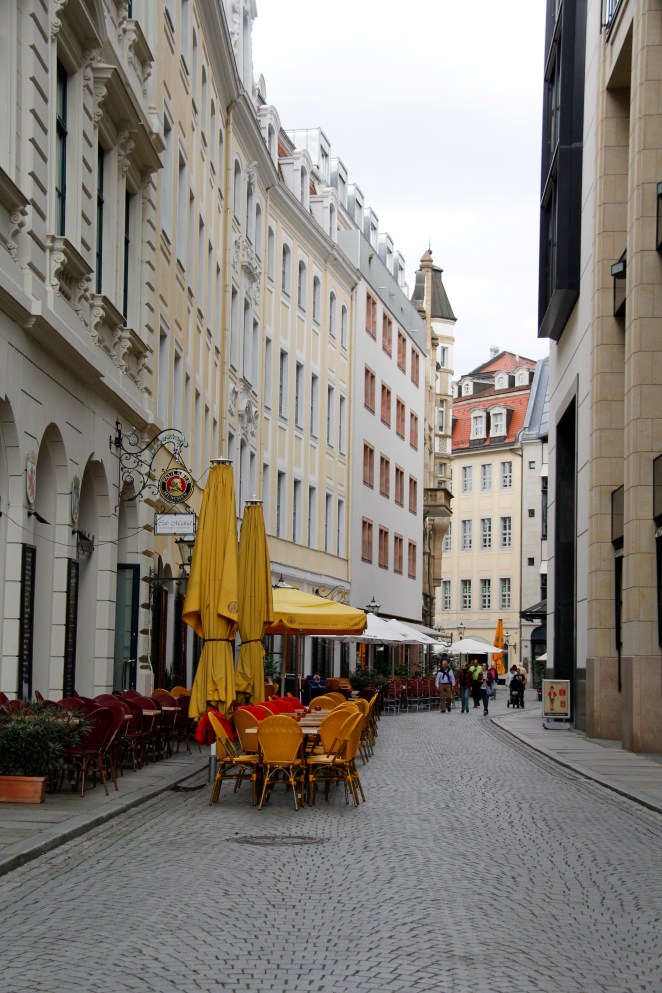
Today is our last full day in Dresden before we leave tomorrow morning for our final leg on this German Odyssey – Berlin.  We’re pretty sad to say goodbye to Dresden because it’s a beautiful, vibrant and sumptuous city, perfect for exploring, relaxing and people watching.

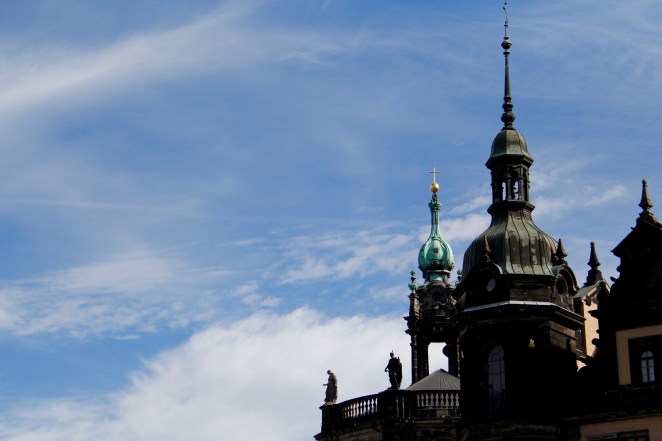
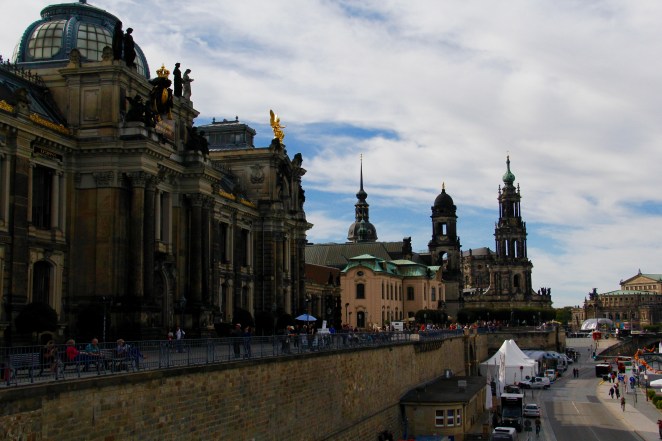
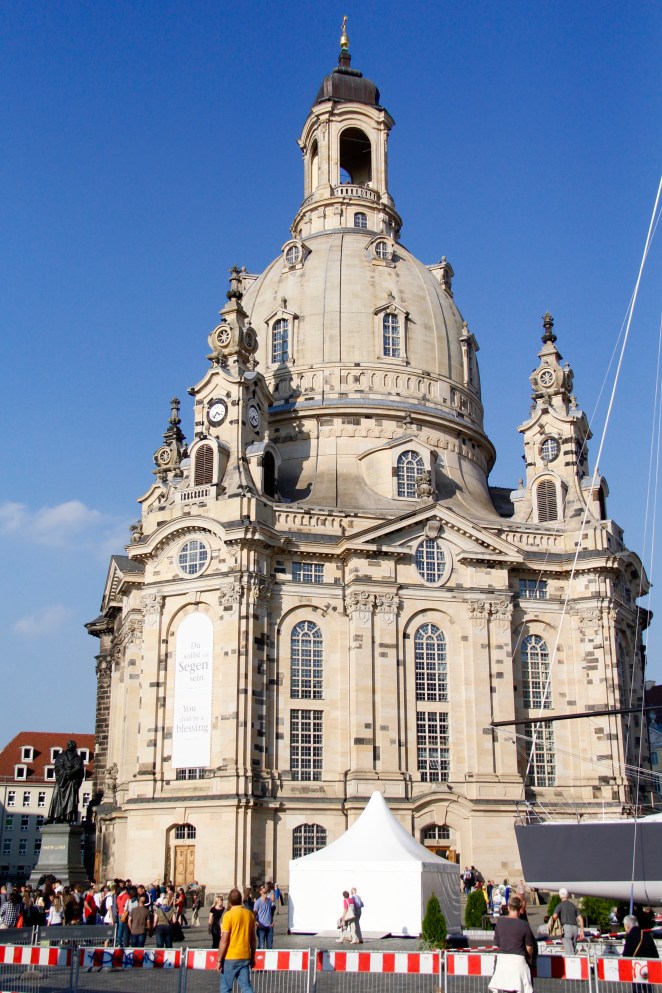
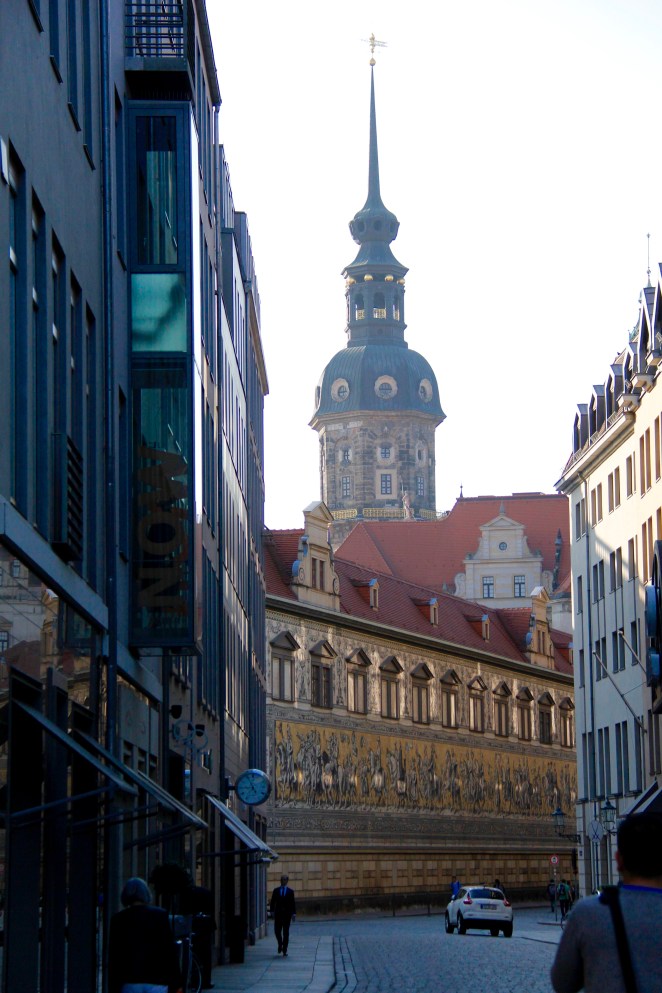
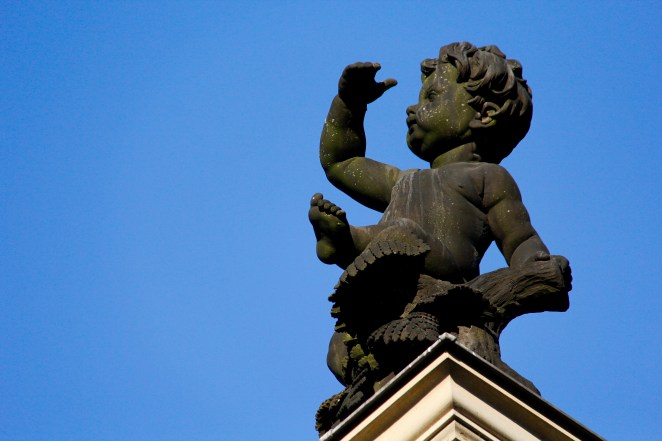
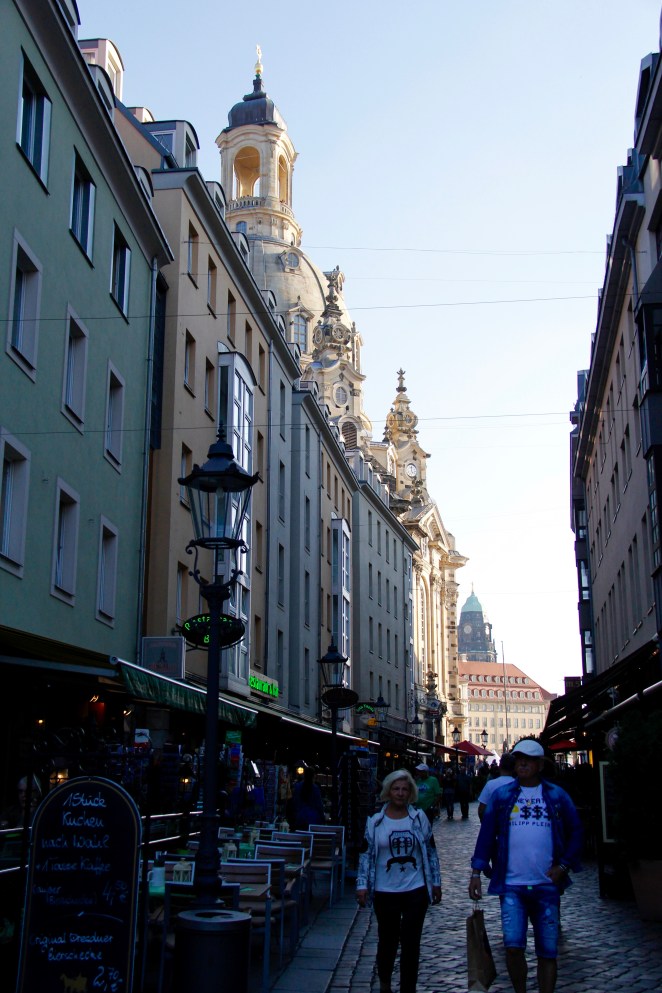
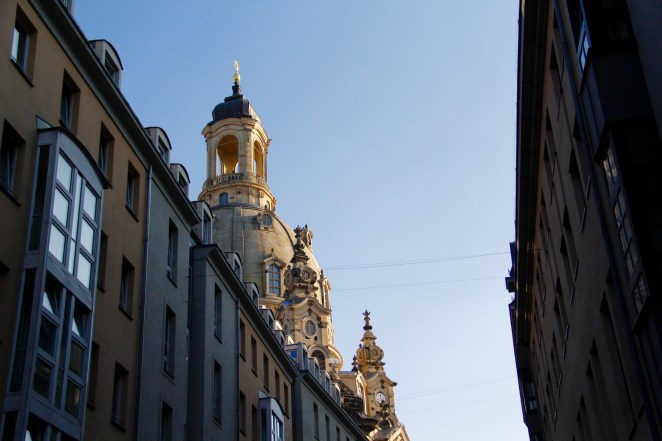
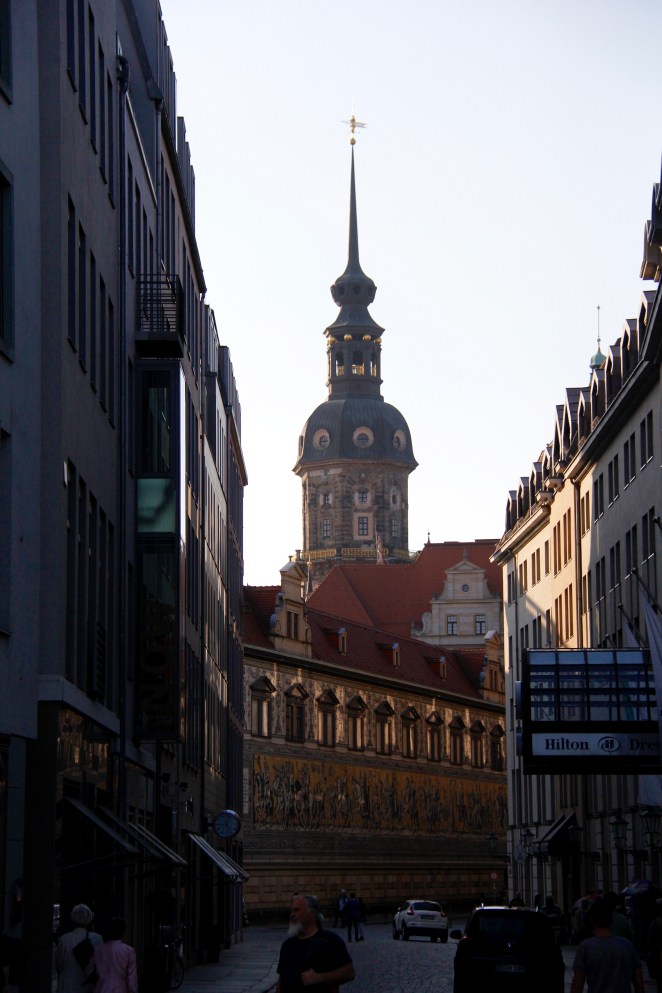
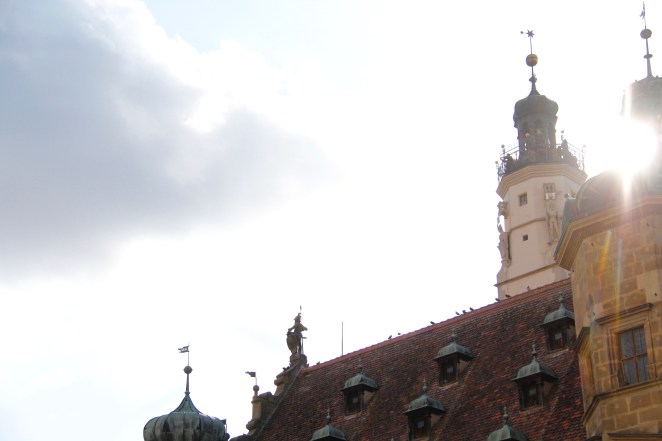
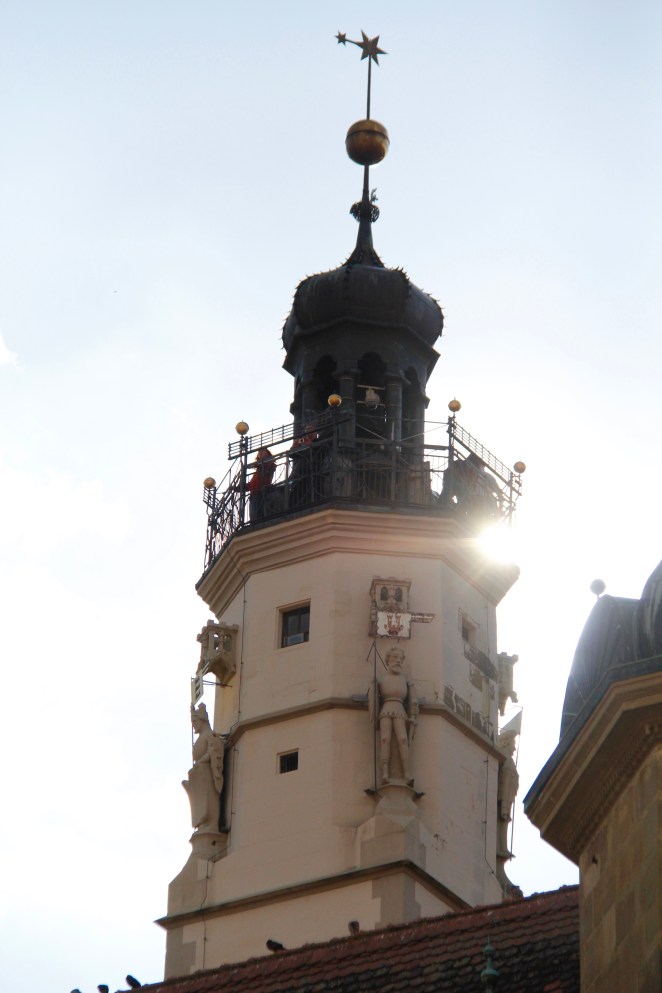
I love all the different spires of the city, so on our way to Dresden’s “Green Vault”, I decided to indulge myself:

_mg_7820_mg_7824_mg_7828_mg_7834_mg_7840

We entered the palatial complex called the Zwinger that houses the Green Vault – a series of rooms that their 18th century Prince Elector, Augustus the Strong filled with different treasures and delights.

_mg_7842_mg_7845_mg_7848

There is only a certain amount of people allowed inside the Green Vault at the same time, so you have to buy a ticket for a certain time.  Security was the tightest I’ve ever experienced at a museum as we had to lock up ALL bags (including Ma’s tiny purse), cameras and phones.  You then line up at two sets of doors that a guard lets you in, two at a time, you wait, then the doors on the other side open.  Everything is alarmed and behind glass, but it is easy to see why – all the rooms are different themes (amber, ivory, jewels, sculptures, bronze, coat of arms, silver) and contain many priceless treasures, big and small – ornate crystal drinking vessels, paintings, amber chess sets, diamond-hilted swords, etc.  After an excellent hour-long audio tour, we decided to embark on one of our favourite travel events, the self guided Rick Steves walking tour.

_mg_7849_mg_7852_mg_7853_mg_7855_mg_7857_mg_7860

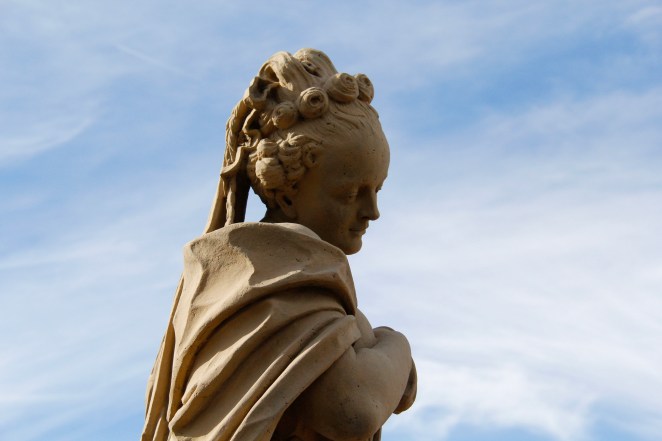
Before we started the tour we had to get to the starting point, and that meant cutting through the Zwinger’s stately gardens.

_mg_7865_mg_7868_mg_7870

The tour started at Dresden’s Opera House, known as the Semperoper as Semper built it.  It burned down twice – once in the 19th century and then again, sadly, in 1945 as did many many other of the fine structures and treasures in the city.

_mg_7873_mg_7875_mg_7877_mg_7879_mg_7887

The last opera performed at the Semperoper in 1945 was Der Freischutz by Carl Maria von Weber and the first opera performed when it was rebuilt almost 40 years later, so they honoured Weber with a statue in front of a cafe.

_mg_7889_mg_7893

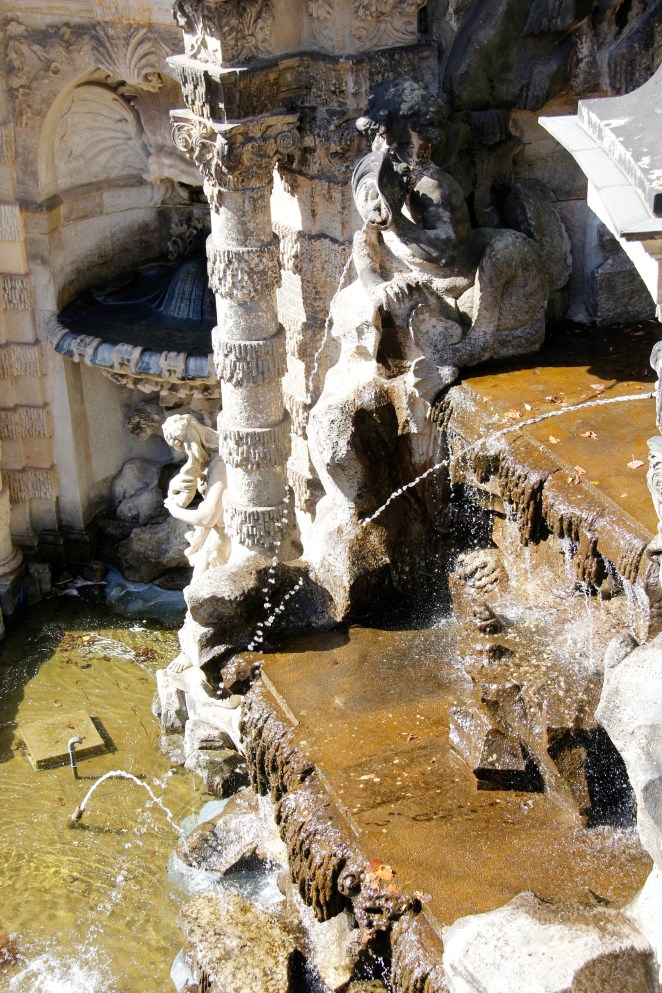
We crossed back into the Zwinger’s gardens and marvelled at the beautiful fountains and stonework.

_mg_7897_mg_7899_mg_7901_mg_7904_mg_7906_mg_7909_mg_7914

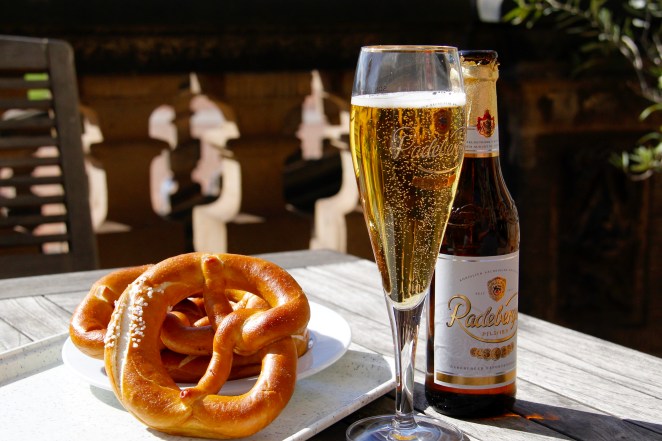
Part of our instructions were to cross from the fountains into the main garden through an orangery, but we noticed that this glassy atrium sold beer and pretzels and it was lunch time, so we stopped and had a beer overlooking the gardens before moving on.
_mg_7917

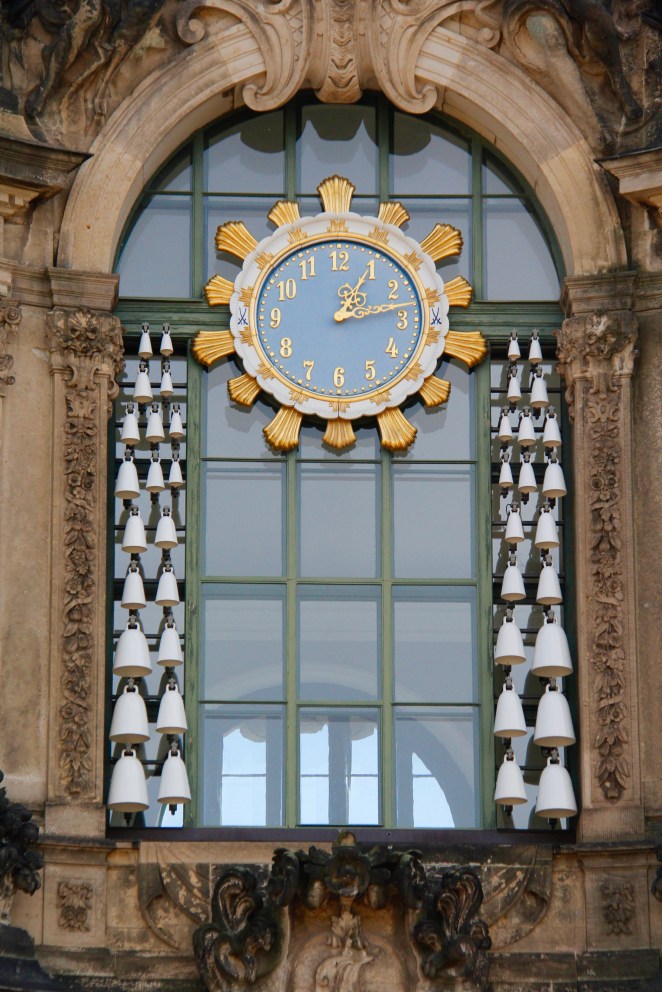
The Zwinger gardens are also home to this beautiful glockenspiel, outfitted with porcelain chimes that emit a much sweeter sound that the usual brass bells.
_mg_7919_mg_7922

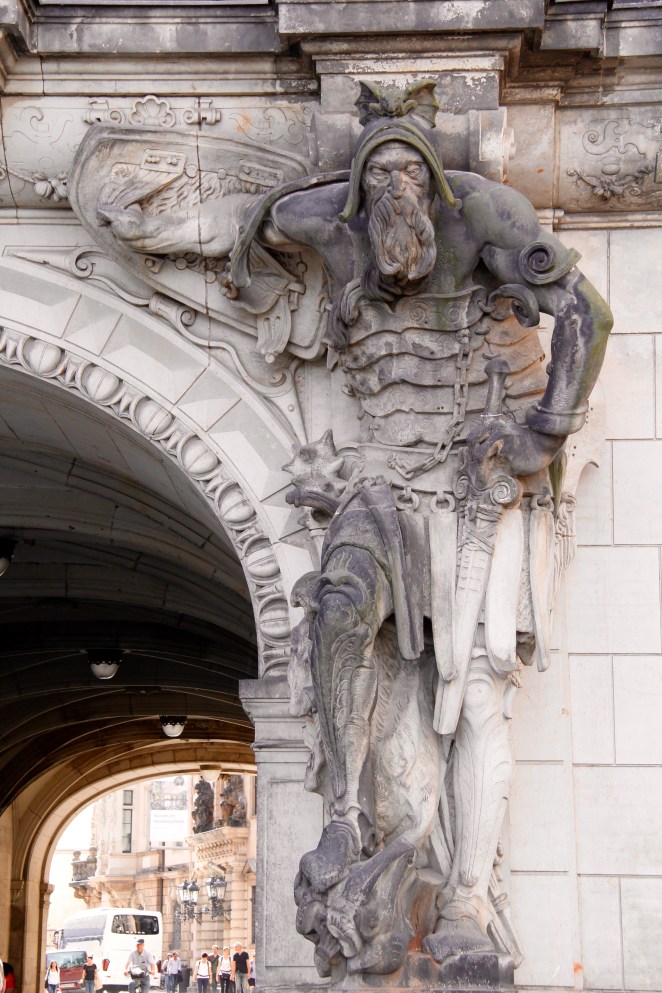
We left the Zwinger and headed north towards the river Elbe, reading stories of Augustus the strong and some of the pre and post war history of the city.

_mg_7928_mg_7931

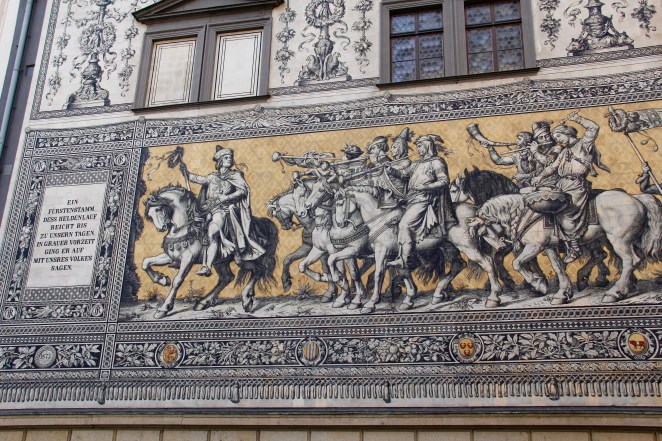
One of our favourite pieces was this 250 foot long porcelain-tiled mural showing a parade of the rulers of Dresden.  This piece miraculously survived the 1945 firebombing.

_mg_7936_mg_7940

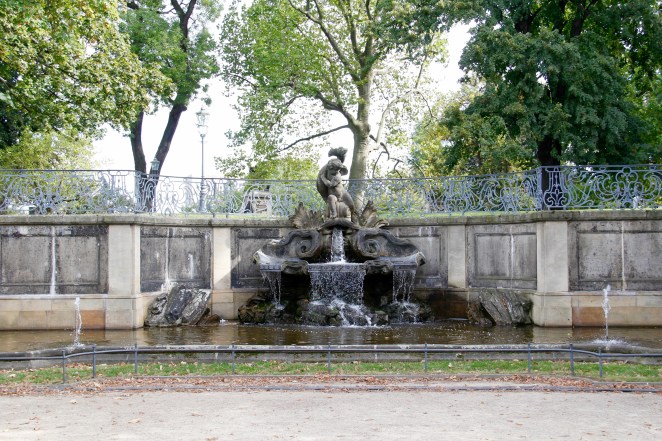
Our walking tour ended along the river on a balcony walk that overlooks the Elbe.  We decided to have a sit and watch all the activity at the other side of the river.

It turns out Dresden is setting up a huge party – it’s the anniversary of Germany’s reunification and every year a different state’s capital hosts the bash – this year it’s Dresden’s turn as the capital of Saxony.  Huge white tents are set up everywhere as well as sound and lighting systems.  The festival starts this weekend, in time for us to just miss it.
_mg_7943_mg_7944_mg_7949_mg_7951_mg_7954_mg_7956

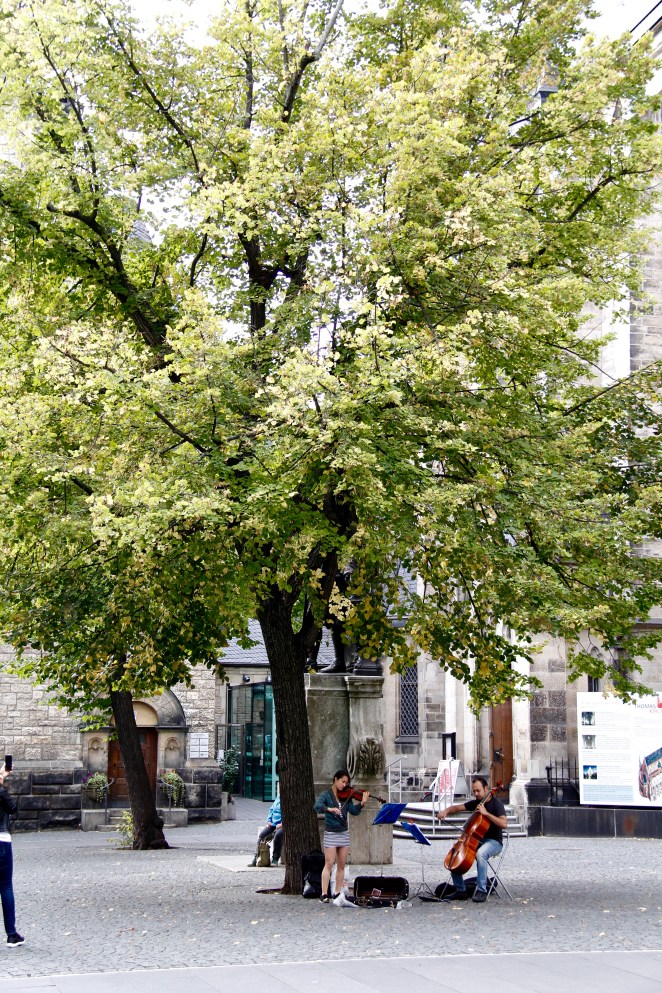
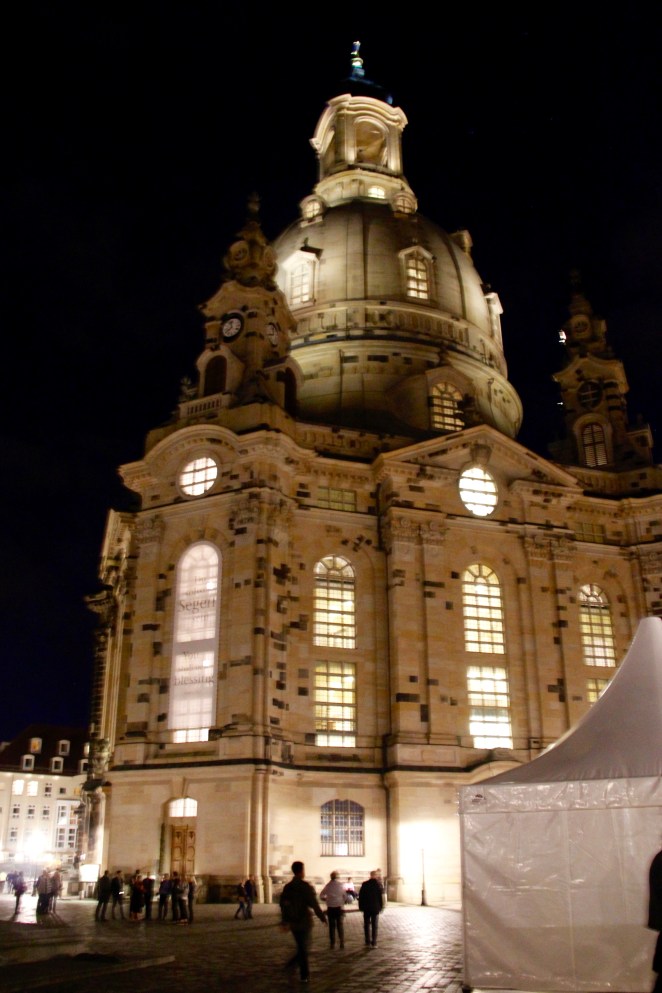
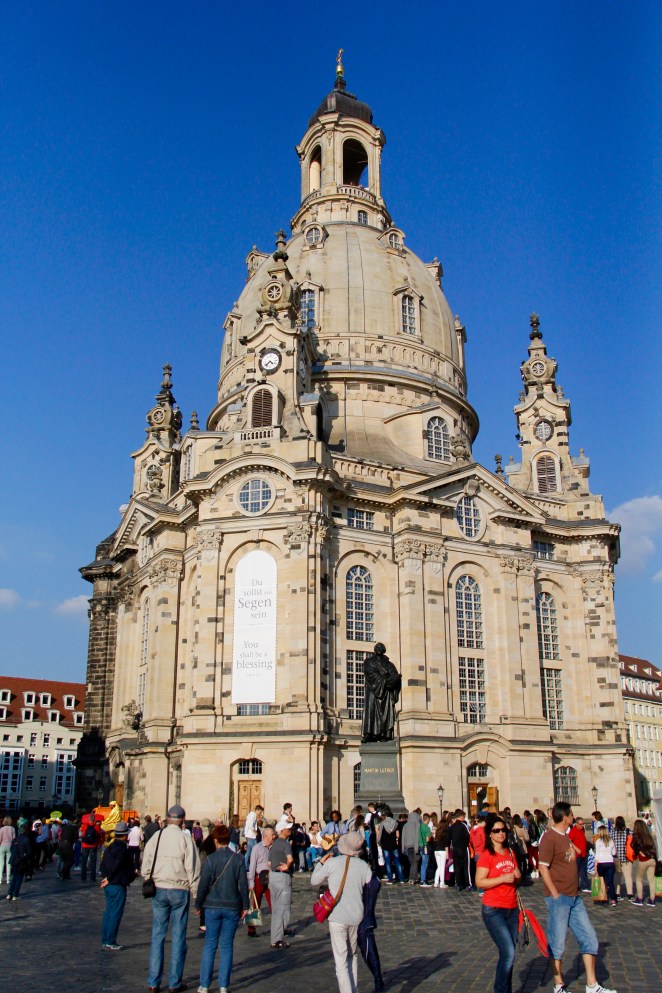
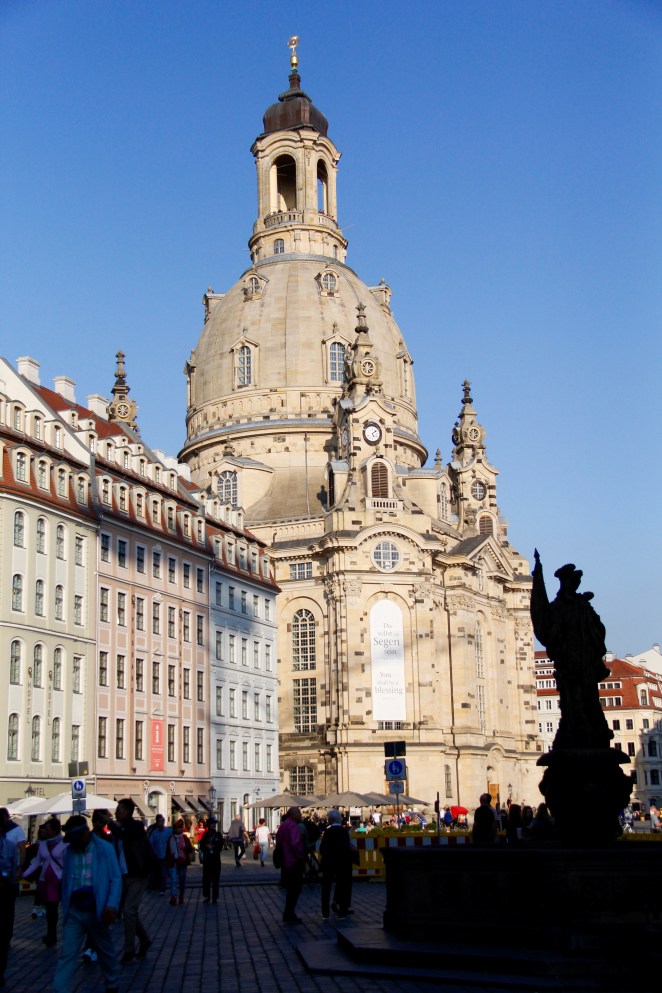
We found a beautiful river-side cafe where we treated ourselves to ice cream confections and fizzy water, ambling back into town where we bought our mandatory post cards and fridge magnets, grabbed some coffees, relaxed in the old market square before headed to dinner.  Again, Dresden spoiled us as we ate a delicious dinner on a beautiful sunlit square in the shadow of the majestic Frauenkirche while the local busker serenaded us with Leonard Cohen classics.

Germany, Day 17: Town Without Pity

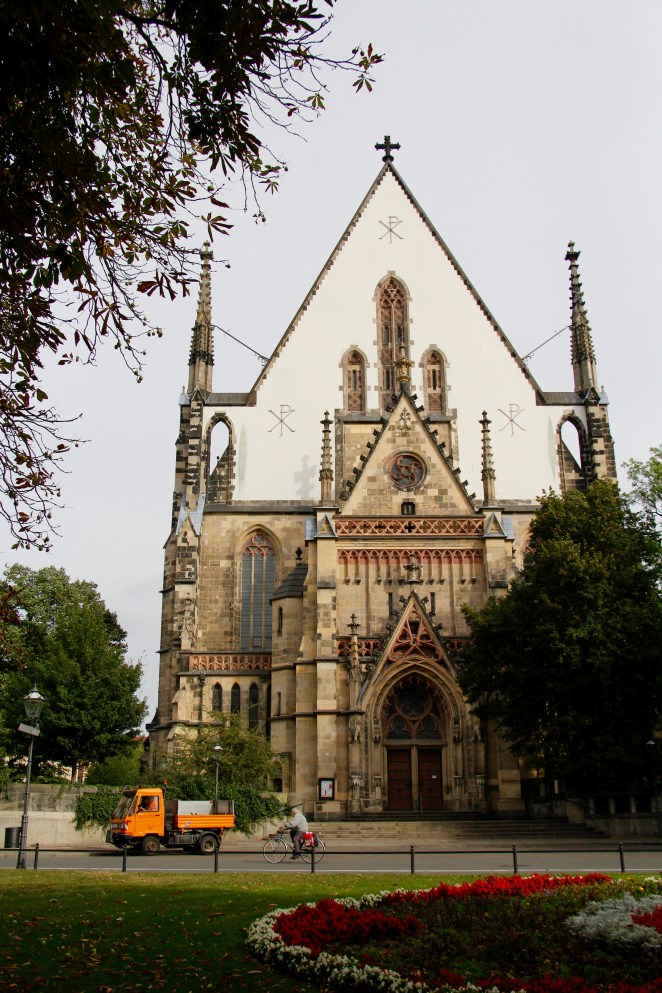
Today we took a day trip to Leipzig.  I was really excited to check this city out because for many years it was the home base of the father of modern music Johann Sebastian Bach.  Bach was the cantor at the Thomaskirche (St. Thomas Church) and is buried in the floor there.  Leipzig is also the hometown of Felix Mendelssohn (meh) and an easy 1 hour train ride from Dresden on the ICE train (express train).  We got in to Leipzig and it was cloudy and blustery – definitely started feeling like autumn.  Once we got on the correct tram, we headed into the old city, and I’m sad to say it lacks the easygoing character of Dresden and the cute factor of some of the other cities we visited.  We went right away to the Thomaskirche because I was REALLY excited to see that Bach stuff.

_mg_7758_mg_7762

_mg_7766

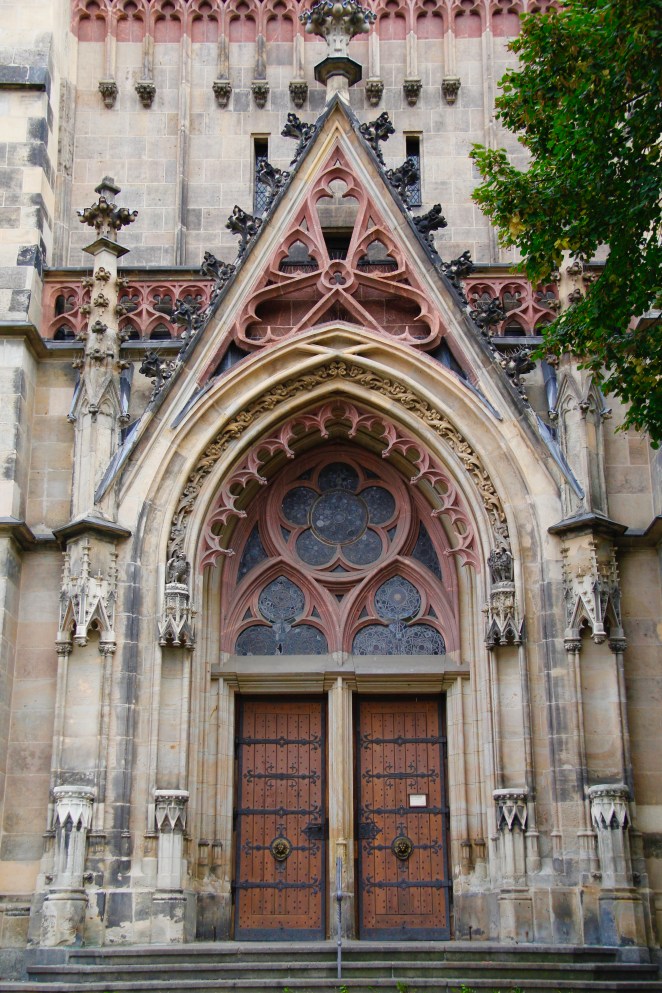
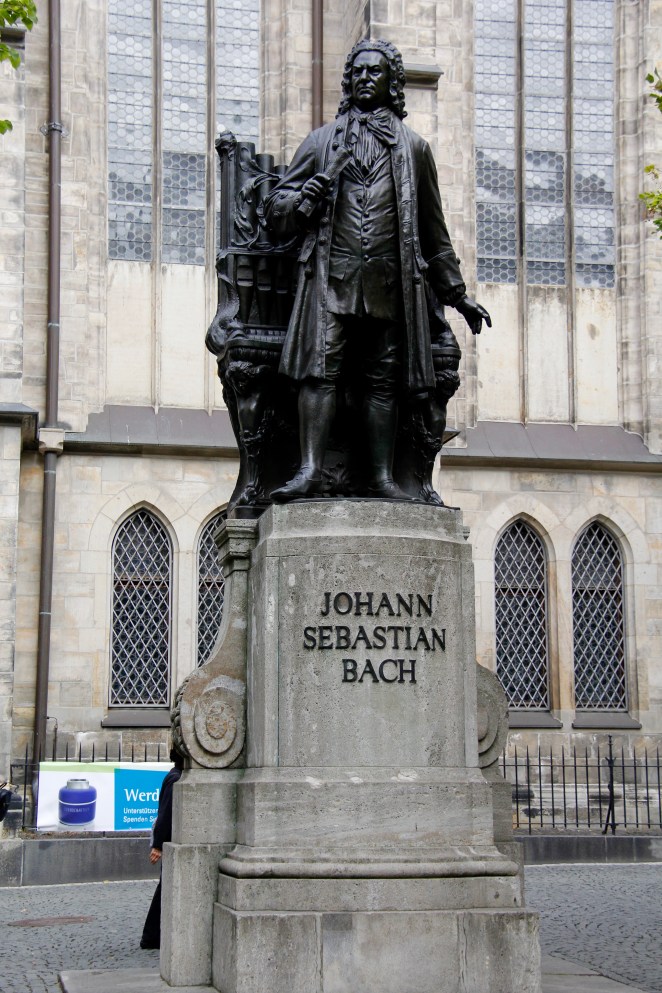
From the outside, the Thomaskirche is quite different from a lot of the churches and cathedrals we’ve already seen, probably because it’s Lutheran.  We turned the corner and there he was, JS Bach in front of his favourite instrument (pipe organ) and roll of music in hand.

_mg_7768_mg_7771

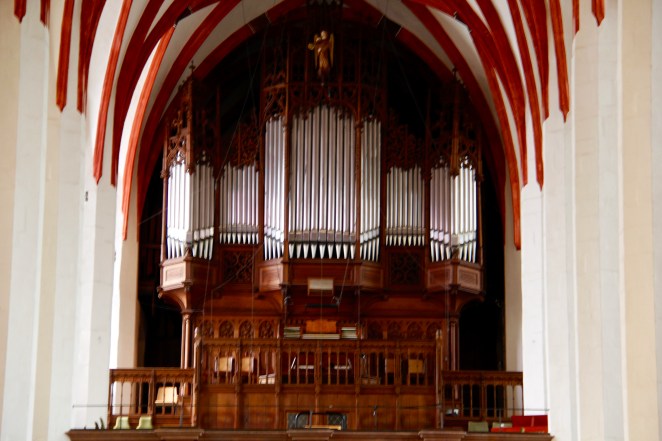
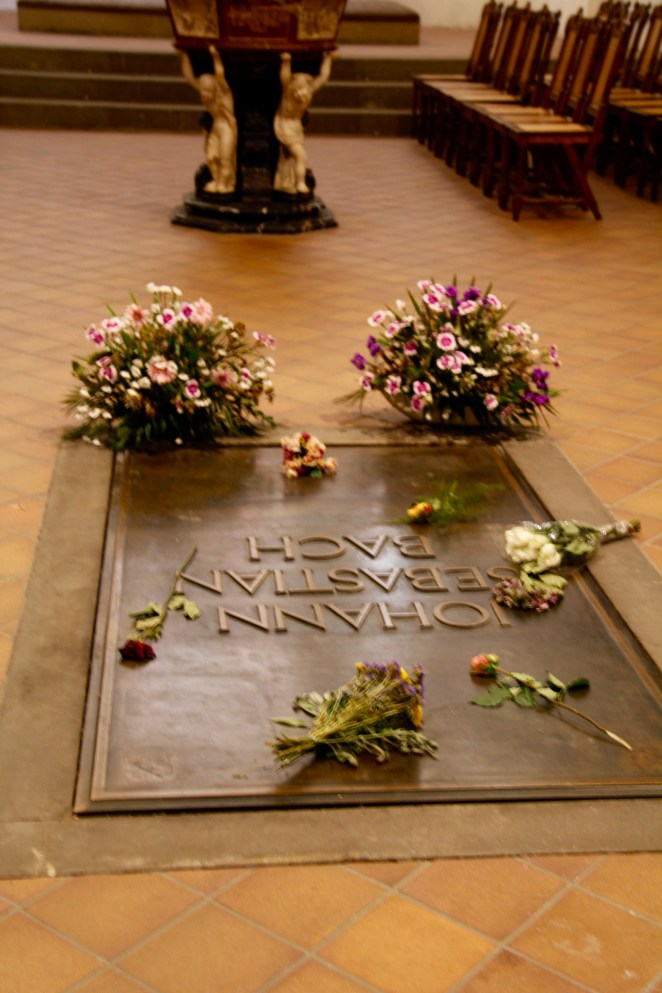
We moved inside the church and gawked at the TWO beautiful organs and quickly made our way to Bach’s grave.  Turns out, it may or may not be Bach’s actual remains – because JS wasn’t super popular in his actual day, he was buried in a modest graveyard.  When people discovered that he was actually a musical genius, they dug up what they think was his remains and re-buried them in the floor of this church.

_mg_7777_mg_7781_mg_7784

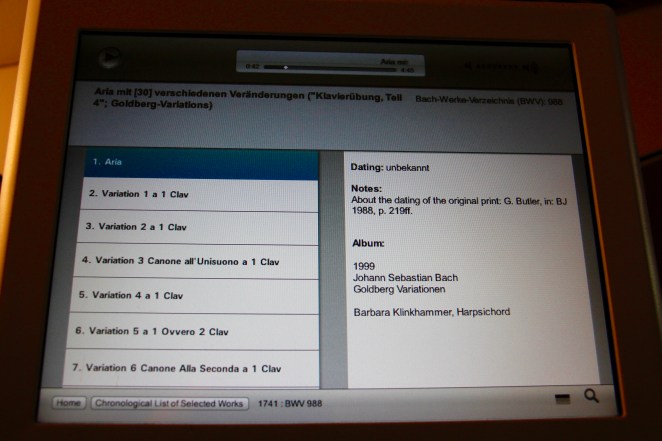
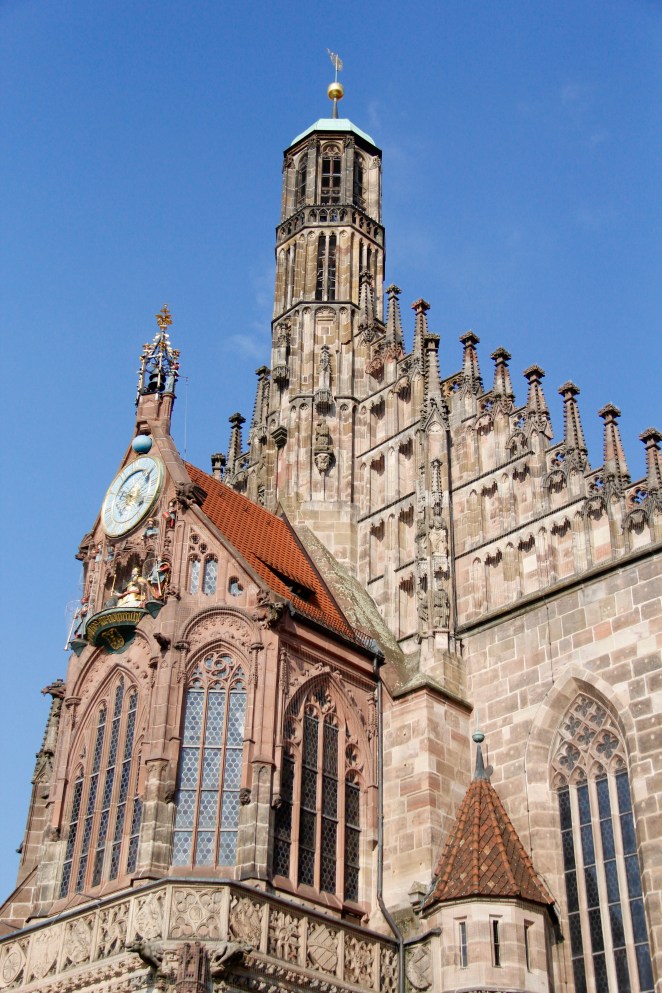
We then moved across the lane to the small but thorough Bach Museum.  Of course I had to buy some Bach goodies in the gift shop and then Ma, Pa and I moved into the “Treasures Room” – ACTUAL handwritten Bach manuscripts!  There was not photography allowed of that room, but had there been I would have taken ALL the photos of those manuscripts.  The museum had a lot of really cool features, including a room that played a Bach piece and you would press different buttons to isolate the different instruments in the piece, a room that had organ pipes suspended from the ceiling and if you clutched one and put your ear up to it, it would play you a Bach piece.  My favourite room was what I can best describe as an opium den for Bach fans: couches with screens and headphones affixed to them.  You put on the headphones and commandeer the touch screen where you can pick exactly what kind of Bach piece you would like to listen to – Sacred organ works, secular cantatas, etc.  We must have stayed there about a half our and all listened to our own streams.  Before we knew it we had walked through the whole thing and it was 1330hrs – time for lunch!
_mg_7786

I wanted to go to a place called Coffe Baum for lunch as it claims to be the oldest coffee bar in Europe still in operation.  We decided to brave the winds and sat outside.  Unfortunately, our server was not only completely disinterested/hated her job, but it’s the first time I have actually felt that a server hates me and everything I stand for.  Like, the kind of hate where she would have vandalized my car in high school or spread shitty gossip about me at the office, not because I’ve been mean to her, but because she’s awful.  Despite her terrible attitude, lunch was very good.
_mg_7788_mg_7791_mg_7793

We decided to call it a day in Leipzig and walked past the Thomaskirche, heading back to the tram station in order to catch the 1631hrs ICE train back to Dresden.

_mg_7797_mg_7802_mg_7808_mg_7812

We got to the train station at 1530hrs, so we went to Starbucks and had a coffee before heading to our platform to catch our train.  1631hrs rolled around and our train hadn’t come yet.  Pa then noticed the sign for our platform stated our train would be 3o minutes late (the stereotype that German trains run on time is a myth).  After the 30 minutes passed and still no train, we checked again – this time the board said 40 minutes late, and we noticed no other ICE trains had entered the station.  At 60 minutes, Pa noticed that the board had taken the entire train info down, so we made the quick decision to run a few platforms over and take the regional train.  The ICE train is a super fast express train and would have taken a little less than an our and the regional train makes all the stops and ended up taking 1 hour 40 minutes.  We got into Dresden at 1945 hours, over 2 hours later than we expected to be.  We headed to a pub for some pan fried potatoes and beers, headed back to the hotel and called it.

_mg_7819

Germany, Day 16: Slow Train A-Comin’

Today we got up early and said goodbye Franconia, hello Saxony.  We were leaving Nuremberg for Dresden, but in order to get there we had to survive a 5 hour train ride (with a transfer in Leipzig).  We had the foresight to reserve seats on the train so we didn’t have to elbow anyone out of the way to get seats together.  After breakfast we taxied to the train station and stopped in at our favourite train station shop Yorma’s to buy some drinks, baked goods and gummies (we’re been really into gummies on this trip since we learned that the gummi bear was invented in Bonn by the guy who created the company Haribo).  The train ride was actually really nice as the scenery was gorgeous – green hills and mountains, slow moving streams and brooks, herons, gardens, church spires, sunflower fields all entertained us and made me think of Goethe and his Romantic poetry about the German countryside.  We transferred trains in Leipzig and had an uneventful 1 hour train the rest of the way to Dresden.  We grabbed a cab that took us to our hotel in the old town, dumped our stuff and headed out to explore prior to beer time/dinner.

Dresden is old/new.  As I’m sure many of your know, Dresden was firebombed and completely devastated by the Allies in 1945 and 25,000 people died.  75% of the old town was destroyed, including an important Lutheran icon to locals, the Frauenkirche (Church of Our Lady).  I read somewhere that it is like the St. Paul’s for Lutherans.  The Church was reduced to rubble and because Dresden was in East Germany during the DDR days, the Church was not rebuilt until recently, construction being completed in 2006.  I was really excited to see this Church and was not disappointed.

_mg_7713_mg_7714_mg_7718_mg_7720

The inside of the church does not allow photos, so I will have to describe it – it’s light and bright, using a lot of lighter woods and white stone with a giant black and gold Baroque alter in the front and centre.  We soon discovered that we arrived in Dresden in the middle of their Bachfest, so if we’re up to it, we may try and catch an organ concert.  Also inside they have on display the original cross from the top of the church.  It fell and was covered up by rubble after the firebombing.  It’s a strong and somber symbol to the tragedy and heartbreak of war, as well as the resilience of a people who endured a horrendous event.  In a show of friendship, the man who forged the new cross for the cathedral in Coventry (a town in England that was flattened by the Luftwaffe) also forged the new cross for the Frauenkirche.

_mg_7725_mg_7728_mg_7731_mg_7732

We did a little more poking around, but as we have a whole day dedicated to exploring Dresden’s old town in a few days, we decided it was time for a sit and a drink.

_mg_7734_mg_7738_mg_7741_mg_7745

Dresden is historically a friendship city with Prague, so there is a lot of Czech and Bohemian influences in the city, including the beer and cuisine.  We found a pub directly beside our hotel (how convenient!) and Pa and I drank some Czech Pilsner, Pa and Ma had some delicious goulash and I had chicken and vegetables.  Soon it was time for coffee, cake, and boots off.

_mg_7749

Germany, Day 15: Words Are All I Have

Today I was very conflicted.

Today we went to the Documentation Centre on the former Nazi rally grounds in Nuremberg.  A lot of the unfinished rally grounds and buildings still stand, including a giant congress complex (where the Documentation Centre is located) and then Zeppelin field where the Nuremberg Rallies were held (google a photo, you’ll know the one I’m talking about).  I hemmed and hawed about bringing my camera with me because I was unsure as to whether was going to/felt comfortable enough to take pictures of this infamous structure.  I ended up bringing my camera just in case, but didn’t end up taking any photos, so I will just describe what’s going on there.

We had taken the tram to the Centre, and it’s hard to miss.  A giant colosseum made of brick and mortar dominates the lake side.  Architects who made the museum decided they wanted to build it inside of the abandoned and damaged centre, but added some jagged metal design pieces, in effect to throw a spear into Speer (the architect who was complicit in using slave labour to build the structure).  The Documentation Centre calls its exhibit “Fascination and Terror” and aims to show how it was that Hitler came to power and how something like the Third Reich can be prevented in the future.  We grabbed our handheld audio guides and headed into the labyrinthian behemoth.

The exhibit is excellent, exhaustive and clinical, starting at the National Socialist party’s beginnings, their rise to power, their horrifying reign and their demise.  The exhibit also documents the rally ground and complex itself and how it was built and the role it and Nuremberg played in that time.

Exiting the exhibit on the metal ramp down to the lobby, a break in the brick work shows a few lengths of railway.  Strewn in and around the railway ties were metal chips that each bore a name, a birthdate, a death date, and which extermination camp they were murdered in.  Heavy, heavy, heavy.

We left the Documentation Centre and headed towards the Zeppelin field.  Halfway between the Centre and the field was a brewhouse and we noticed how hungry and thirsty we were, so we had a beer, tried some of Nuremberg’s own sausages and were back on our way.  The rally grounds at the Zeppelin field have fallen into disrepair – plants are taking the structure back, people have left their garbage and broken bottles on the steps.  You can climb all the way to the pulpit where Hitler would give his speeches, but I felt weird about it and chose not to.  We sat for a moment, looked over the field and roadway and decided it was time to go.

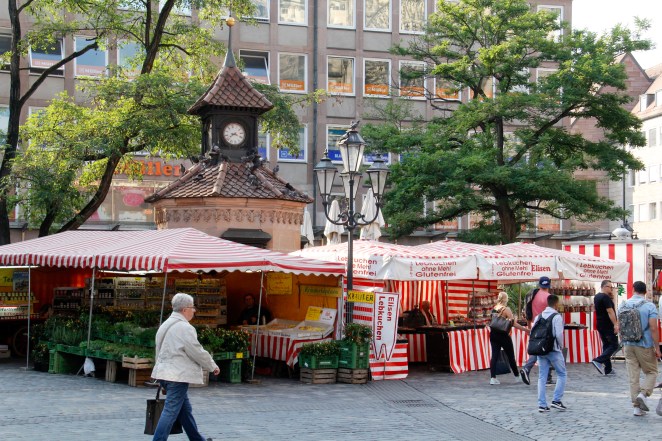
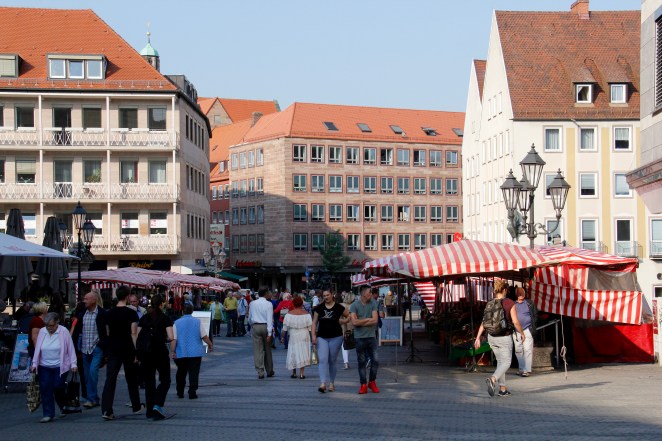
We got back on the tram and headed to Nuremberg’s old town.  I was especially excited about this because Nuremberg’s old town is where the stationery giant Staedtler’s flagship store is.  We wandered along the cobblestones and watched the bustling market vendors and busy sidewalk cafes, definitely the busiest old town we’ve been to so far.

_mg_7658_mg_7659_mg_7662_mg_7666

We found the Staedtler store and I immediately started getting sweaty palms.  Pens, pencils, mechanical pencils, erasers, fountain pens, highlighters, pencil crayons, felts, fancy limited edition ballpoints – all so glorious.  Ma and I picked up some goodies and we were on our way.

_mg_7671_mg_7672_mg_7674

Ma wanted to find a certain church that was at one point a synagogue (there is a Star of David in the floor).  Luckily, giant churches are not hard to miss.

_mg_7680_mg_7681_mg_7683

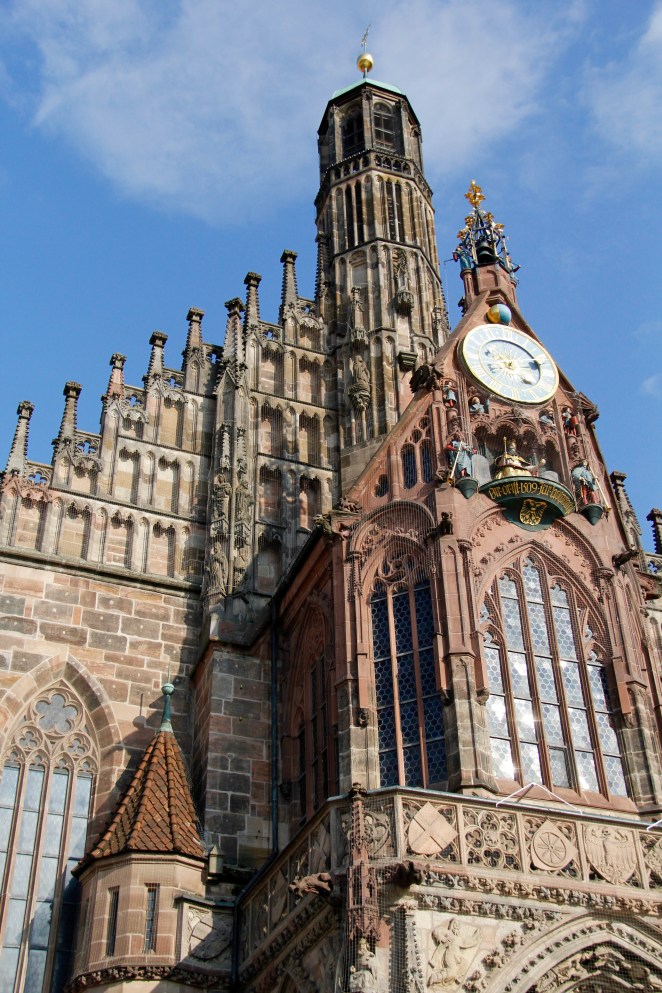
I had mentioned in a previous blog post something about wanting to wander into a giant church and have the organist bust out some Bach and today that came true!  This young man was playing away, fully immersed in fugue, feet moving madly across the pedals.

img_7686

We grabbed some dinner at one of the restaurants in the square and watched the sun go down, reflecting on a profound day.  After some ice cream we headed back to the hotel to pack, on our way to Dresden tomorrow.

_mg_7704

Germany, Day 13/14: Taking Care of Business/You Are So Beautiful

Day 13 was more of administrative day.  We left Augsburg for our next home base in Nuremberg and had a huge bundle of laundry to be done and also needed a break from sightseeing.

This morning we filled up on delicious hotel breakfast and hit the train station for a day trip to the beer capital and UNESCO World Heritage Site of Bamberg.  Bamberg isn’t a super well known city and we decided we wanted to go because it looked cute and Pa and I were interested in trying some of their 9 breweries.  They are also home to ‘Rauchbier’, which is a smoked beer.  We grabbed a cab and got dropped off in the middle of the old town.

_mg_7520_mg_7522_mg_7528_mg_7529

It happens every now and again that I visit a new place and get a good feeling about it.  A really good feeling.  A ‘I could probably just sit in this spot for the rest of my life’ kind of feeling.  I felt that way at the Marine Organ in Zadar and at Big Beach in Ucluelet.  I felt this way about Bamberg.  Bamberg is charming but not just in a ‘this place is so cute!’ kind of way.  It had a movement to it with the river flowing through the centre and the medieval breweries dotting the cityscape.

_mg_7534_mg_7539_mg_7542

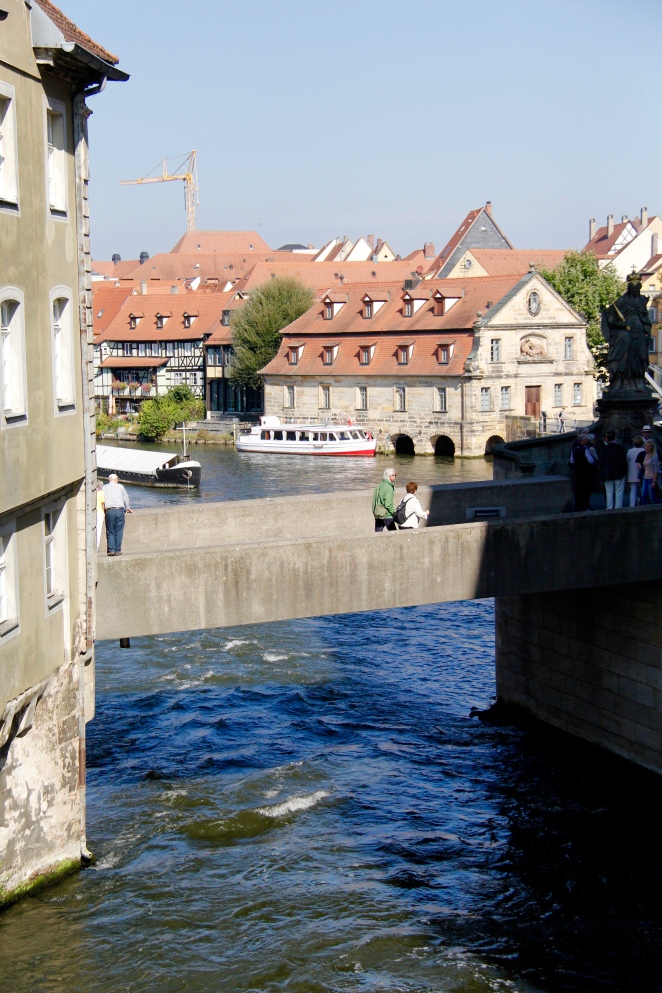
We ambled around and gawked at all the beauty and character, significant lack of tour groups and half timbered buildings seemingly floating on the river.

_mg_7545_mg_7550_mg_7552_mg_7554_mg_7557

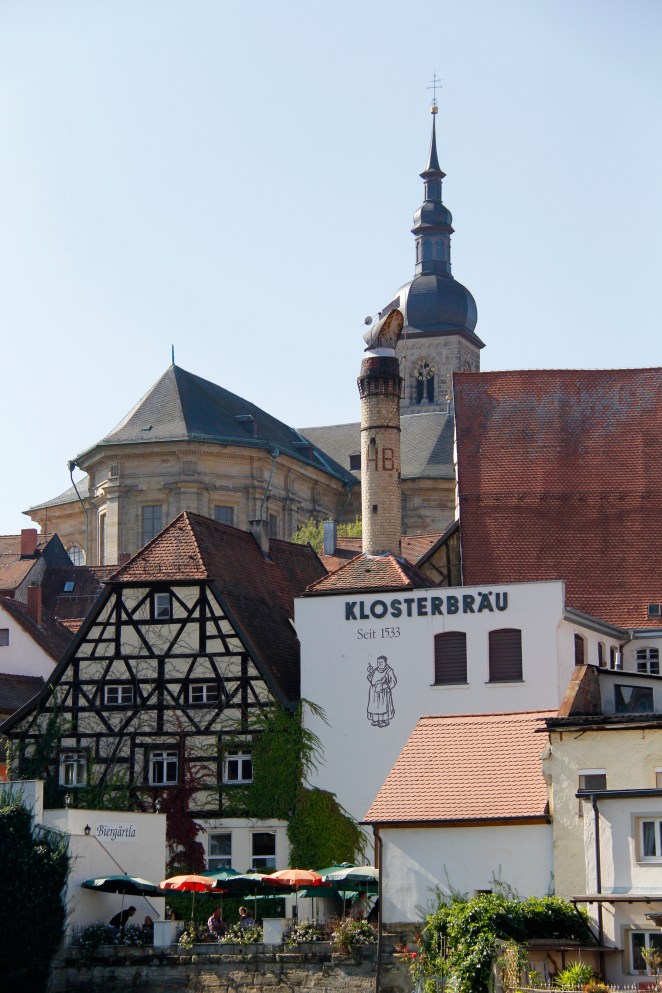
We decided that we wanted to get some beer in our bellies before we tackled some of the interesting churches in the city, so we grabbed a riverside table at the Klosterbrauerei and slowly sipped from the ceramic mugs.

_mg_7561_mg_7565

After settling the bill we hiked up to the Church of Our Lady, a gothic structure with an incredible organ.  I always hope that when I’m visiting old churches and cathedrals the local organist will bust out some Bach fugues while I’m there, but so far no luck.

_mg_7569_mg_7572_mg_7574_mg_7577_mg_7584_mg_7586

We then moved to the adjacent Dom, another gothic behemoth but we found it significantly underwhelming compared to the previous Frauenkirche.

_mg_7588_mg_7592_mg_7596_mg_7602_mg_7603_mg_7607_mg_7609

After our fill of Catholicism, we felt it was time for lunch and time for smoked beer.  We hit up the Schlenkerla brewery as they still use their original oak casks to smoke their beer.  We shared a long table with a quiet Japanese twosome and ordered our meals and drinks.  The Rauchbier was interesting – not smokey like a peaty scotch, but like bacon.  It was like drinking liquid bacon.  Sadly, our meals were not up to par and came with pickled everything, not mentioned on the menu.  We decided that in order to get the taste of pickled things out of our mouth, we would need dessert and more beer.

_mg_7613_mg_7621

The town started to get busier and busier and hotter and hotter, so we found a sunny square with a pretty patio.  Pa and I ordered a flight of beer each as well as a dish of vanilla ice cream and Ma had to test the town’s apple strudel offering – all was delicious and a welcome palette cleanser from lunch.

_mg_7632_mg_7640

As our energy started to wane, we headed back over one of the many bridges, drank in the beautiful scenery and landscape and got back to the train station, again cursing the fact we didn’t spend a few days there.  Anyone thinking about going to Germany, I highly recommend Bamberg.  It shall hold a special place in my heart.

_mg_7645_mg_7648_mg_7652

Germany, Day 12: They Say It’s Your Birthday

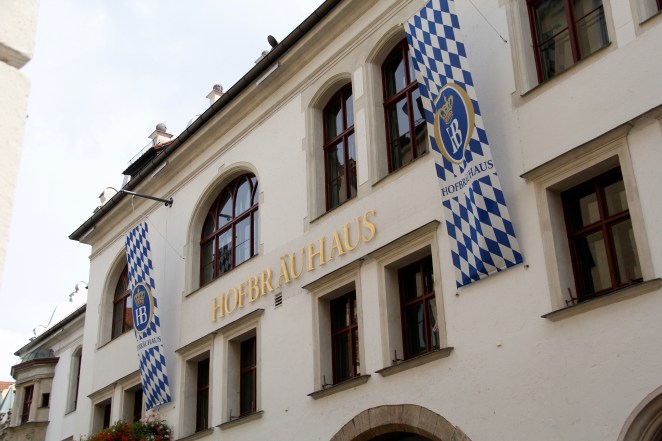
Today was my birthday and I decided that for our last day in Southern Bavaria, I would like to have lunch at the real Hofbrauhaus in Munich’s old town.  Again we commuted into the giant Munich train station and took the subway to the Marienplatz, the heart of Munich’s old town.

_mg_7401_mg_7403_mg_7405_mg_7411_mg_7417

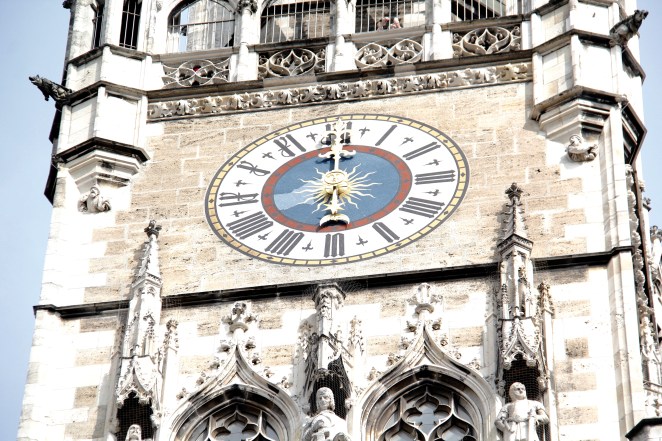
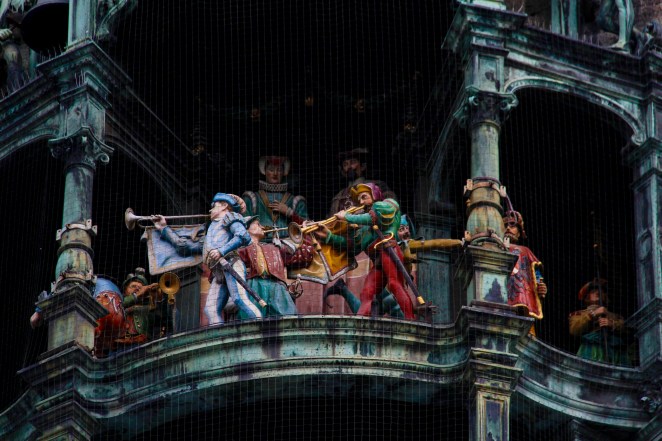
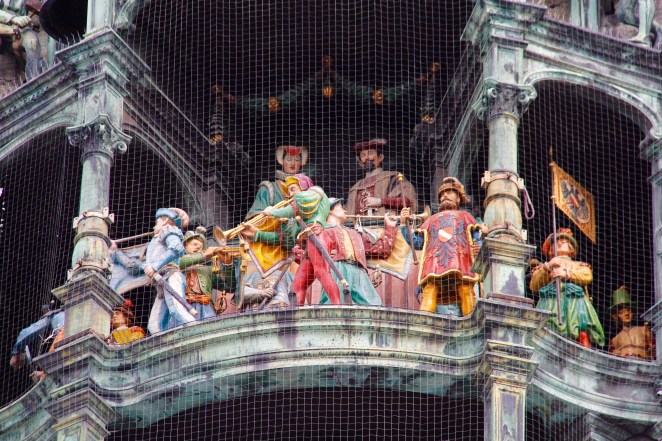
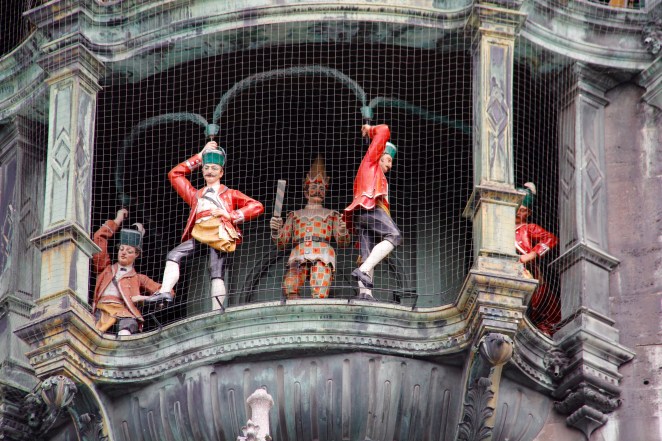
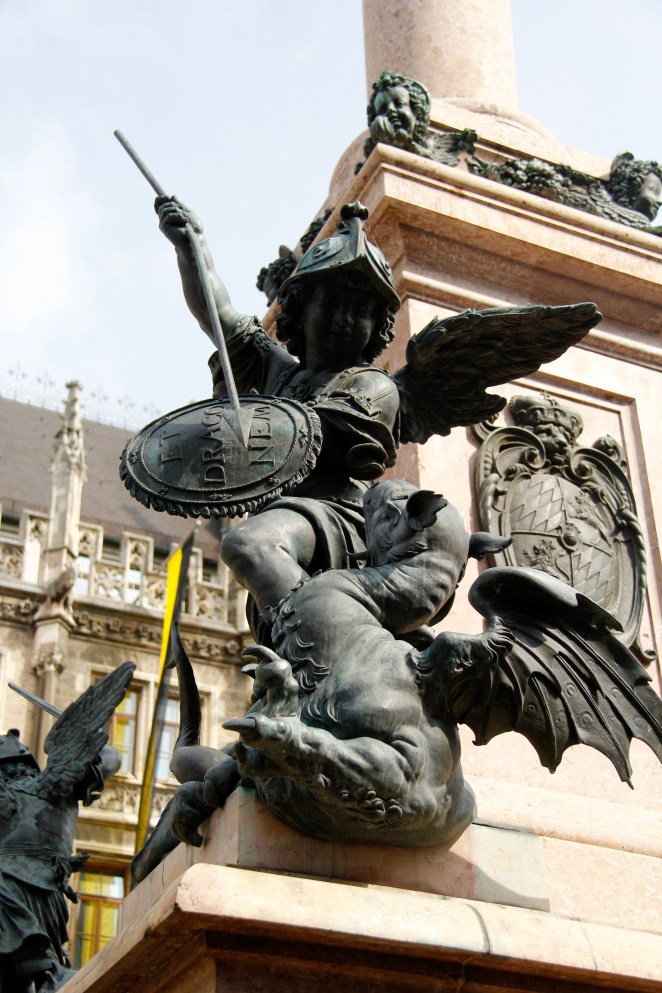
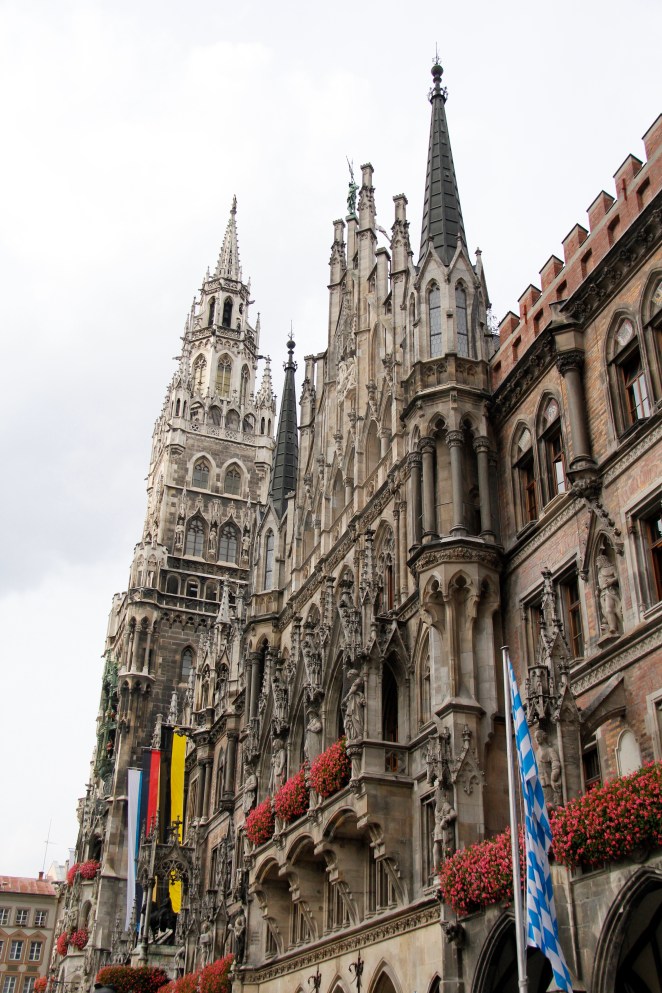
In the middle of the platz is a statue honouring Catholic saints fighting symbols of the evil protestants.  Also in the main tower is a glockenspiel that plays at 1100hrs and 1200hrs every day.  As it was 1155hrs, we decided to take a good spot and watch.

_mg_7420_mg_7421_mg_7423_mg_7427_mg_7430_mg_7433_mg_7436

The glockenspiel shows a royal wedding reception followed by a jousting match with the Bavarian in blue and white defeating the Frenchman in red and white, and finally courtly dancers.  At noon the church bells sounded and the mass of people in the square all craned their necks and eagerly stared at the glockenspiel.  About 3 minutes later the music started and the crowd went silent, only making noise again when the Bavarian out-jousted the Frenchman (hooray!).  After another 7 minutes the show wrapped up and we were on our way.

_mg_7438_mg_7442_mg_7445_mg_7450_mg_7455

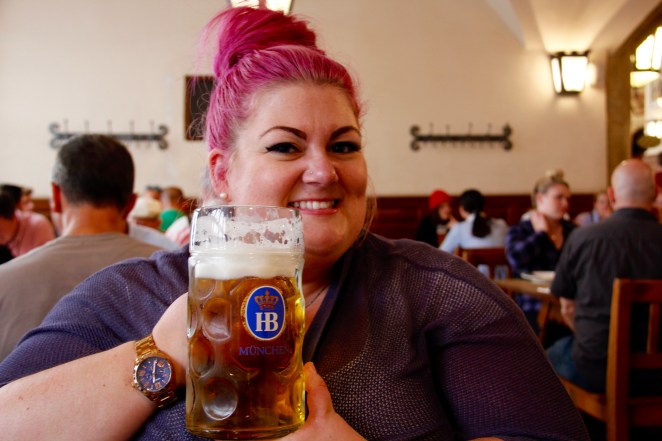
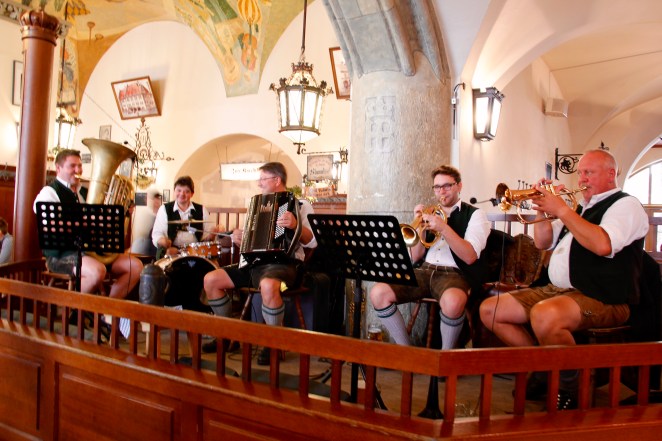
We made our down the more main streets and to the famous Hofbrauhaus.  The house band was blasting their oom pah pah and the crowd was almost as jolly as those at Oktoberfest.  We found a table next to some friendly guys from Bologna, got our mass of beers (Ma ordered a mini mass) and ordered our food.  I don’t know how it’s possible, but the rowdies behind us got kicked out for being too rowdy.  In a beer hall.

_mg_7465_mg_7467_mg_7470_mg_7474_mg_7477_mg_7481_mg_7487_mg_7488_mg_7495

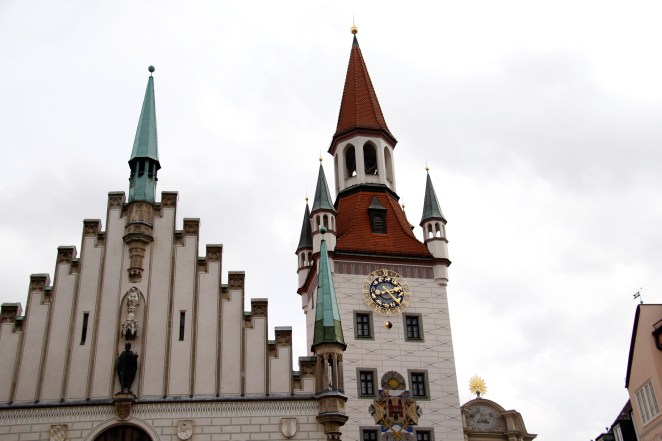
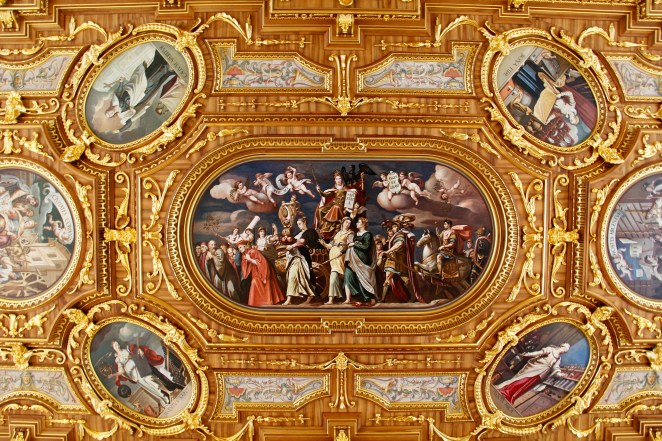
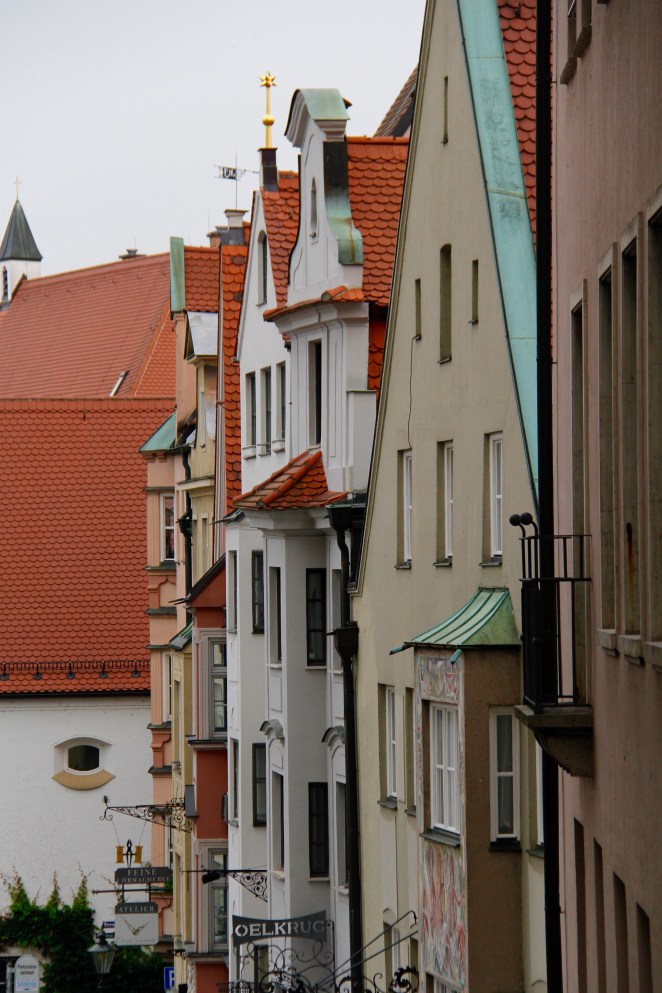
After another walk around the town we decided we were done with Munich and wanted to spend the rest of our day in the town we’d been staying in, Augsburg.  Our tour guide for Neuschwanstein Carlota had told us that Augsburg’s old town was beautiful and was a smaller, less crowded Munich.  Pa had also read that the old city hall houses a beautiful golden room (goldener seal) and wanted to check that out.  We arrived back into Augsburg and headed to the old town.  The old town hall faces an enormous square with a fountain and many shops and patios.  We learned that Augsburg is actually a very affluent city and made its money in the textiles trade back in the day.  It was destroyed in the War but rebuilt with generous donations from the community.  Also, playwright Bertolt Brecht was born here.

We went into the city hall, bought our tickets and headed up to the golden room.

_mg_7502_mg_7507_mg_7511

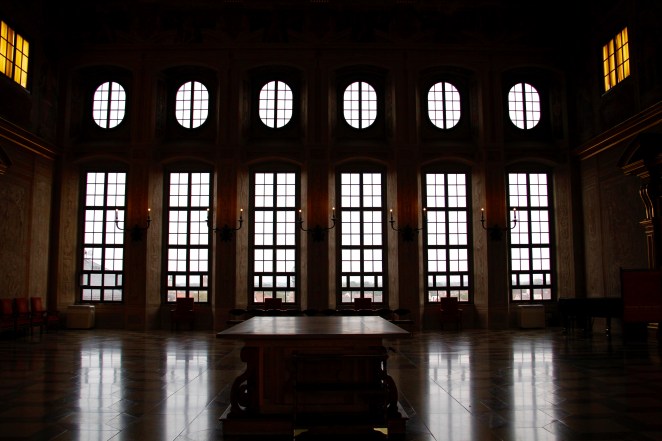
It really is a thing of beauty.  Gold leaf covering the wooden statues and ceiling sculptures, wood parkay flooring and tall windows made it a totally enchanting space.  We read the handout on the history, spent some time just looking around and were on our way.

Ma and Pa wanted to walk around but I just wanted a beer, so I grabbed a table in the square, ordered a beer and watched what was going on around me.  There were several security guards at the square but they didn’t bother anyone.  There were a lot of youths hanging out, minding their business, having a sit and chatting and security didn’t bother them.  Everyone there was just being peaceful, doing their own thing.  Ma and Pa then joined me and we people watched and decided what we would do for my birthday dinner.  Carlota had recommended a popular restaurant in the basement of the old town hall, so we found the Rathskeller and decided to check it out.  We were not disappointed.  Ma and Pa had pork medallions and I had Bavarian sausage, beer and some raspberry schnapps for dessert.  It was a delicious meal in a very cool setting.  It was also surprisingly reasonable – 3 entrees, 3 desserts, 2 beers and a liqueur in a really posh restaurant came to $45 euros.  We wandered back to our hotel, peaking into the many fine fashion shops and ogled the beautiful boots, bags, watches and hats, then turned in for the night.

_mg_7514

Germany, Day 11: Some Day My Prince Will Come

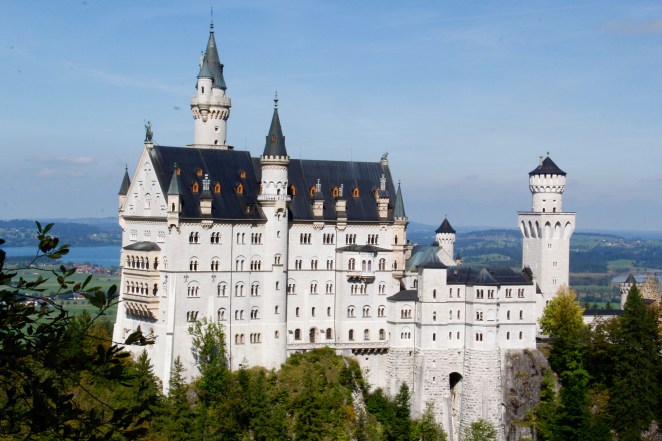
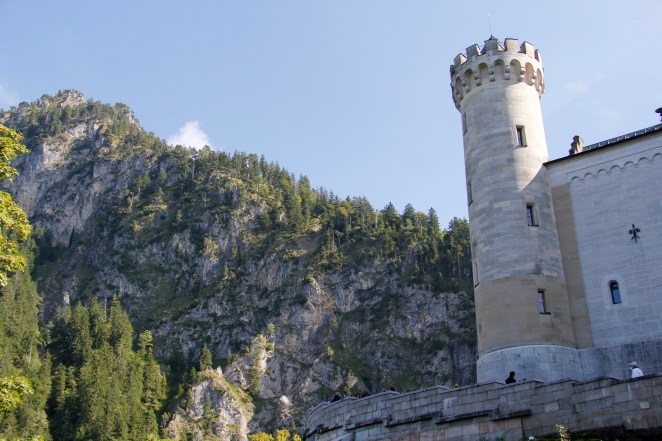
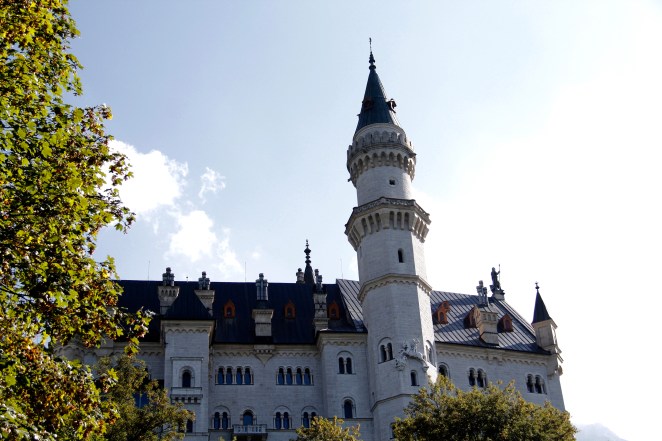
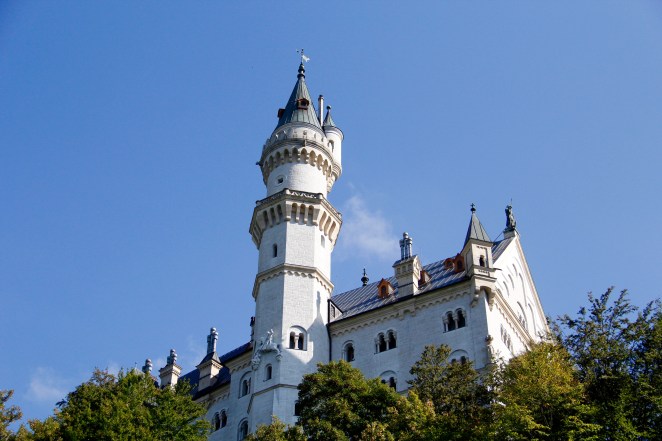
This morning we got up bright and early as we had to get to Munich by 0900hrs.  We had arranged for a tour of possibly Germany’s most famous landmark: Neuschwanstein Castle.  Neuschwanstein, although it looks medieval, was actually built in the mid 1800s by ‘mad’ King Ludwig II (although he probably wasn’t mad…more on that later).  Because it is such an icon it attracts an enormous amount of visitors and can only allow a certain amount of people in per day, and had read that you can book a tour with a ‘jump the queue’ ticket so you are guaranteed to get in.  In Vancouver we booked a tour with Viator and were ready to see this structure at the station at 0900hrs.

Our tour group was about 20 of us – an Australian family, several Americans from North Carolina and Arizona, a Malaysian and a Chinese couple, us being the lone Canadians.  We were met by our tour guide, an effervescent Spaniard named Carlota dressed in a tyrollean hat and lederhosen.  Carlota counted us all to make sure we were all present and accounted for and shepherded us onto the train for our 2 hour train ride towards the border town of Fussen.  While on the train Carlota told us the story of Ludwig II and his dysfunctional family of absentee father Maximillian I and schizophrenic brother Otto.  Ludwig II’s family were not ‘actual’ royalty, his grandfather Ludwig I having been pronounced King of Bavaria by Napoleon.  Ludwig II first heard an opera by Richard Wagner at around the age of ten and soon became enamoured with Wagner and German mythology.  Ludwig II and Wagner became pen pals and fast friends, a friendship lasting a good amount of time (until Wagner stole a prominent politician’s wife and then things got awkward).

Anyhow, the countryside went from relatively flat to the rolling green hills and craggy peaks of the pre-Alps.  Beautiful houses with geranium-lined balconies became the norm with clean little towns and ambling brooks dotting the land.  We all hopped off the train at Fussen and boarded a bus into the city of Schwangau where we disembarked amidst a sea of trinket shops and bratwurst stands.  We also caught our first glance of the castle:

_mg_7309

We were given a chance to have some lunch while Carlota checked the bus queue to see if we could all make it on the bus up to the castle.  We sat and watched the other tour groups while thoroughly enjoying a bratwurst on a bun and currywurst.  When time was up, we all wandered towards another bus stop so the bus could take us up the mountain, rather than taking the 40 minute walk up.

The bus dropped us off right by the Mariensbrucke – a rickety bridge overstuffed with tourists that offers the best view of the castle.  Unfortunately, you have to keep your elbows out and be a little rude to get a good spot for photos.  Getting off the bridge was also a bit of a battle.

_mg_7317_mg_7320

We left the bridge en masse and hiked further up the side of the mountain to a lookout, offering beautiful views of the Alpsee and Ludwig’s childhood castle, Hohenschwangau.

_mg_7330_mg_7333

We hiked up more and finally approached the castle proper.  There was no photography allowed on the inside of the castle, which was unfortunately as it really was magnificent.  As previously mentioned Ludwig II was a huge fan of Wagner operas and German mythology so each room had a different theme from Wagner’s operas, such as Tannhauser, Parsifal and Tristan und Isolde.  Ludwig also loved swans, and one of his salons is adorned with over 100 swan depictions – in the woodwork, wallpaper, flooring.

_mg_7336_mg_7340_mg_7344_mg_7346_mg_7348_mg_7350_mg_7357

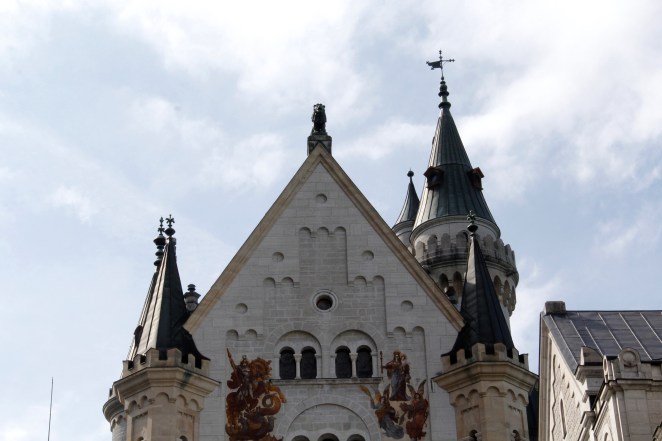
Ludwig wasn’t crazy about the political side of being king, which he became at the age of 18.  He was more interested in technology, arts and culture.  He was obsessed with the idea of flight and of innovation, as well as design, having a hand in and inspecting almost every aspect of his castle and having insurance for every labourer working on the building.  His castle took 20 years to build and is not actually finished – there was to be another tower built.   Sadly he only lived in it for 2 weeks as politicians and other nobles thought that he was a liability and wanted to get rid of him as quickly as possible, so he was arrested in his chapel and declared insane.  Once declared insane he could no longer rule and moved to another family residence where he soon died at age 41 under very mysterious circumstances – Ludwig and his psychiatrist went for a walk around the lake sans bodyguards and were later both found dead in two feet of water, no water in their lungs.

_mg_7358_mg_7363

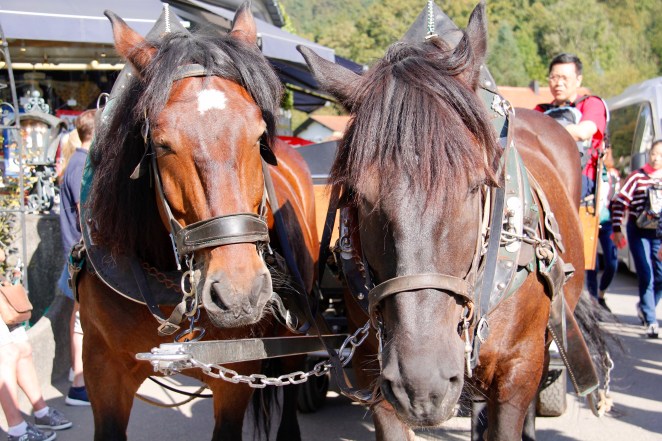
The 35 minute long tour ended and our tour group was given about 1 1/2 hours to make it back down to the bus stop.  We decided the most romantic way was by horse-drawn carriage.

_mg_7365_mg_7376

Once back at the bottom of the mountain we had a sit and Argie pulled out some chocolate, so we once again people watched and waited for the bus and then the train.  The train ride was actually a bit of a highlight as the countryside is so rich and beautiful.

_mg_7395_mg_7399

We finally returned to Augsburg around 2000hrs.  The whole day had been rather exhausting – essentially 11 hours for a 35 minute tour.  The castle was definitely a sight to see and I’m glad I went, but it leaves me with the same feelings I had for the Eiffel Tower – glad I visited and went inside, but I shan’t be going back.

Germany, Day 10: Oom Pah Pah

With heavy hearts we packed our bags, ate a fantastic breakfast and caught a cab out of Rothenburg, cursing our thorough but not thorough enough trip planning for the singular night in that magical little hamlet.

We got on the train and headed south-east to the suburban Bavarian town of Augsburg.  Augsburg is about a 45 minute train ride outside of Munich, and we decided to stay there rather than in Munich proper because the largest outdoor festival in the world is happening – Oktoberfest.  Going to Oktoberfest was a dilemma for me – I love beer and fun, but I hate crowds and getting jostled around.  One of my managers at work had told me that Oktoberfest isn’t fun and it’s mostly drunk people peeing in the streets.  Ma and Pa weren’t convinced either, but Argie piped up and said she just wanted to see what it was like, maybe have a beer and then we could leave.  We decided that this wasn’t an opportunity that presented itself every day, so we checked into our hotel in Augsburg, dropped our things off and headed into Munich.  We had a little chuckle when we boarded the train as we saw a group of young men in lederhosen, gingham shirts and tyrollean hats – cute!

First things first – the Munich train station is an incredible piece of engineering and algorithms.  36 tracks and trains, shops, restaurants, tour companies, all busy and bustling.  Also, like a lot of the train stations we’ve been to, they are all very clean and don’t smell like pee and armpit, unlike some of the skytrain stations in Vancouver…

Anyhow, we got off the train at the Munich train station and discovered that group of men in lederhosen were in the majority and us in our civvies were in the minority.  Most men were in some sort of suede shorts/gingham shirt combo and most women were in dirndls, every single one of them looking beautiful and rosy-cheeked.  We followed the crowds of traditional dress and marked sidewalks to the fairgrounds, had our bags checked by the tiers of security and polizei and entered into a joyous, beer-soaked world where people from all over the globe convene to eat, drink and be merry:

_mg_7134_mg_7142_mg_7144_mg_7150

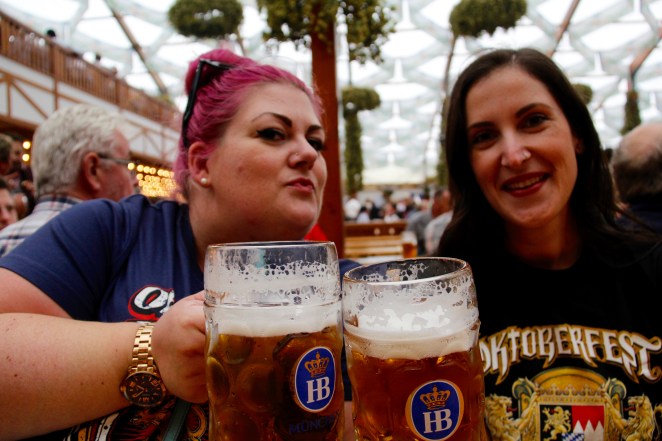
14 beer tents, all holding about 7000 and bursting at the seams with merriment!  Argie and I decided we wanted to try the Hofbrauhaus tent for a mass (1 litre) of beer, listen to the band and maybe have a pretzel as it is arguably the most famous brauhaus in Bayern.  Ma and Pa followed suit and as we entered the tent, a huge smile spread across our faces – the oom pah pah of the band hit our ears and the yeasty smell of beer and roasted chicken and pork knuckle hit our senses.  One of the waitress frauleins showed us a space at one of the long tables where we quickly made friends with some of our neighbours.  Argie and I quickly became very popular with some of the more inebriated men.

_mg_7159_mg_7163_mg_7166

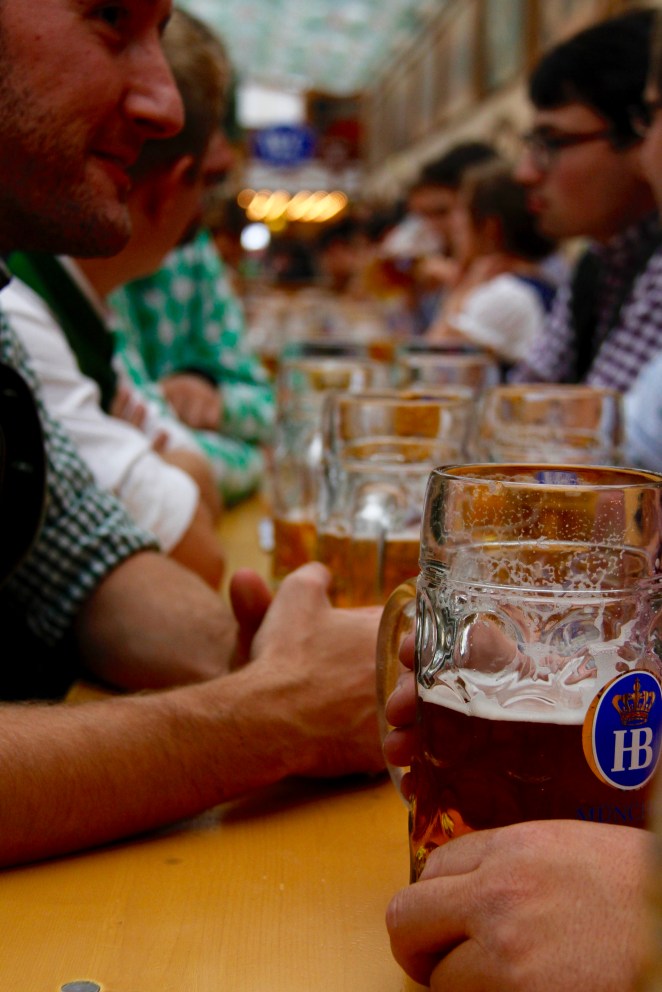
We got our mass of beer (well, beer for me and Pa, radlers for Argie and Ma), ordered some food and just enjoyed all of the commotion around us – people trying to chug their beer, people swaying and ‘prost’-ing every time the band played “Ein Prosit” (apparently they are to play it every 15 minutes to keep people drinking).

_mg_7173_mg_7186_mg_7193

Argie and I made friends with two of our table mates, Vroni from Hamburg and Maximillian from Dresden.  They are both flight attendants with Lufthansa and Argie and I hope we get to fly with them some day.

_mg_7202

It seemed to us that at Oktoberfest everyone is your friend and much more affectionate than when you are sober.  These Dutch gents insisted I come visit the Netherlands soon.

_mg_7232_mg_7236_mg_7247_mg_7252_mg_7257

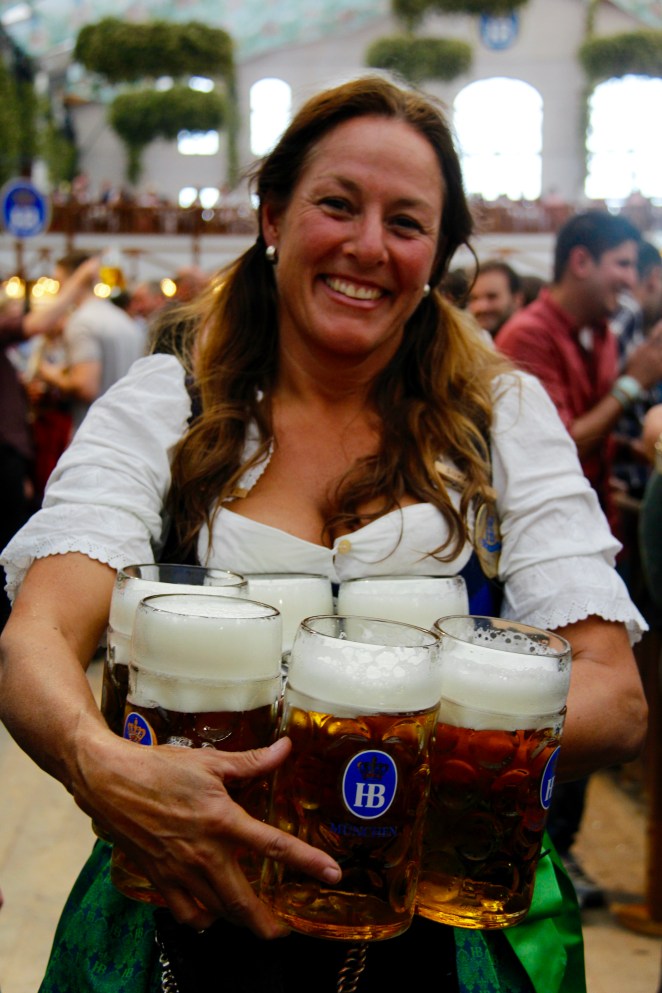
I don’t know how the staff kept it together.  These women must have the strongest forearms in the world and the sharpest memories (and I would imagine, the most bruised butt cheeks after these two weeks).

_mg_7260_mg_7263_mg_7269

We finished our meals and beer and decided it was time to move on to explore the other parts of the fairgrounds, and Ma heard whispers of a dessert tent and wanted to ferret that out.

_mg_7272_mg_7276_mg_7278_mg_7287_mg_7300

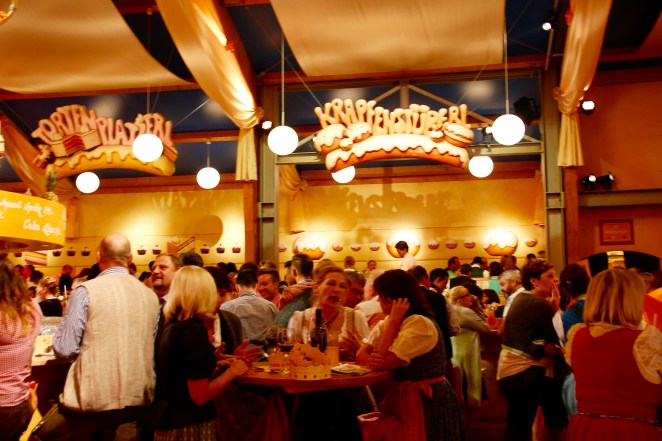
We found the fabled dessert tent and ordered coffee and cake and enjoyed the band, this time instead of playing traditional German music, played the hits including Queen and Suzie Quattro.

_mg_7304

We finished our strudels and coffee and decided it was probably time to head towards the train station as we had surprisingly been at the fest for 5 1/2 hours and had an early morning the next day.  As we were leaving we noticed the festival had gotten quite a bit busier and drunker, walking behind a poor over-served soul flanked by lederhosen-clad friends, giving him a good drag to the train station.

Germany, Day 9: My Little Town

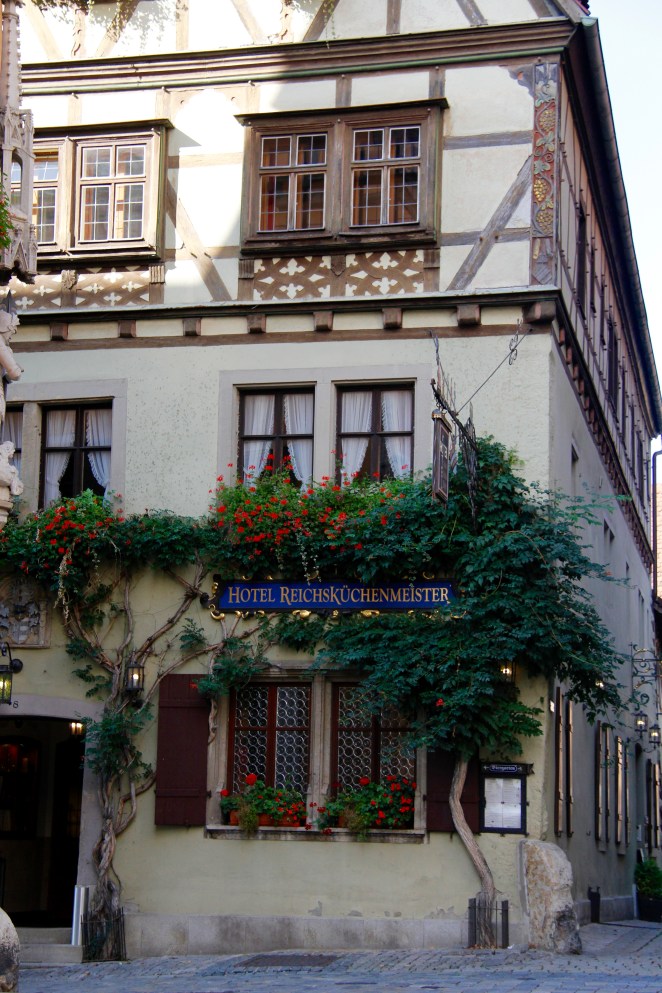
Today we got up, ate our final breakfast at the Goldener Falke and said goodbye to Heidelberg, hopping the train (well, series of 4 trains) to the tiny and allegedly adorable town of Rothenburg ob der Tauber.  Rothenburg is on every single one of those “Most Adorable Villages you MUST VISIT!!” lists and is apparently the inspiration behind Geppetto and Pinocchio’s home town in the Walt Disney animated feature Pinocchio.  We pulled into town on a small milk train, stepped into a cab and also into the past.

_mg_7015_mg_7019_mg_7021_mg_7029

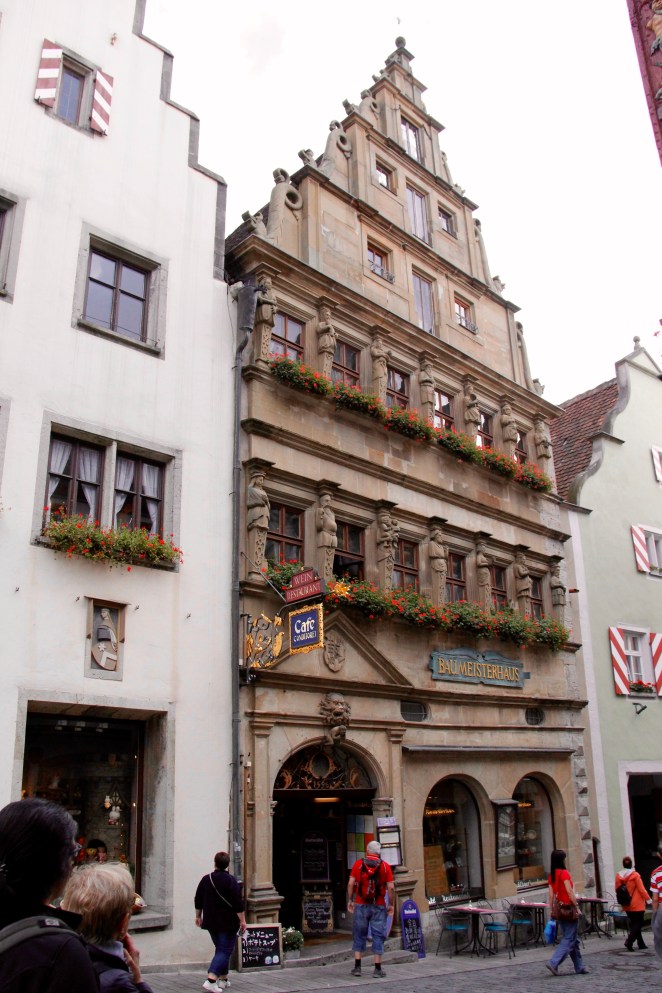
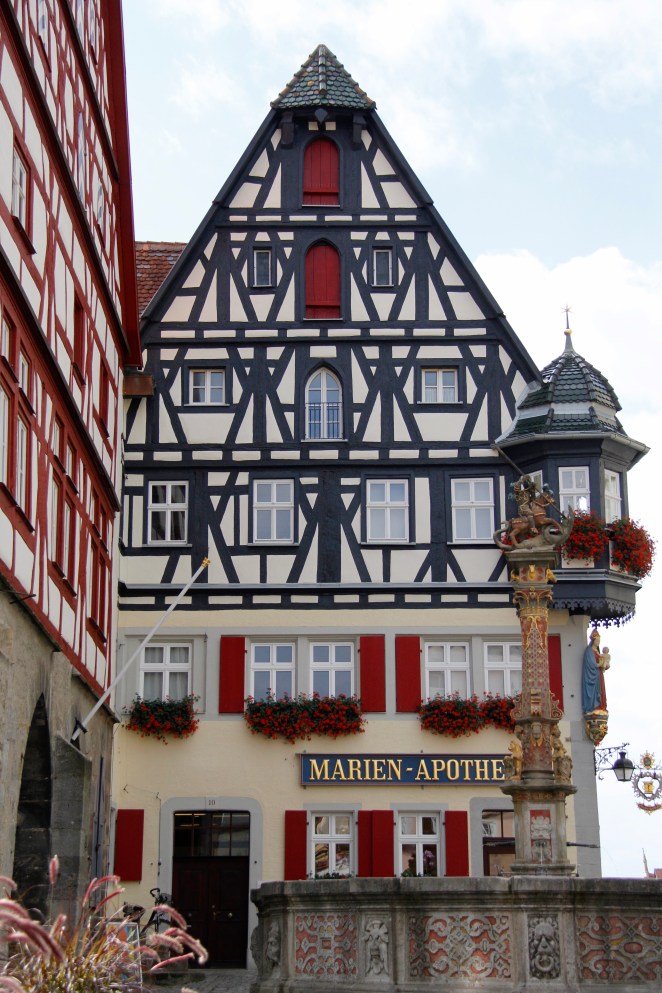
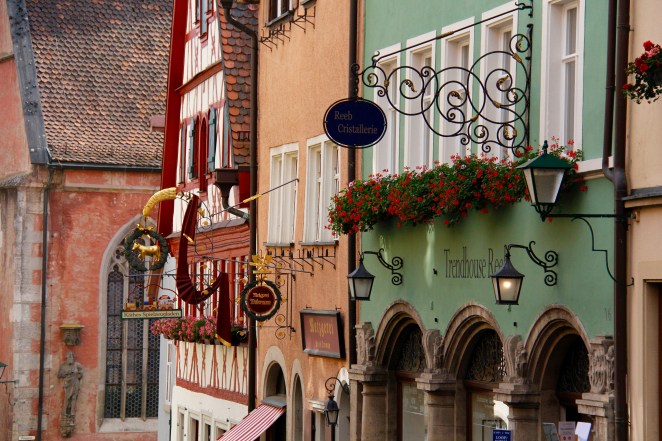
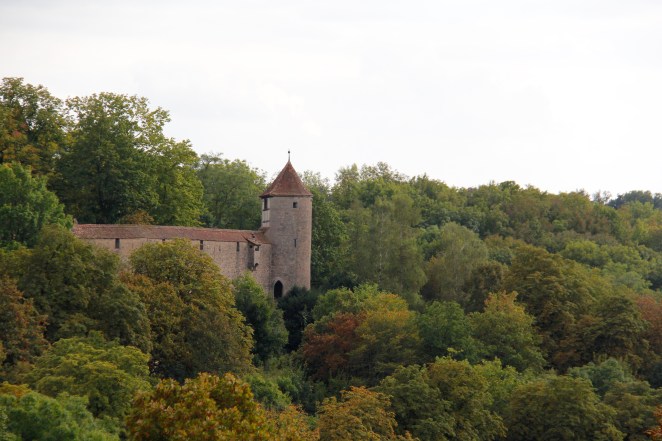
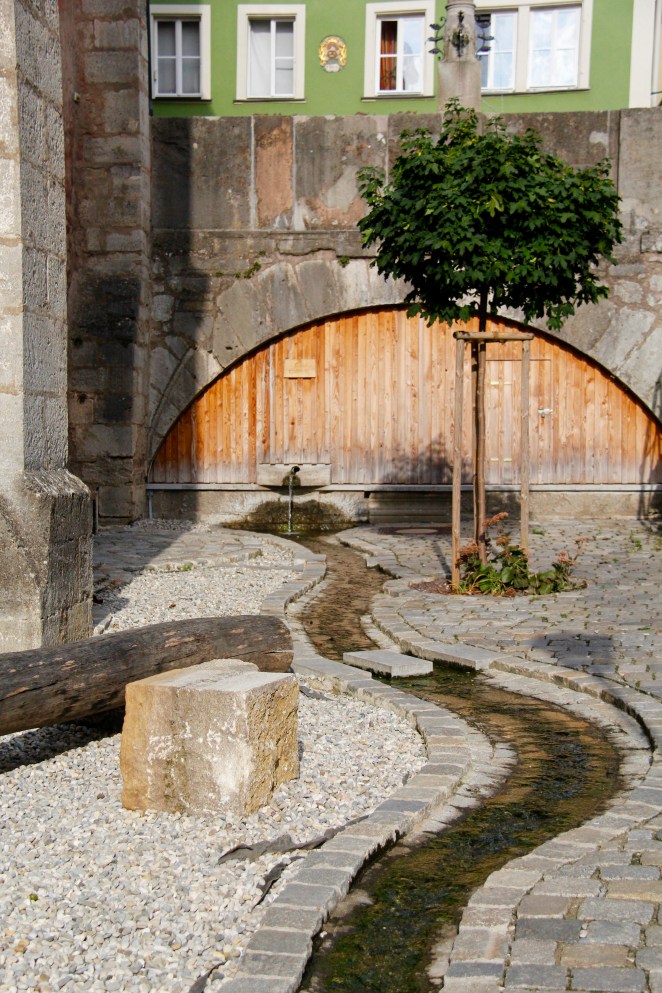
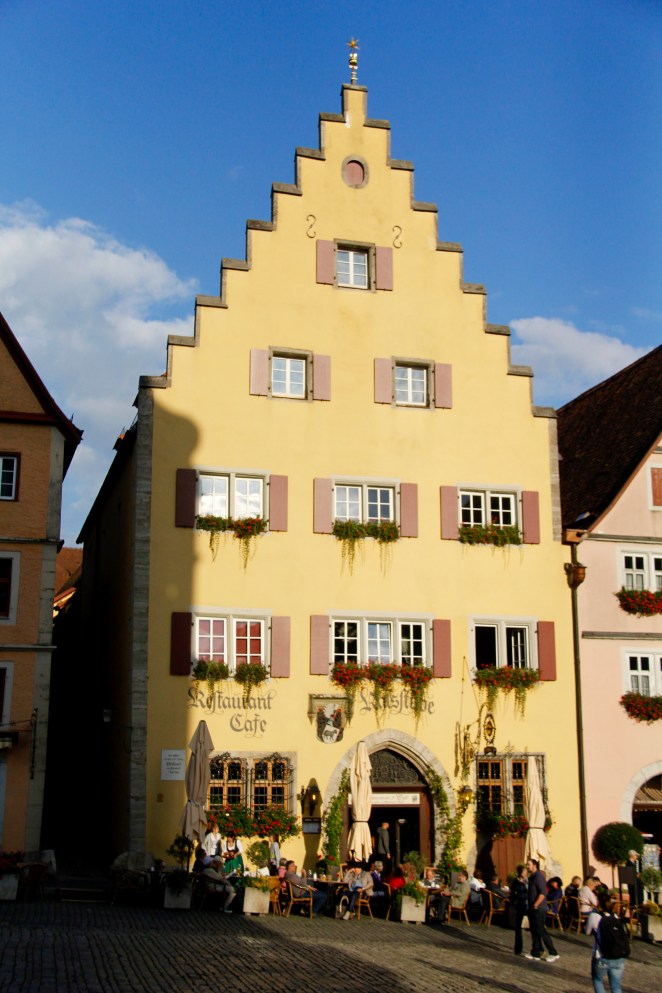
Rothenburg is even more adorable than we expected it to be.  Cute laneways, half-timbered houses, bakeries, Christmas shops, cobblestones, town squares, medieval walls and much more were preserved in this decadent slice of German heaven.

_mg_7034_mg_7038_mg_7039_mg_7041_mg_7047_mg_7052

We checked into our little Bed and Breakfast (I think it was at one point a monastery) and headed into town to soak in all of the glory.

_mg_7054_mg_7056_mg_7060

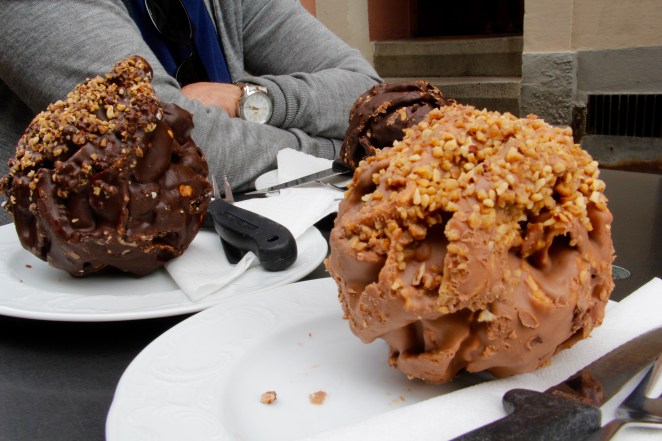
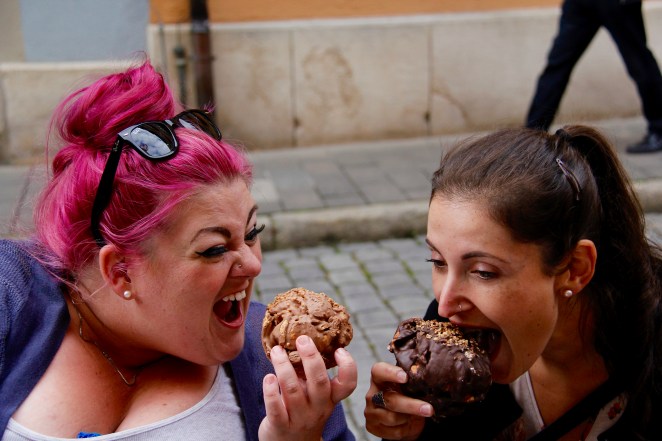
One regional delicacy that I insisted that we try are a sweet snack called “schneeballs” (snowballs).  They were originally made from leftover pastry dough in an effort to not let any of it go to waste, and there are dozens of different flavours.  The town is littered with bakeries that sell this little apple-sized delights, so we found one with a nice patio and picked our flavours – I chose caramel, Pa and Argie had rum-marzipan and Ma had dark chocolate.  They were definitely not what we had expected – we were all under the assumption that they would be soft and sweet, like a giant Timbit, but they were crunchy and crumbly, a lot like a fortune cookie.  They were also extremely filling!

_mg_7064_mg_7073

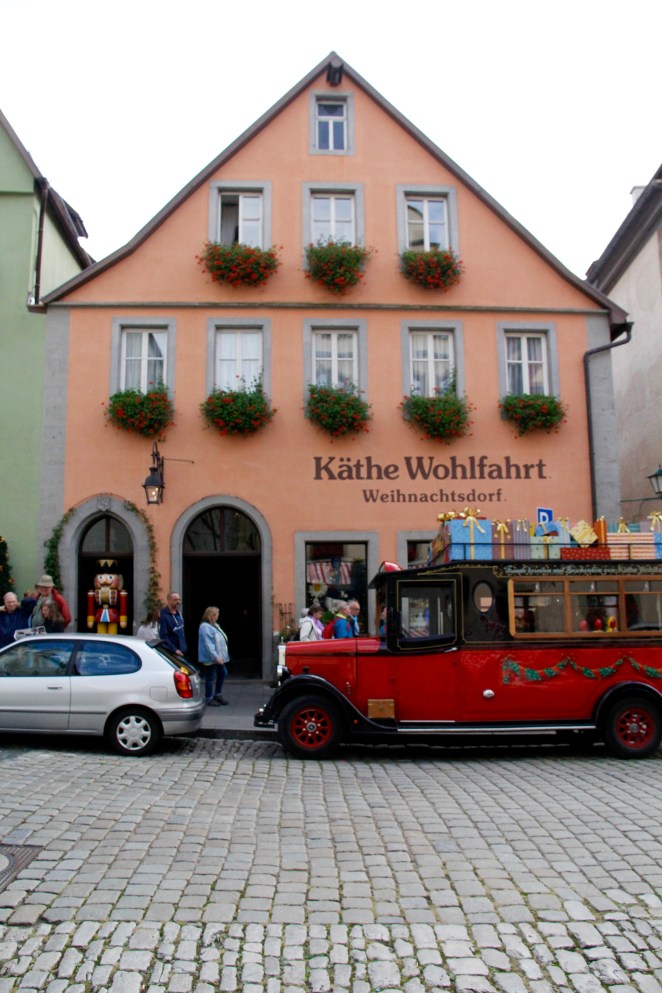
After our schneeball experience we decided to amble around, explore some Christmas shops (nutcrackers, steins, decorations, woodart!) and just enjoy how sweet this little town is.

_mg_7077_mg_7081_mg_7084_mg_7085_mg_7089_mg_7091_mg_7105_mg_7109

After dodging other tourists to take photos of the most famous and probably most photographed intersection in the city, we headed for the town wall.

_mg_7114_mg_7120_mg_7122

Ma and Pa decided that they wanted to walk the town wall, but Argie and I opted for something a lot more sinister in this adorable town – The Medieval Crime and Punishment Museum.

_mg_7124

We walked past the stocks and into a building with an arrow pointing into the basement which immediately immerses you into the punishment part of the museum, more specifically torture.  The museum housed hundreds of medieval torture instruments as well as shame fixtures including the aforementioned stocks and shame masks, different masks decorated differently depending on the crime.  The museum also had documents and descriptions of trials and law in the different areas of Germany.

After our fill of torture (and the museum was closing), we met up with Ma and Pa and headed to a recommended inn for dinner where we dined on soup and schnitzel.

_mg_7126_mg_7128

The dinner was delicious and after we settled up, we headed back to our inn to rest up for the night, wondering why we decided only one night in Rothenburg would be sufficient.

_mg_7130

Germany, Day 8: Like A Bridge…

_mg_6971_mg_6975

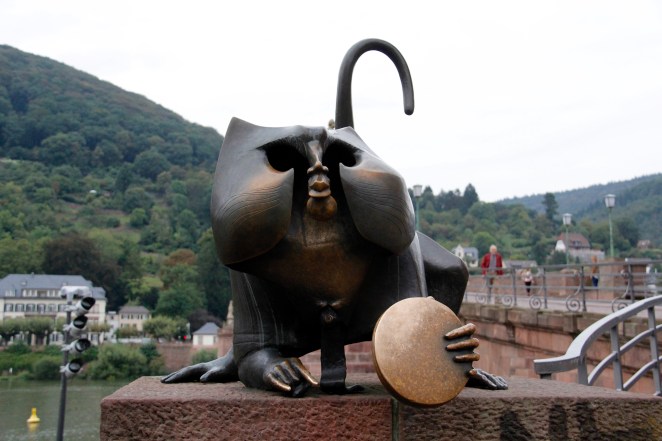
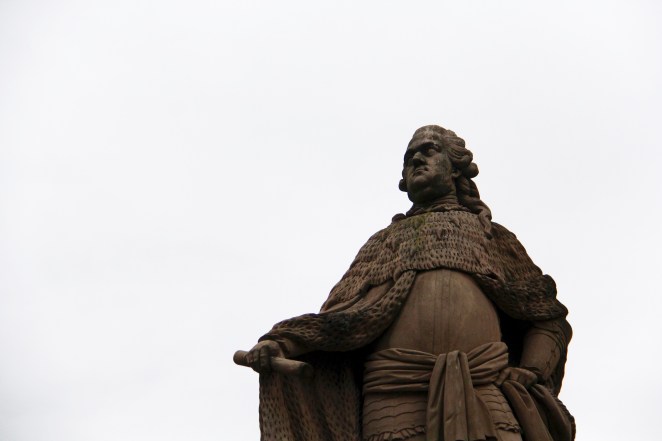
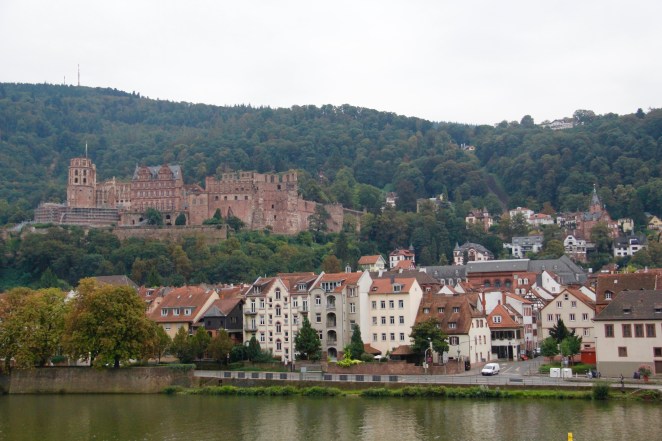
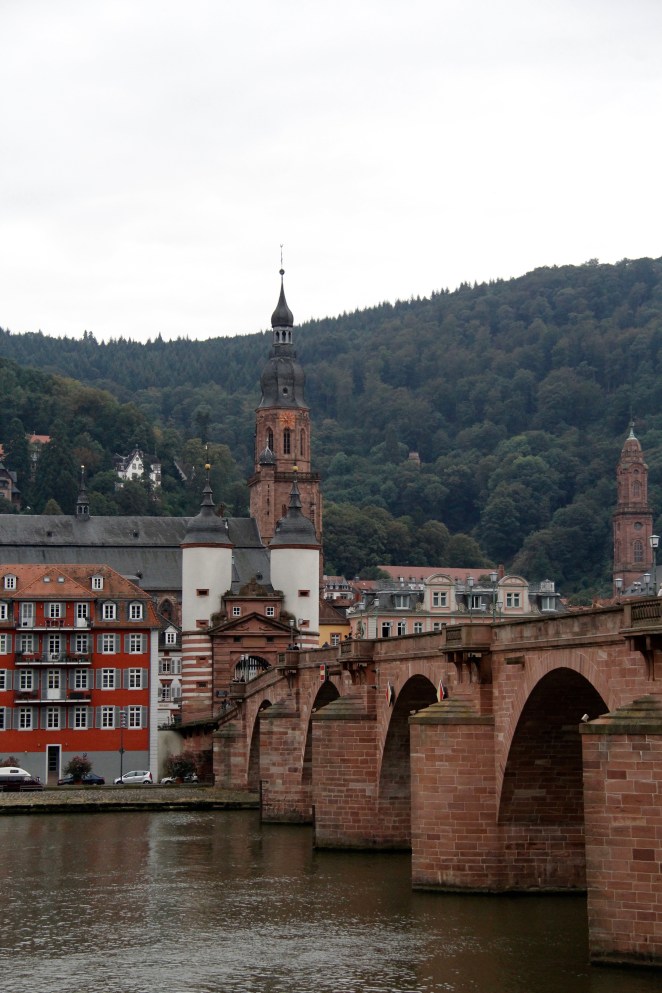
Today was our last full day in Heidelberg, so the the four of us (me, Ma, Pa and Argie) decided to check out the previously undiscovered parts of the old town, starting with the old bridge.  The bridge is old and mostly pedestrian so we had a good chance to amble around and take photos of the city, castle and bridge itself.

_mg_6982_mg_6989_mg_6994_mg_6997_mg_6999_mg_7002

The one end of the bridge houses a love lock fixture at a peaceful riverside point with a beautiful view of the castle.

_mg_7005

Following our time on the bridge, we headed over to check out parts of the old university.  Heidelberg houses one of the oldest universities in Europe and is still a popular institution today.

_mg_7008_mg_7010

The rest of the day was pretty much a day for relaxing.  We learned that gummy bears and gummy candy come from the west part of Germany, so we filled up with gummy bears and gummy Heidelbergs, bought some Christmas ornaments, sampled some Schnapps native to the region, ate some cake, sent off a parcel and lots of postcards, had dinner at a burger joint decorated with birch trees and finally watched the sun set over the square while drinking hot chocolates and cointreau, sad to say goodbye to Heidelberg but excited to find out what’s in store in Rothenburg.