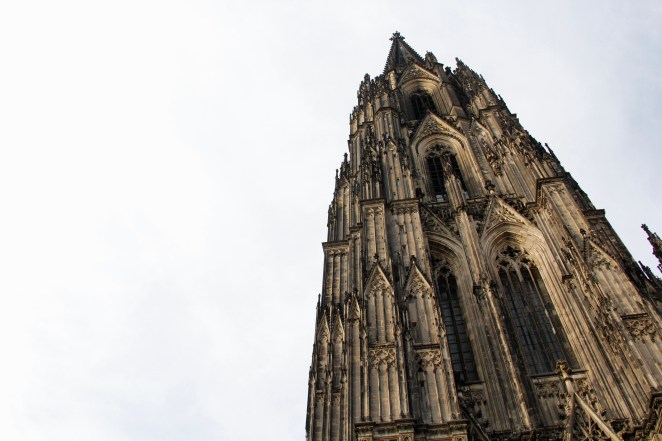
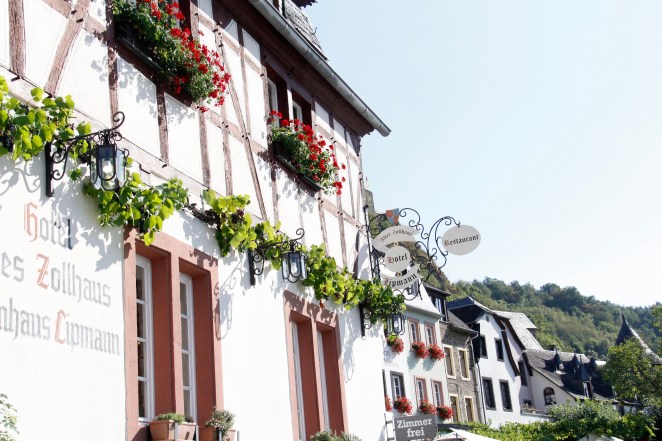
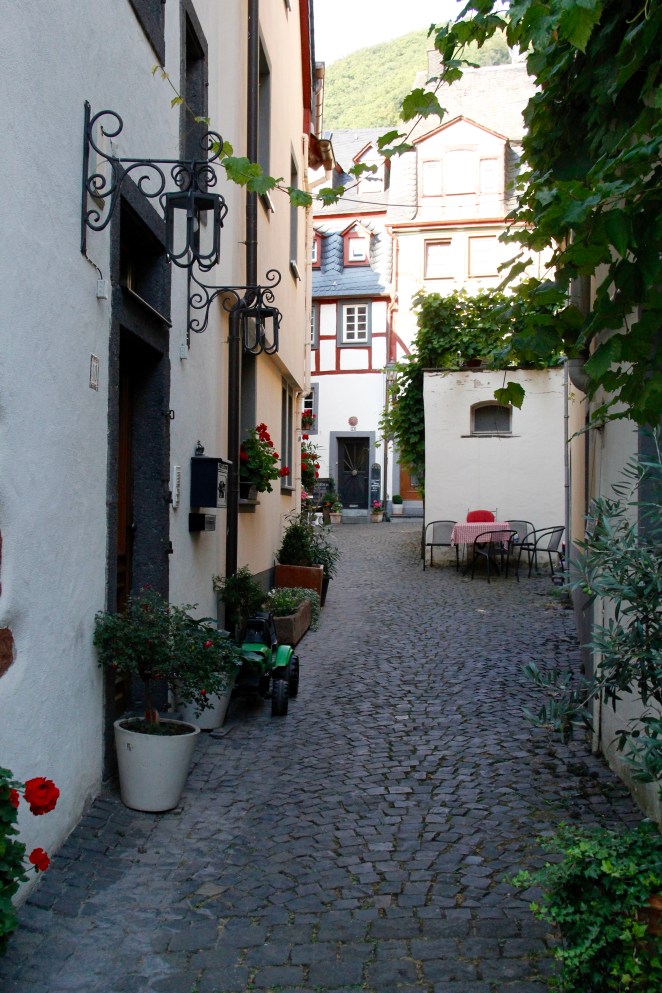
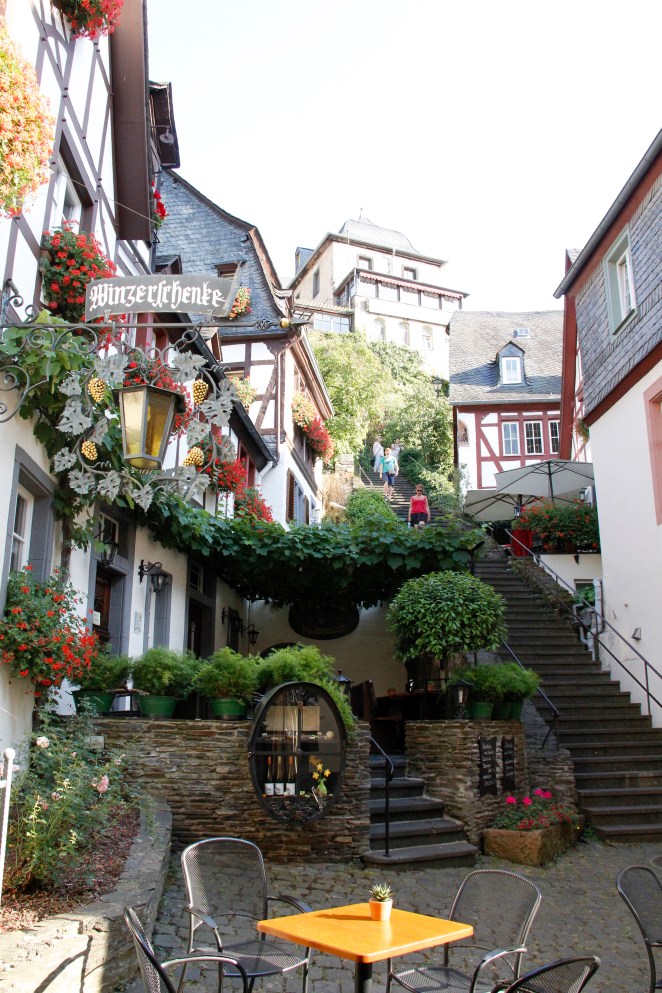
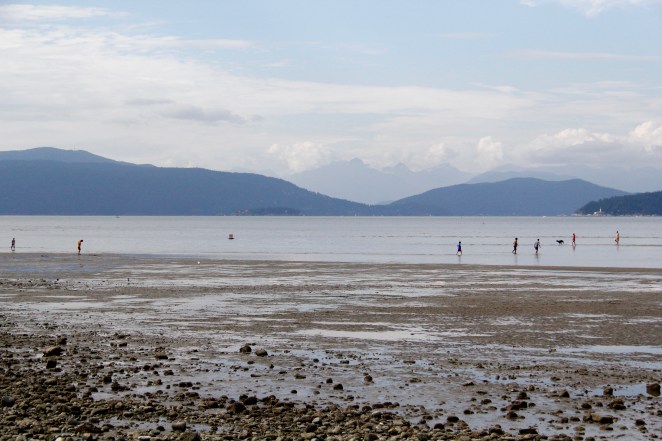
Germany, Day 9: My Little Town

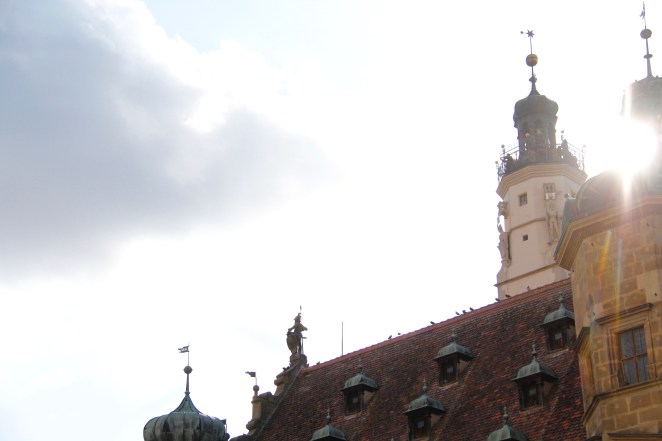
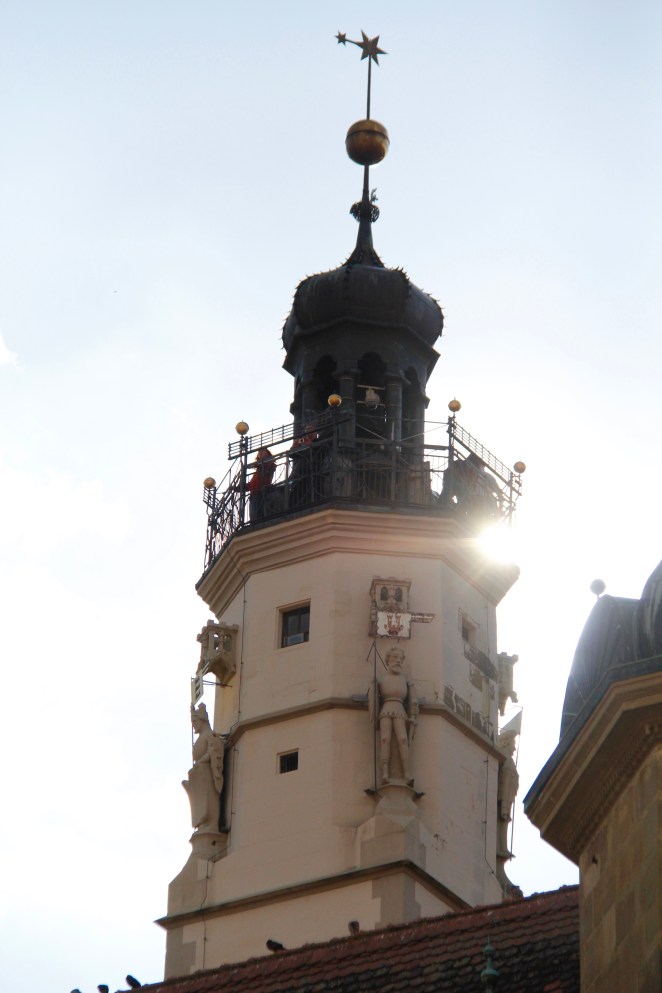
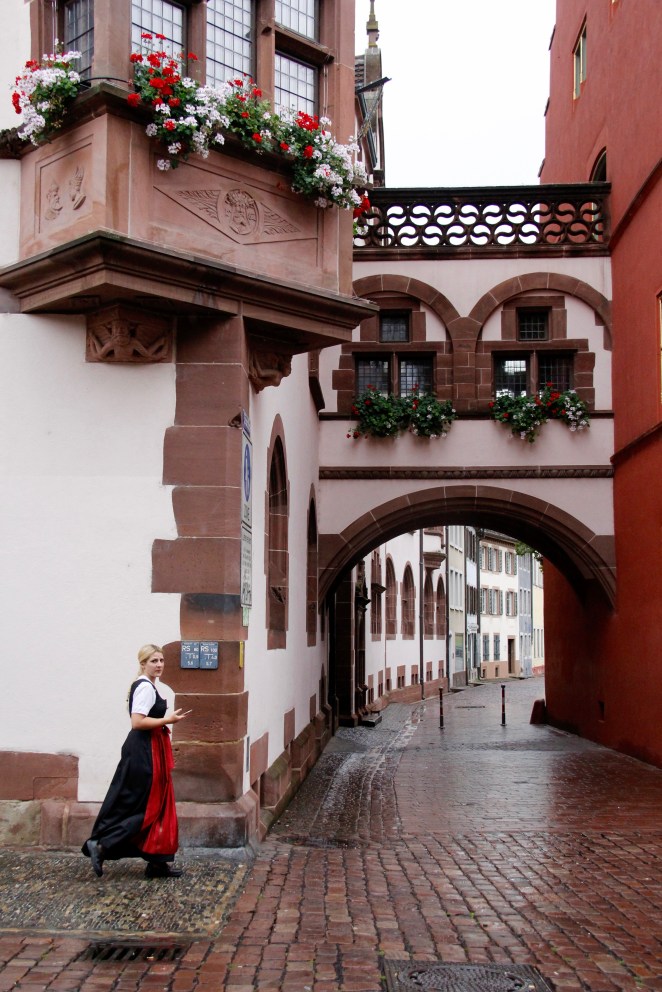
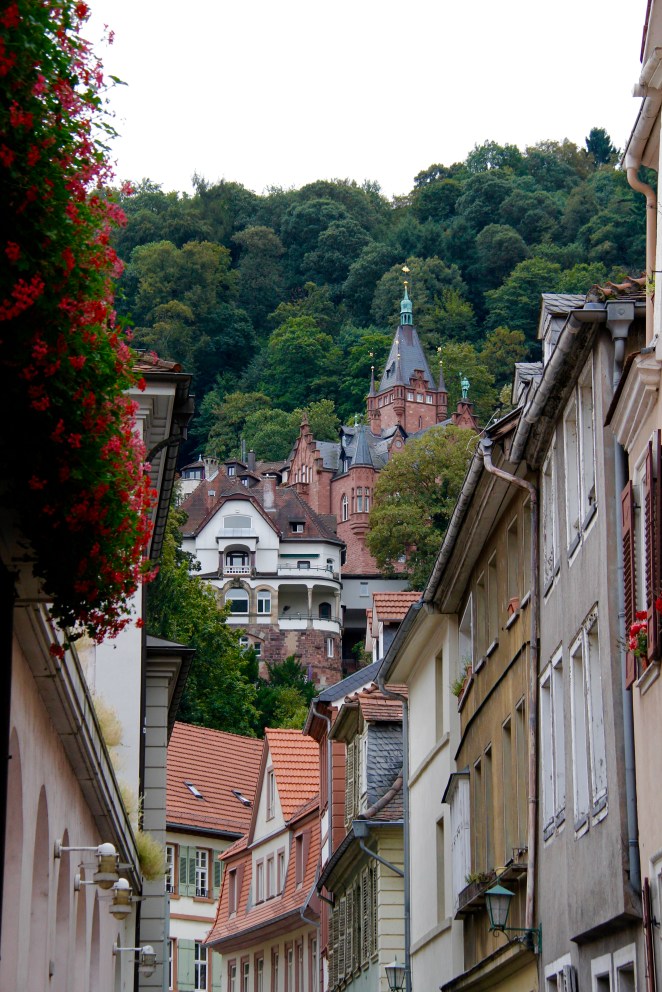
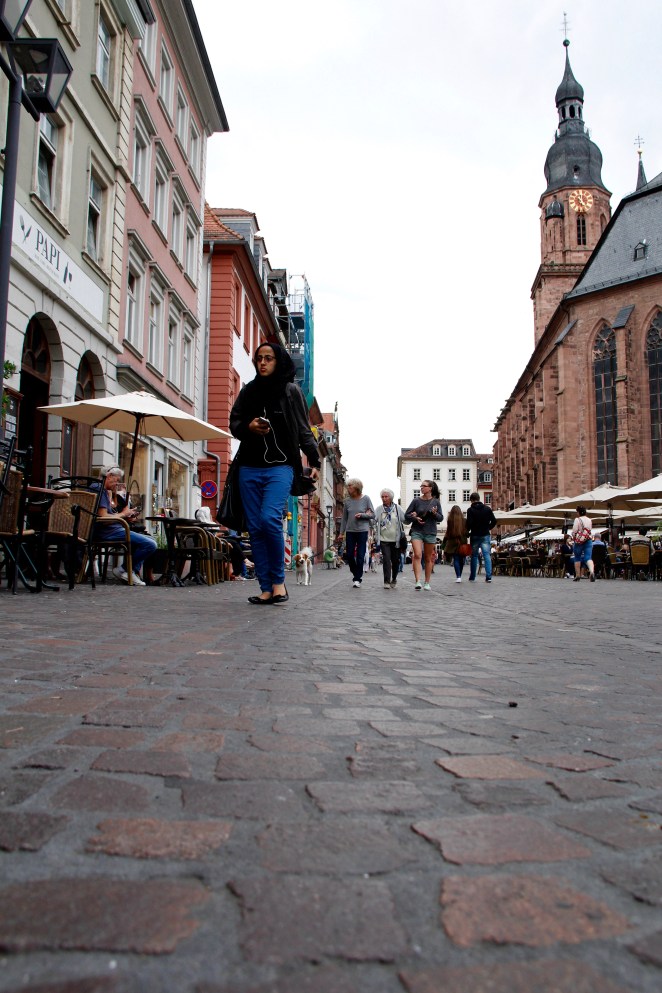
Today we got up, ate our final breakfast at the Goldener Falke and said goodbye to Heidelberg, hopping the train (well, series of 4 trains) to the tiny and allegedly adorable town of Rothenburg ob der Tauber.  Rothenburg is on every single one of those “Most Adorable Villages you MUST VISIT!!” lists and is apparently the inspiration behind Geppetto and Pinocchio’s home town in the Walt Disney animated feature Pinocchio.  We pulled into town on a small milk train, stepped into a cab and also into the past.

_mg_7015_mg_7019_mg_7021_mg_7029

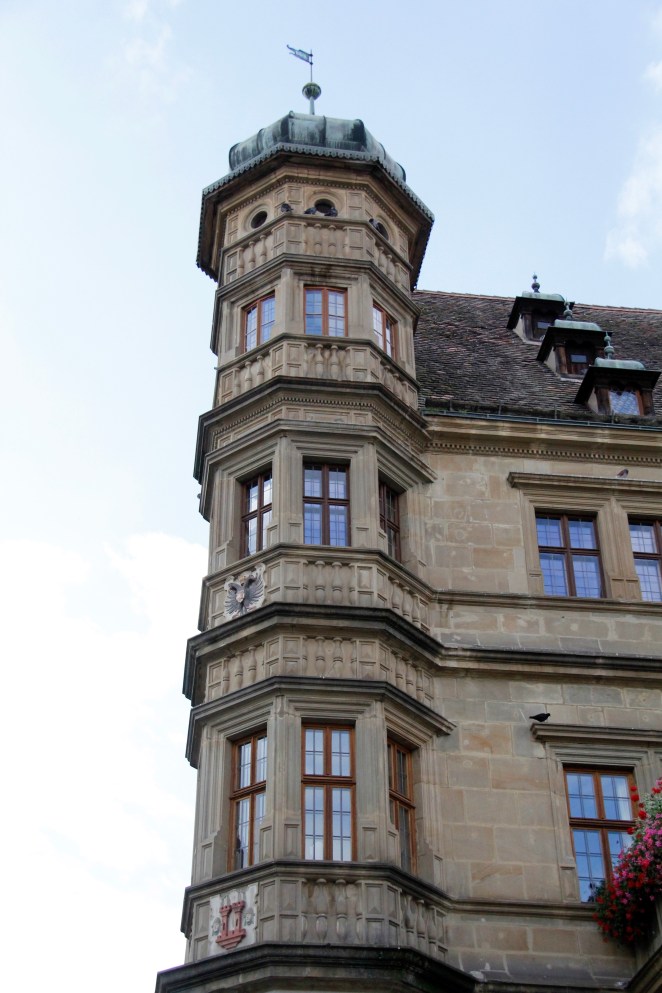
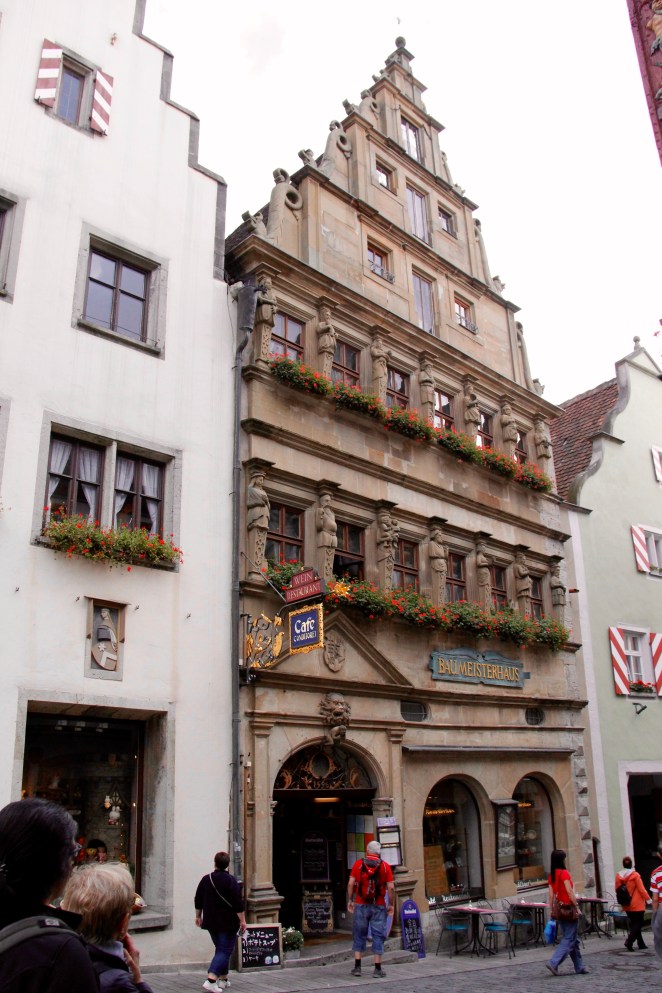
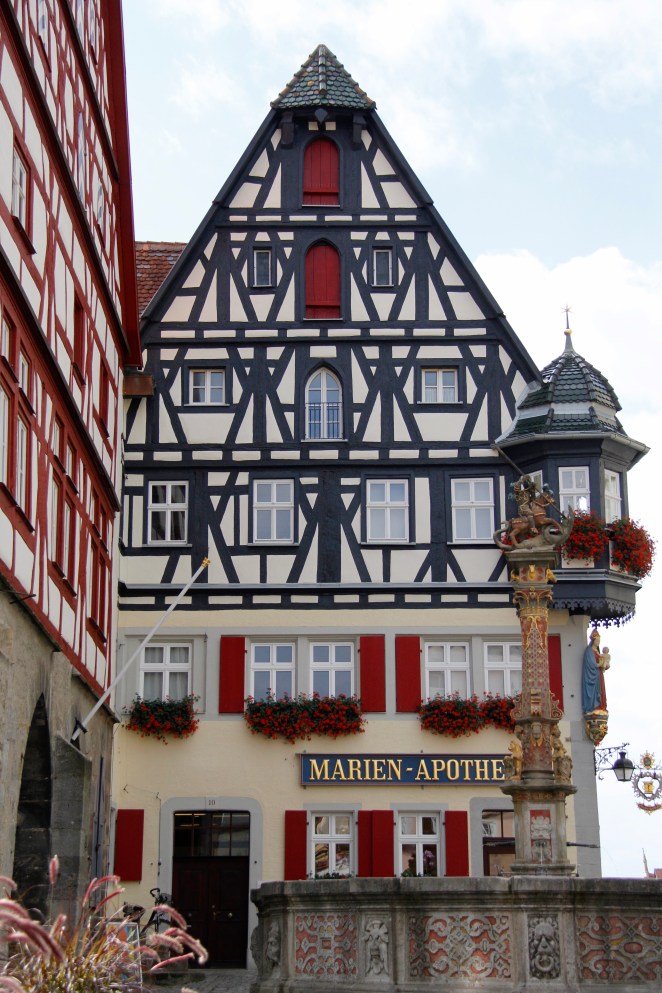
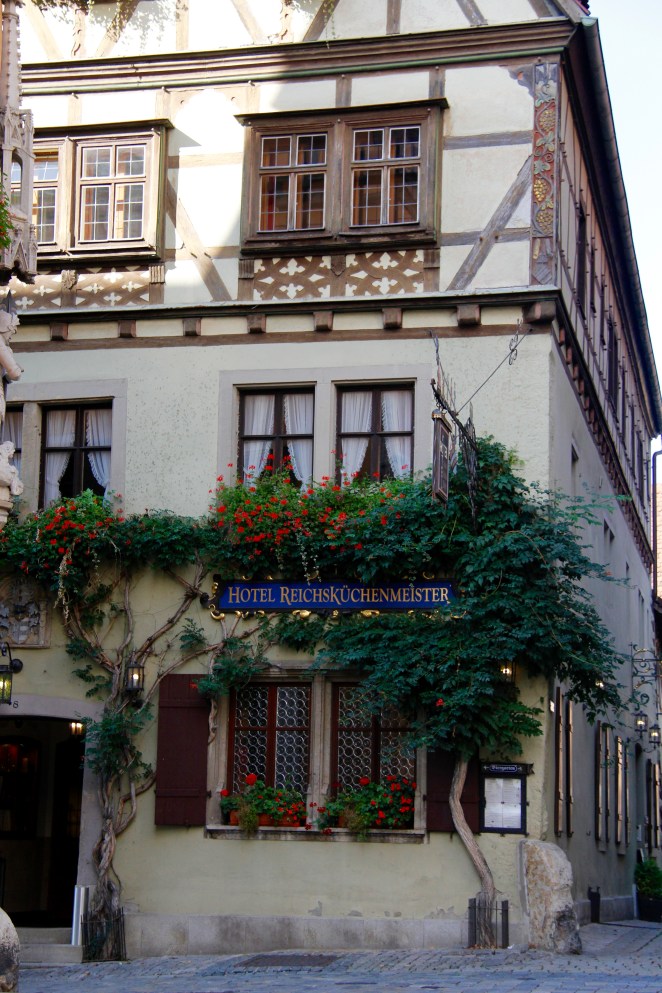
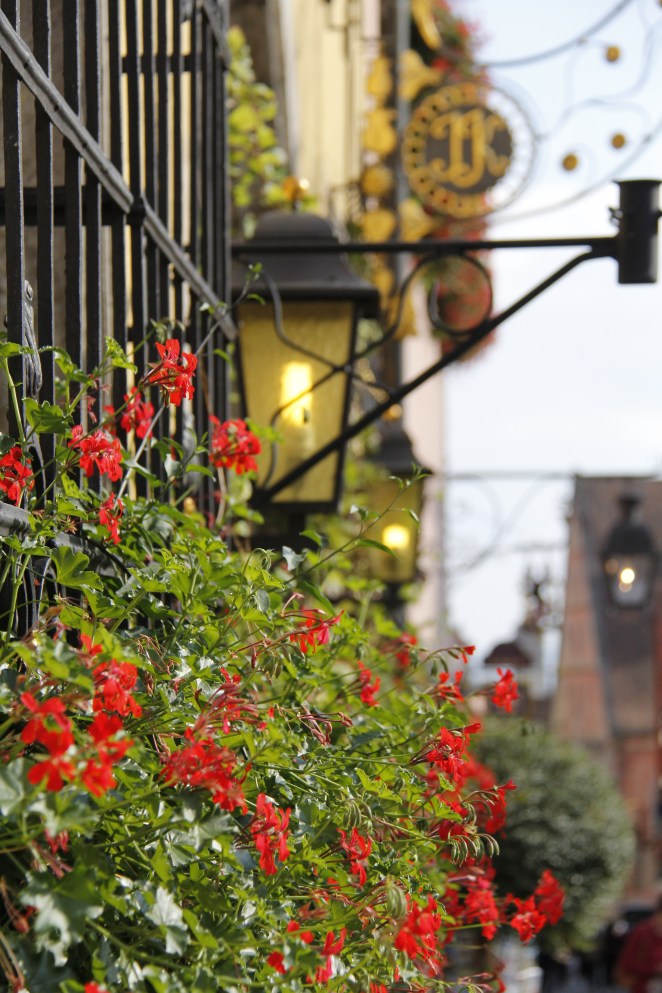
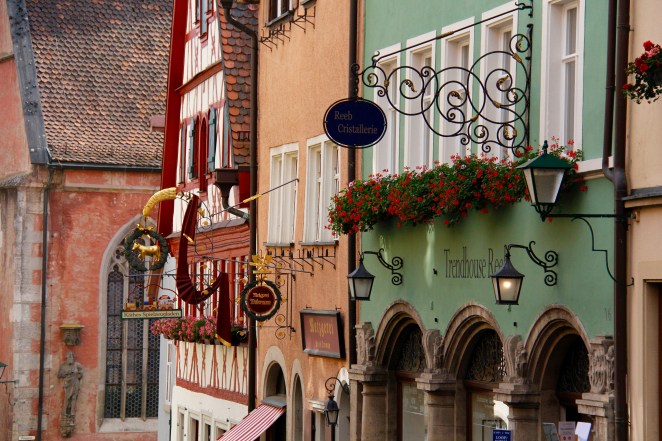
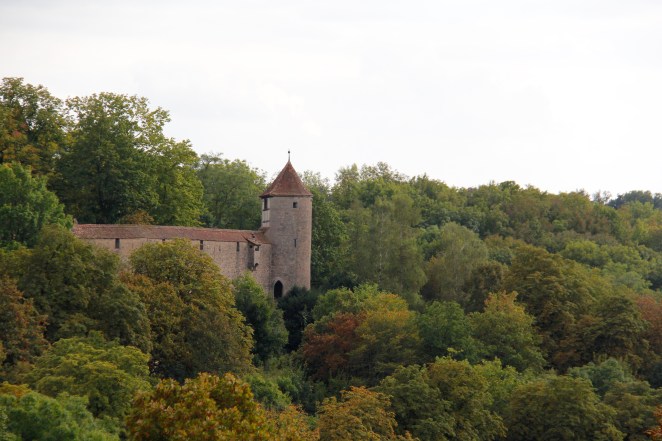
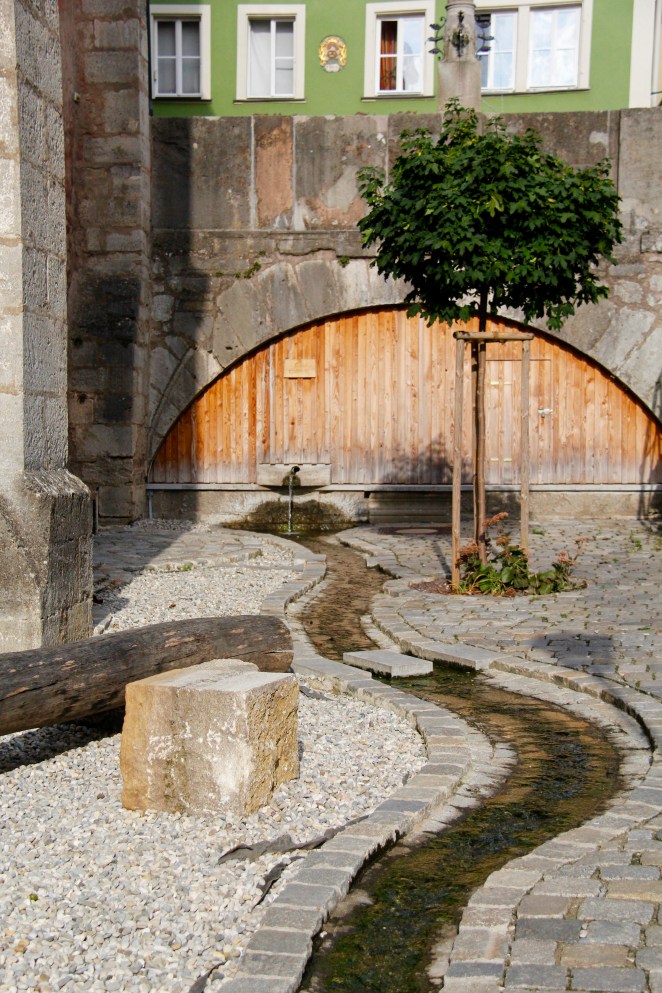
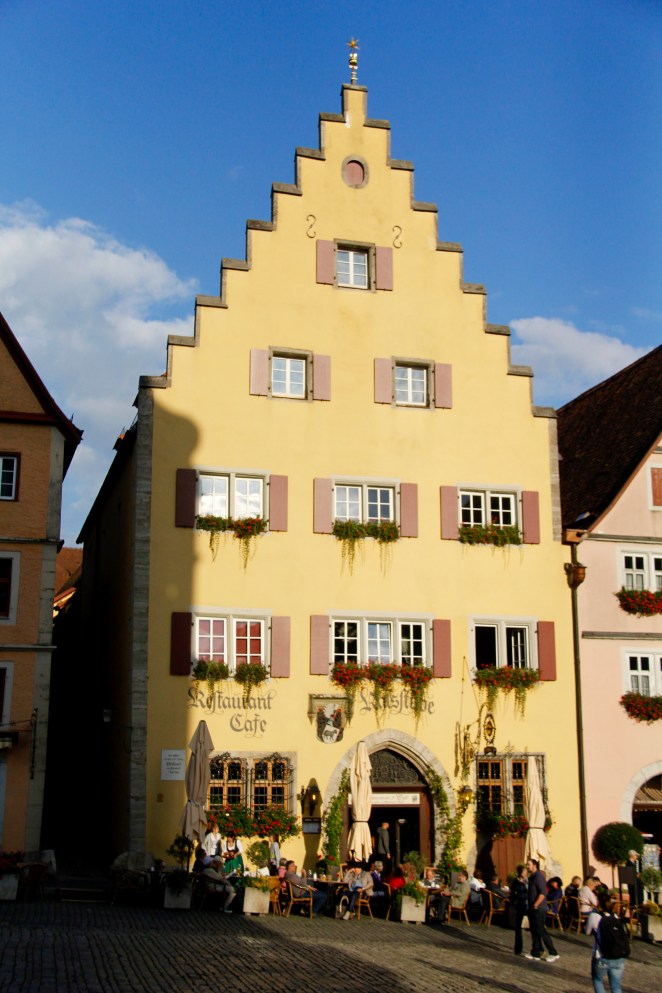
Rothenburg is even more adorable than we expected it to be.  Cute laneways, half-timbered houses, bakeries, Christmas shops, cobblestones, town squares, medieval walls and much more were preserved in this decadent slice of German heaven.

_mg_7034_mg_7038_mg_7039_mg_7041_mg_7047_mg_7052

We checked into our little Bed and Breakfast (I think it was at one point a monastery) and headed into town to soak in all of the glory.

_mg_7054_mg_7056_mg_7060

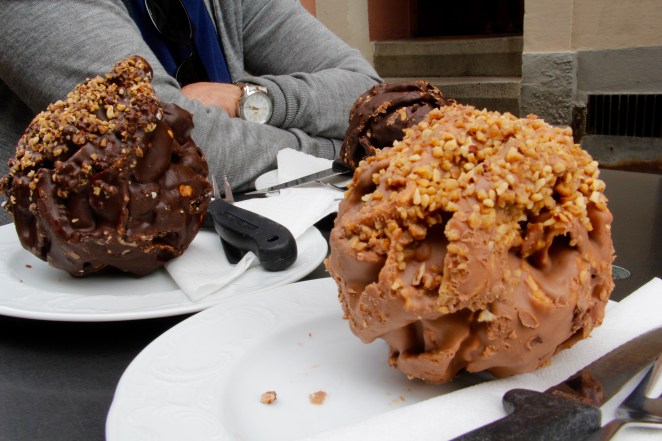
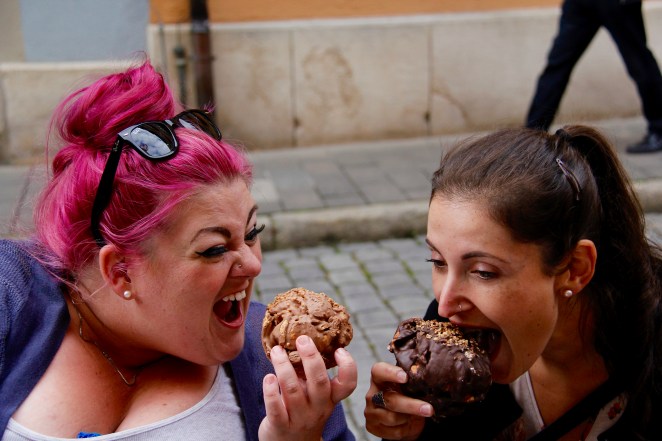
One regional delicacy that I insisted that we try are a sweet snack called “schneeballs” (snowballs).  They were originally made from leftover pastry dough in an effort to not let any of it go to waste, and there are dozens of different flavours.  The town is littered with bakeries that sell this little apple-sized delights, so we found one with a nice patio and picked our flavours – I chose caramel, Pa and Argie had rum-marzipan and Ma had dark chocolate.  They were definitely not what we had expected – we were all under the assumption that they would be soft and sweet, like a giant Timbit, but they were crunchy and crumbly, a lot like a fortune cookie.  They were also extremely filling!

_mg_7064_mg_7073

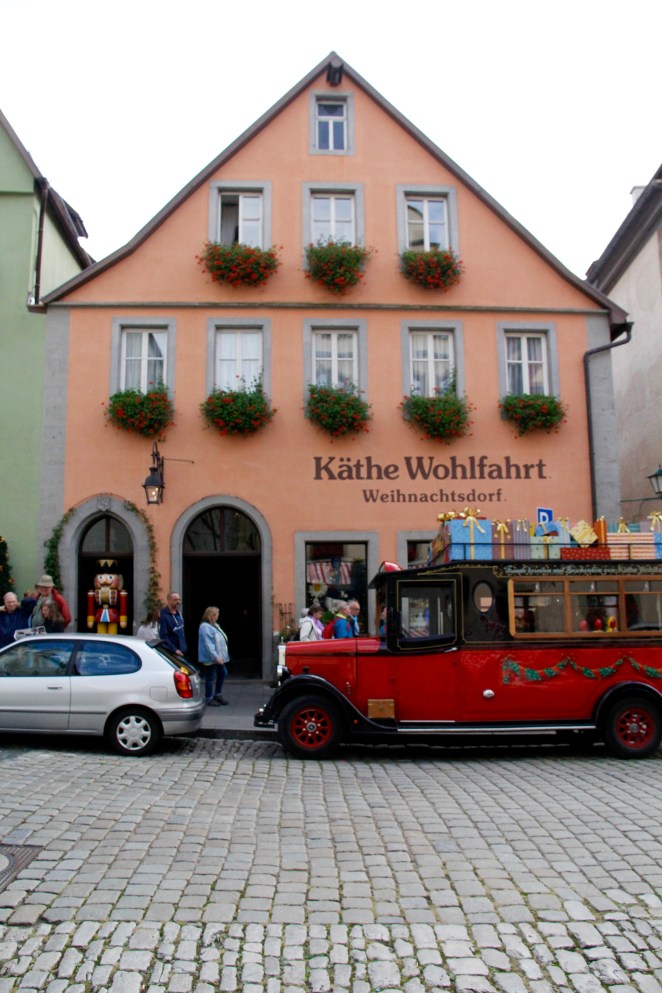
After our schneeball experience we decided to amble around, explore some Christmas shops (nutcrackers, steins, decorations, woodart!) and just enjoy how sweet this little town is.

_mg_7077_mg_7081_mg_7084_mg_7085_mg_7089_mg_7091_mg_7105_mg_7109

After dodging other tourists to take photos of the most famous and probably most photographed intersection in the city, we headed for the town wall.

_mg_7114_mg_7120_mg_7122

Ma and Pa decided that they wanted to walk the town wall, but Argie and I opted for something a lot more sinister in this adorable town – The Medieval Crime and Punishment Museum.

_mg_7124

We walked past the stocks and into a building with an arrow pointing into the basement which immediately immerses you into the punishment part of the museum, more specifically torture.  The museum housed hundreds of medieval torture instruments as well as shame fixtures including the aforementioned stocks and shame masks, different masks decorated differently depending on the crime.  The museum also had documents and descriptions of trials and law in the different areas of Germany.

After our fill of torture (and the museum was closing), we met up with Ma and Pa and headed to a recommended inn for dinner where we dined on soup and schnitzel.

_mg_7126_mg_7128

The dinner was delicious and after we settled up, we headed back to our inn to rest up for the night, wondering why we decided only one night in Rothenburg would be sufficient.

_mg_7130

Germany, Day 8: Like A Bridge…

_mg_6971_mg_6975

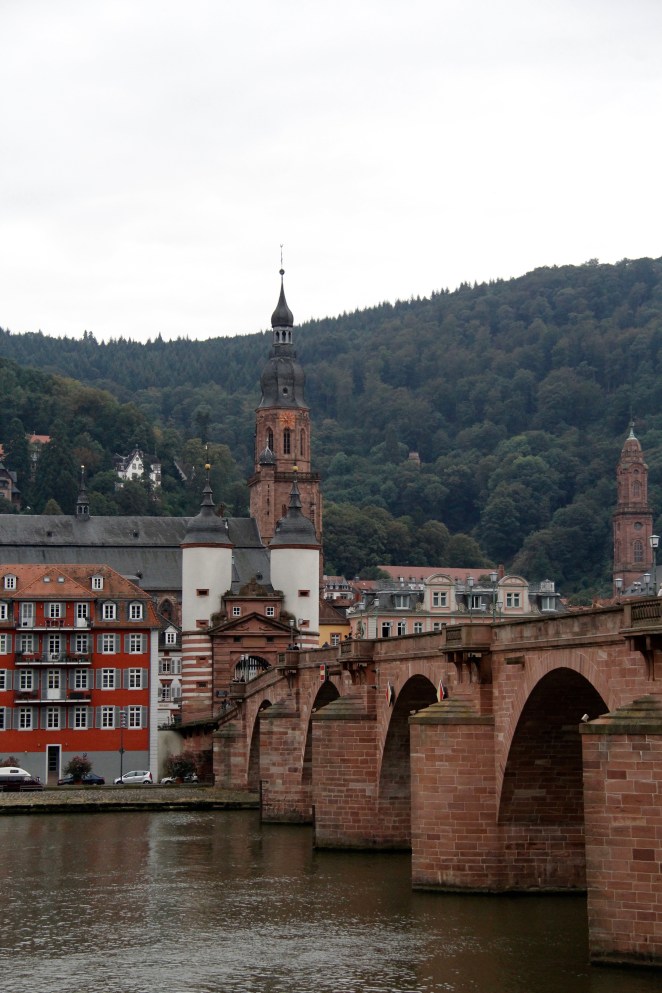
Today was our last full day in Heidelberg, so the the four of us (me, Ma, Pa and Argie) decided to check out the previously undiscovered parts of the old town, starting with the old bridge.  The bridge is old and mostly pedestrian so we had a good chance to amble around and take photos of the city, castle and bridge itself.

_mg_6982_mg_6989_mg_6994_mg_6997_mg_6999_mg_7002

The one end of the bridge houses a love lock fixture at a peaceful riverside point with a beautiful view of the castle.

_mg_7005

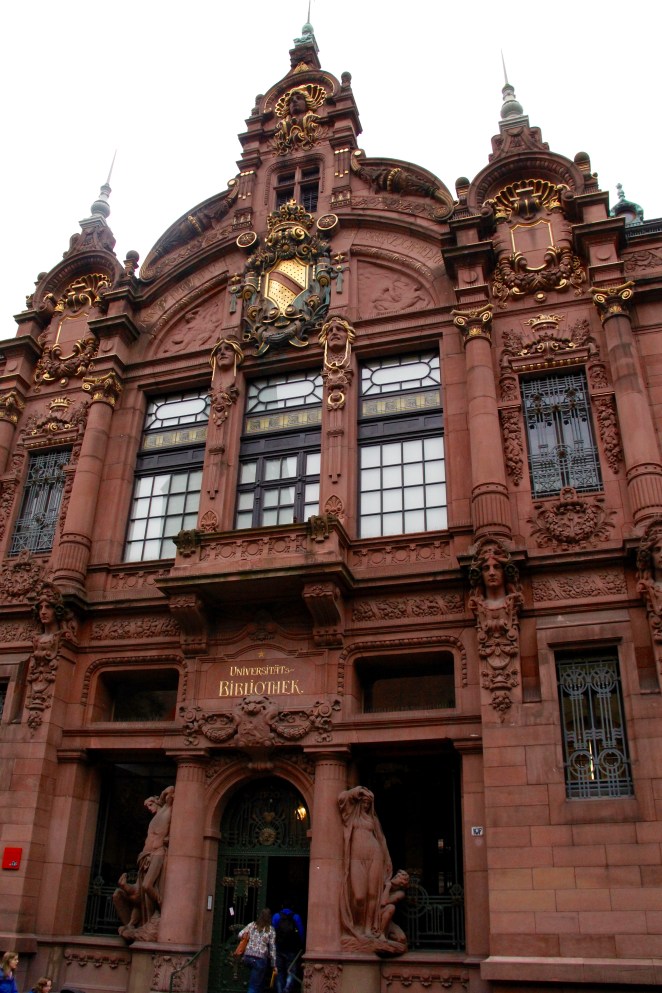
Following our time on the bridge, we headed over to check out parts of the old university.  Heidelberg houses one of the oldest universities in Europe and is still a popular institution today.

_mg_7008_mg_7010

The rest of the day was pretty much a day for relaxing.  We learned that gummy bears and gummy candy come from the west part of Germany, so we filled up with gummy bears and gummy Heidelbergs, bought some Christmas ornaments, sampled some Schnapps native to the region, ate some cake, sent off a parcel and lots of postcards, had dinner at a burger joint decorated with birch trees and finally watched the sun set over the square while drinking hot chocolates and cointreau, sad to say goodbye to Heidelberg but excited to find out what’s in store in Rothenburg.

Germany, Day 7: Raindrops Keep Falling on my Head

This morning we woke up early to grey skies and wet cobblestones – looks like we brought a piece of Vancouver with us after all.  After a 2 hour train ride via Mannheim we arrived in the cozy Black Forest town of Freiburg in Breisgau.  This town is famous for two things – its UNESCO World Heritage cathedral and minster (pictured later), and little canals that wind through the city called bachles.  In the summertime you can find people cooling off their feet in these canals and children pulling toy boats on string.

_mg_6870_mg_6895

Legend has it that if you fall into one of these, you will marry a Freiburger and judging from the men’s style in the area, I wouldn’t turn that down.  Minus the man buns.  So many man buns…

After a short walk from the train station, we were in the historic old town, ready to do our Rick Steves walking tour.

_mg_6875_mg_6881_mg_6885_mg_6890_mg_6891_mg_6898_mg_6900_mg_6902_mg_6904

After learning about the downhill and adjacent buildings, we came upon the historical and visual focal point of the city, the Freiburg Munster (minster).  Its giant, spiny tower can been seen from everywhere in town and is as tall as it is wide. It occupies the middle of a huge square.

_mg_6908_mg_6916_mg_6918_mg_6922_mg_6914

We came to the front door right at noon and the giant bells chimed, calling the faithful to mass.  We decided to come back to it when mass wasn’t in session, so we moved on.

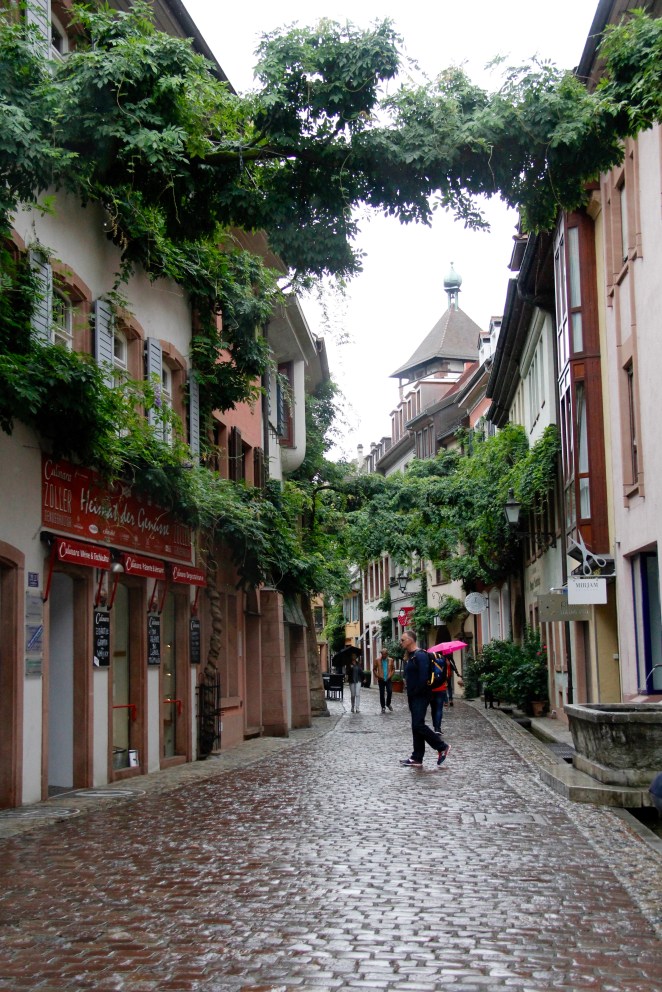
We walked down what originally looked to be a side street, but turned into a beautiful cobblestoned street, draped in arbour which blooms wisteria in the summertime.  Because it was Sunday most of the shops were closed, but we still found a lot of things we would spend our pennies on, including a new hat for Pa and a beautiful wool coat for Ma.  They will have to wait for another day.

_mg_6930_mg_6932_mg_6936

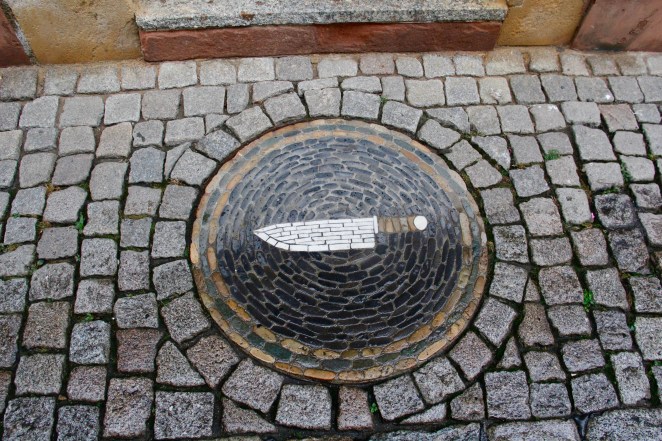
An interesting part of the cobblestoned road is that in front of a lot of the businesses are mosaics that indicate what kind of shop is there:

_mg_6926

A more sobering thing we noticed in the ground stones were a few seemingly random copper ‘stones’ with writing on them in front of some of the old apartments.  They were in German, but we could make out names, birth dates, death dates (usually between 1940 – 1944) and one chilling word that ended all of them: Auschwitz.

By the end of our walk we had worked up quite a hunger and decided to try the recommended Hausbrauerei Feierling for lunch and beer.  I ordered a beer which was slightly smokey and flavourful, and had possibly some of the best bratwurst I’ve ever tasted.    We settled up and headed back towards the Munster so we could get a look inside.  The rain had let up and we liked the walk we took before so much, we walked past the same way.  When we had gotten back to the Munster mass was done so we were free to walk about the church.

_mg_6955_mg_6956_mg_6958_mg_6964_mg_6966

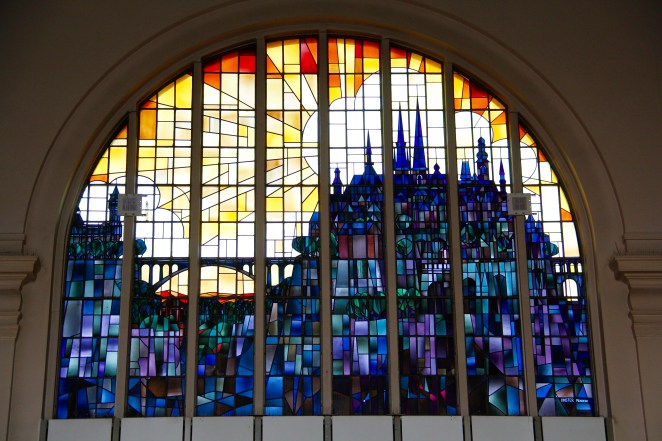
The church’s stained glass was sponsored by different workers, tradesmen and craftsmen back in the medieval time, so a portion of the window is dedicated to that worker’s profession (bakers, tailors, cobblers, etc).  After our walkabout the castle it was time to hit the road and headed back to Heidelberg, sharing a train car with a bunch of drunken football rowdies (go St. Pauli, I guess).

We ate a delicious dinner at the Italian restaurant next door to our hotel and then moved over to our hotel for some hot chocolate.  The sky cleared up and the air chilled and we sipped our hot drinks in anticipation of a special guest on our trip, my friend Argie.  Argie works with me in the tower of terror known as our job and is hanging out with us for a few days on her way back from Budapest.  At 1900hrs a black Mercedes pulled up and Argie stepped out excited to be done her 11 hour train sojourn.  She met Ma and Pa and we chit chatted until it was time for bed.

Germany, Day 6: I Can See For Miles and Miles

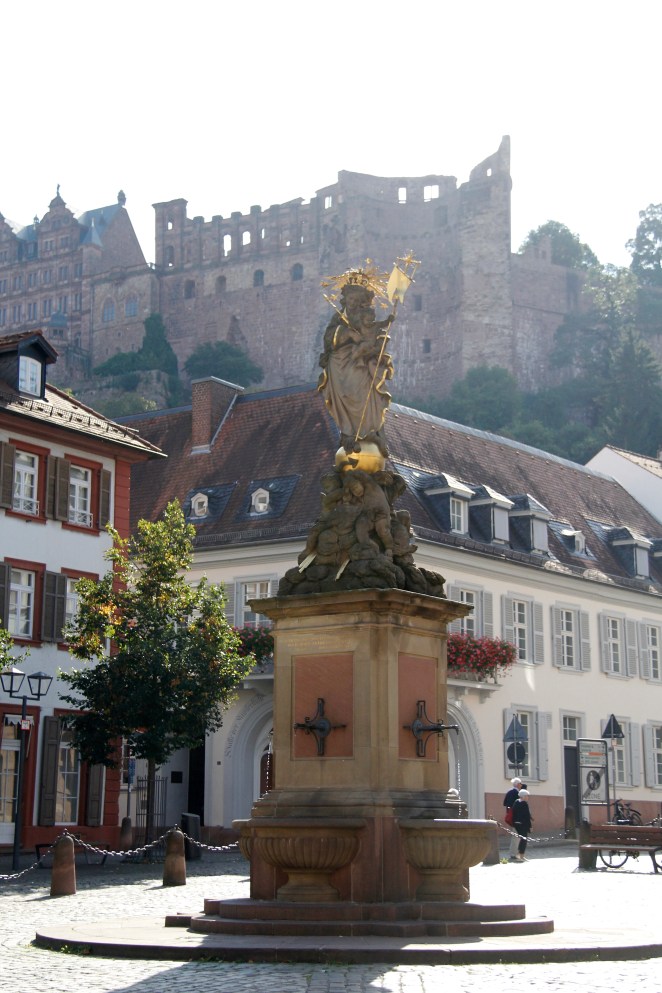
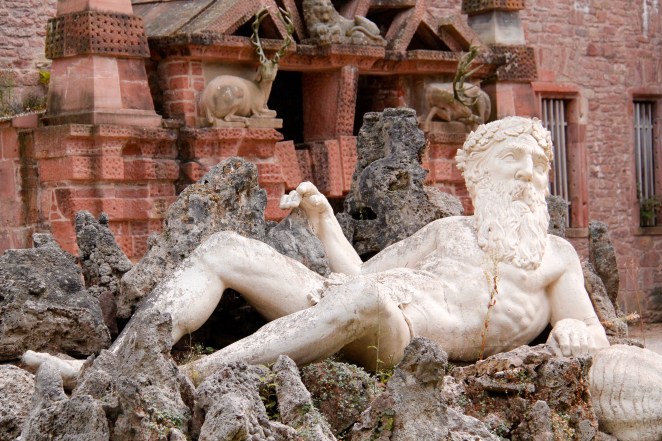
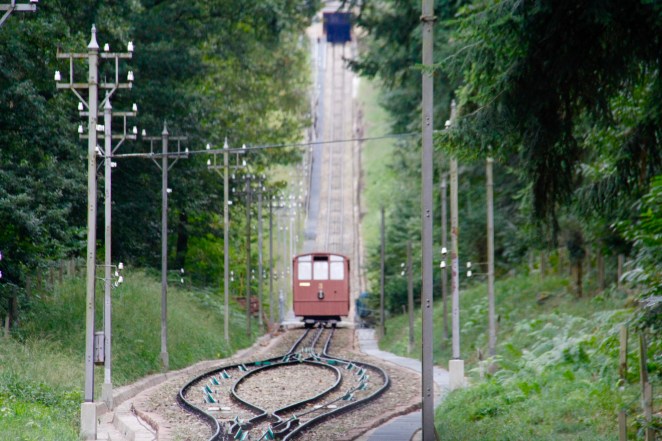
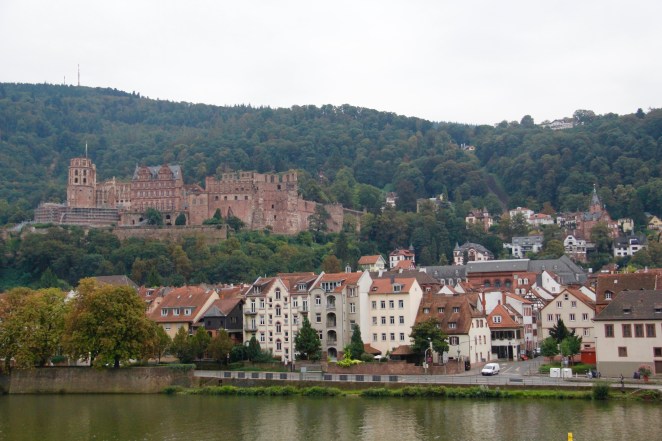
Today was our first full day in Heidelberg.  We had planned to go to Stuttgart to visit the Mercedes Benz Museum, but we all woke up late, I had a, uh, headache, and Pa wasn’t previously as excited to go as he was before, so we made the decision to stick around Heidelberg instead.  Heidelberg is mostly famous for its partly ruined castle, Schloss Heidelberg, which is perched on the side of the high hills that surround the city, and is accessible by way of one of Pa’s favourite contraptions, the funicular.  We had a lazy breakfast in the hotel restaurant and ambled over to the funicular, conveniently located next to the square over from our hotel.

_mg_6680_mg_6690

There are actually two funiculars on the hill – a newer modern one that takes you from the bottom to the castle and halfway up the mount, and then a creaky wooden 125 year old one that takes you to the top.  We decided we wanted to see the castle first, so we exited the funicular and headed down the marked path, past a couple of small shops and cafes to the partly ruined castle.

_mg_6708_mg_6710_mg_6722_mg_6726

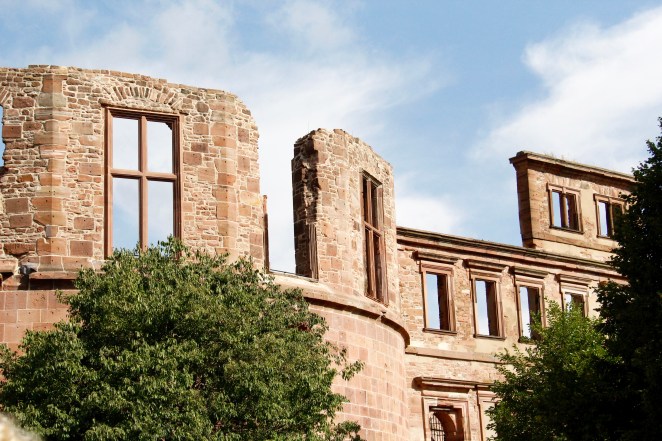
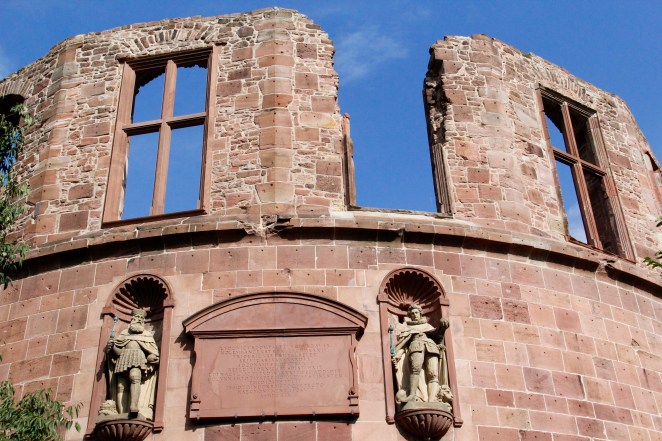
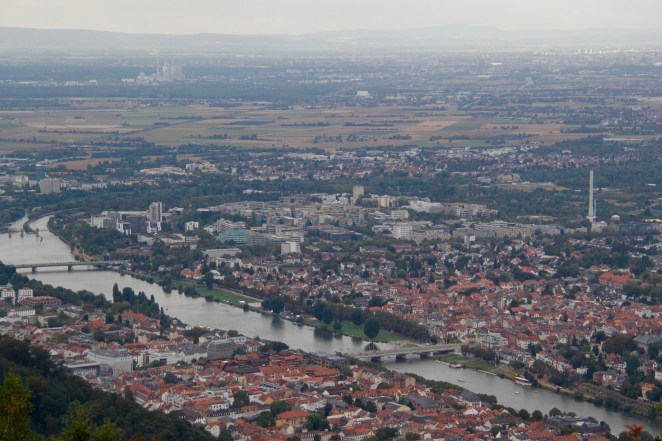
The castle is cool and different – its a mishmash of different styles as it was chronically being hit by lightning and parts of it got damaged.  Construction started in the Renaissance and eventually stopped, leaving half of it ruins and the other parts in differing states of crumble.  The castle overlooks the city and on a clear day (like the first part of today), you can see all the way to Mannheim.

_mg_6714_mg_6774

The castle is enormous.  We spent the better part of the morning and afternoon wandering around the grounds, with a brief stop in the castle cafe to have our standard beer/pretzel/apple strudel.

_mg_6716_mg_6731_mg_6737_mg_6746_mg_6750_mg_6764_mg_6767_mg_6806_mg_6808_mg_6810_mg_6821_mg_6826

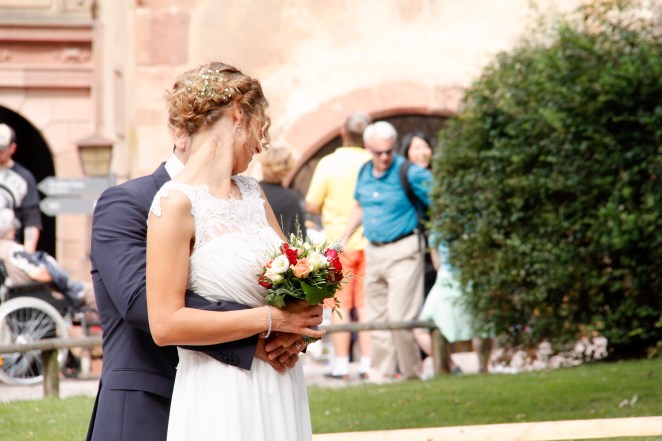
A relatively recent feature of the castle is you can get married in a sacred or civil ceremony there, so we got to see a few different bridal parties of varying fanciness.  I am a creeper at heart, so I had to get a couple of snaps in.

_mg_6789_mg_6793_mg_6798

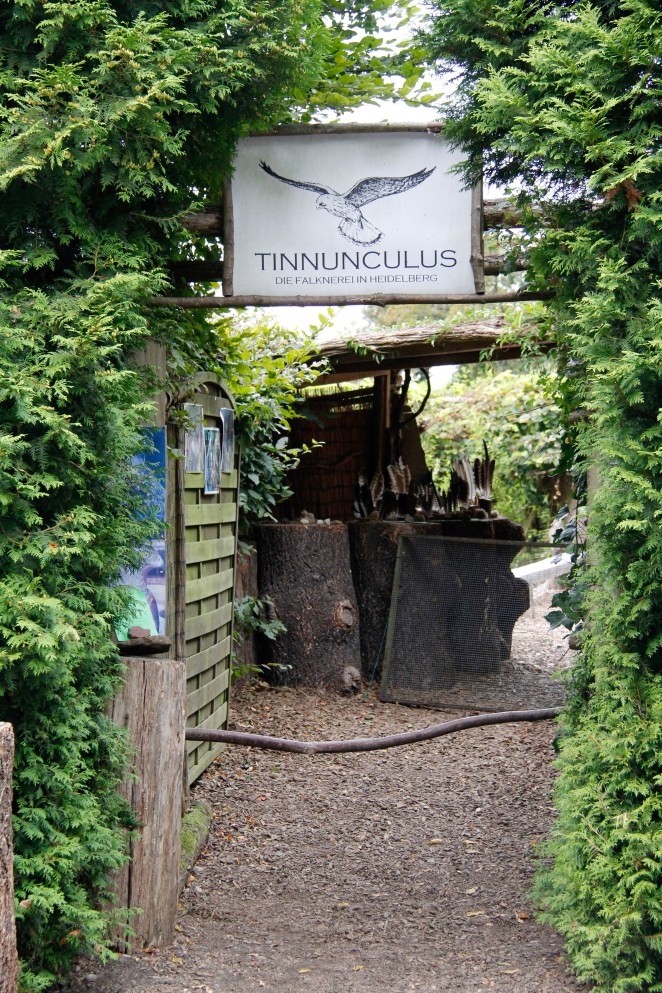
We had had our fill of castle so we headed back to the funicular station and got on board ye olde funicular.  The funicular cars are adorable and shake and sigh through the 10 minute ride to the top of the hill.  The top of the mount didn’t have much to offer – a closed falconry, a derelict boarded up restaurant and more spectacular views.

_mg_6839_mg_6848_mg_6853_mg_6854

We decided that it was time to head back and got on our little shaky funicular, then the smooth modern funicular and headed to the hotel restaurant patio for beers and so that I could write out some postcards.  The next few hours were filled by dinner, ice cream, and a frantic shop at the Lindt chocolate shop and as the rain started, we headed in for the night.

_mg_6864

Germany, Day 5: On the Road Again

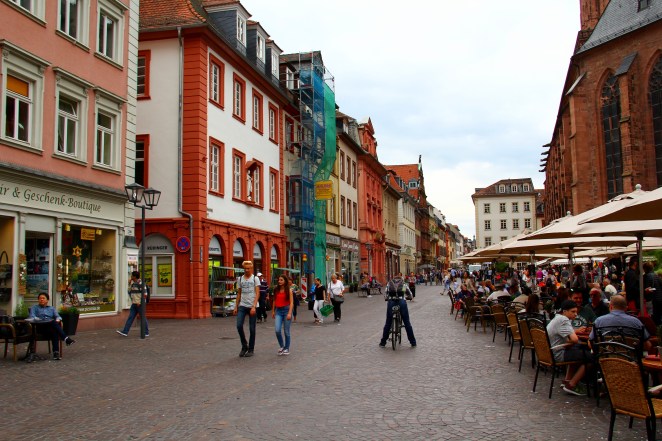
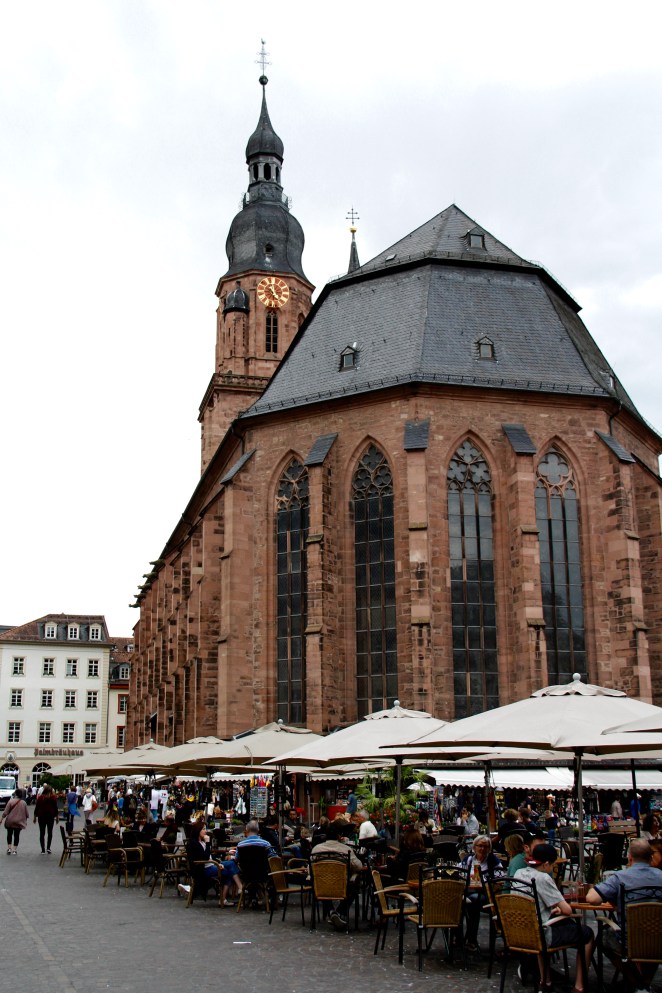
Today we woke up to a mercifully cloudy sky and cooler temperature – for the first time since we’ve been in Germany it was under 27 degrees.  We packed our bags, settled our hotel, said our goodbyes to the Mosel Wine Valley and headed to the train.  At Koblenz we hopped off to catch our connecting train to the Baden-Wurttemberg city of Heidelberg for our next set of days.  For those of you who believe that German trains run on time – they don’t.  Our train was 30 minute late today, and the train on our platform before that coming from Zurich was even later.  At about 1430 hrs after an unremarkable journey through Bingen, Mainz and Mannheim we wandered off the train and into the ancient university town of Heidelberg.  We hired a very friendly cab driver who dropped us off at our hotel, Goldener Falke.  We felt like we hit the jackpot – a beautiful 19th century building with a restaurant and patio on the ground floor and faces out into a main square filled with cafes, a cathedral, and a fountain.

img_6616img_6617img_6618img_6619_mg_6621_mg_6623

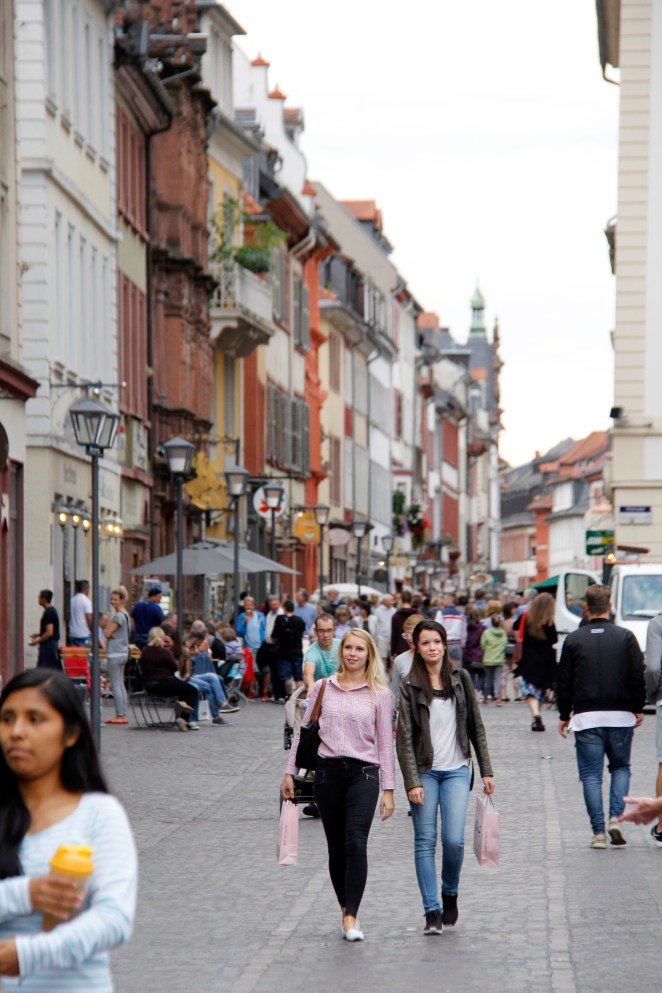
One big difference that we’ve noticed between Heidelberg and the Mosel Valley is the number of tourists.  We sat in the square this afternoon to take a breather from the previous 4 busy days and watched many tour groups come through and heard many different languages spoken.  Pa and I had a couple of Heidelberger beers (another pilsner) and I wrote out some postcards.  _mg_6625_mg_6630_mg_6639_mg_6642

We had an excellent dinner of coq au vin, beer and strudel at the hotel restaurant, took and stroll around the square and turned in to watch some BBC news._mg_6663_mg_6665_mg_6666_mg_6668_mg_6676_mg_6679

Germany, Day 4: Burn Baby Burn

Today was a day that I was really excited about.  I had been looking forward to taking a boat up the Rheine (Rhine) River and looking at all the castles, sipping beers, sunbathing with the German men who seem to take off their shirt even if they have no business taking off their shirts.  Another scorcher of a day was in the cards but it was nice heading out early in the cooler air.  We took the train by way of Koblenz to Bacharach (yes, just like Burt Bacharach) to start our KD Rhein cruise, already in progress (the cruise starts further south in Mainz but there’s not a lot of castles that far south).  Bacharach is an adorable little town and I kind of feel bad that we didn’t get more time to poke around.

_mg_6345

_mg_6361

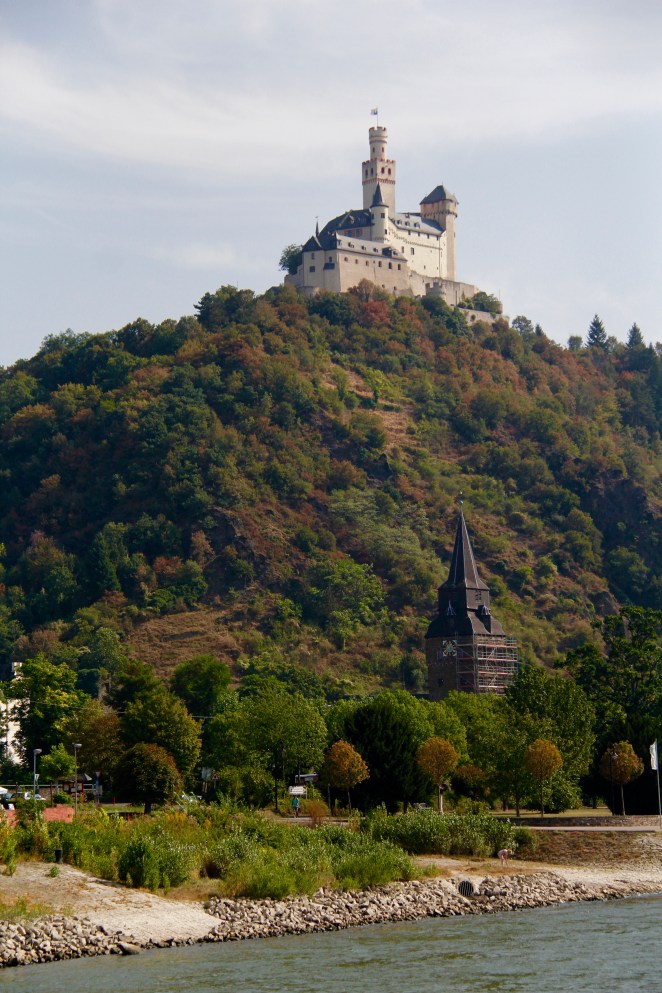
We got on the boat and grabbed some chairs next to some wildly gesticulating Italians who engaged Pa in a conversation (“I think they said something about red wine”).  The Rheine was and still is an important shipping route in Europe as it reaches from Rotterdam to Switzerland.  Many of the merchant barges are privately owned and lived in and we saw many of them putting up and down the river.  Back in ye olde days when Germany was made up of hundreds of little kingdoms, robber barons would set up castles and forts along the Rheine and levy taxes and tariffs for those sailing up or down the river, often setting up a huge chain from one side of the river to the other to stop boats.

_mg_6375

_mg_6362

Pa and I bought a couple of overpriced beers and Ma had some water and we settled into our seats.  The river did not disappoint – castles in various states of repair and disrepair around every corner.  There’s a still a romantic in the basement of my chilly heart, so seeing some of these robust stone castles with sleepy little wood timbered villages below made my blood run a little warmer.  A lot of these castles have now been converted into hotels, with one being purchased by an eccentric Japanese bajillionaire who wanted to turn the castle into some sort of Japanese tourism hot spot, but the German government put the kibosh on it and now the castle stands vacant.

_mg_6379_mg_6385

_mg_6392

Most of the castles were built in either the 12th or 13th century and a lot of them were destroyed by the invading French army in the 19th century and had to be rebuilt.  Napoleon blew up an impressive looking one to show how much more impressive his explosives are.

_mg_6400_mg_6413

Another part of the cruise that I was really excited about was seeing the Loreley Rock.  This is the narrowest and deepest part of the Rheine and was apparently quite treacherous in the olden times, causing many shipwrecks.  Apparently to people back then it was more plausible to blame a river siren named Loreley for distracting sailors than narrow reefs for all of the scuttled ships.  There were many songs and poems written about Loreley and they’ve even erected a statue of the schone madchen.

_mg_6424_mg_6429_mg_6442

The cruise was about 3 hours long and we got hot hot hot.  I even got a bit of a sun burn.  We saw about a dozen or so castles total.

_mg_6453

_mg_6466_mg_6468

_mg_6498_mg_6502_mg_6508

_mg_6536_mg_6542

After our boat moored at Koblenz we were up to our elbows in castles so we disembarked and headed towards the bahnhof to catch the train to Koln (Cologne) for our next UNESCO Heritage Site building.  The train ride itself was 2 dull hours of mostly field and industry, but when we got into Koln, we could see the spires of what was once the tallest building in the world:

_mg_6547_mg_6548_mg_6550

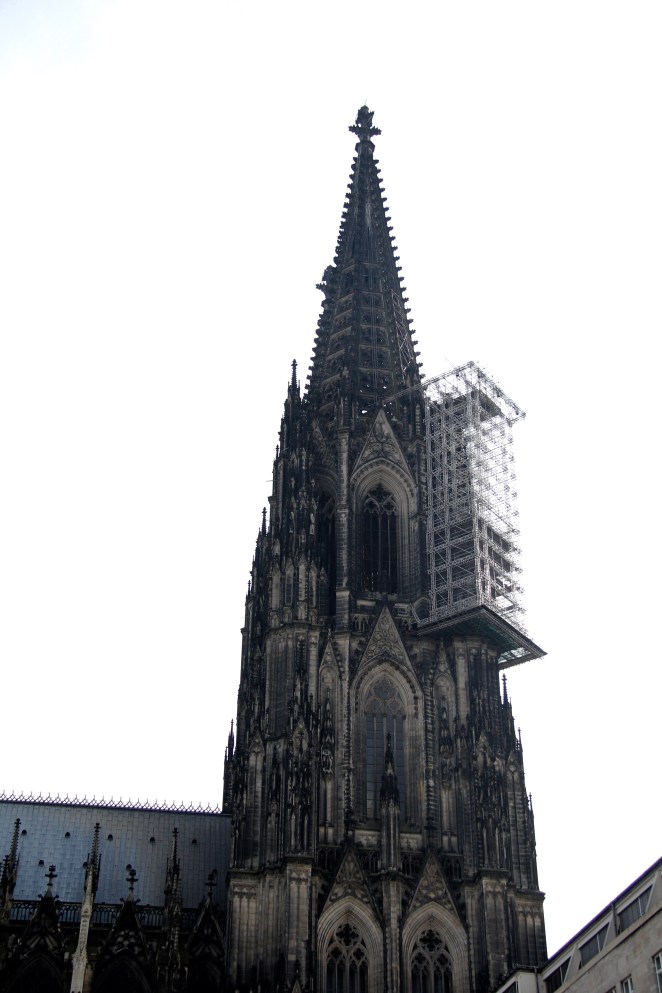
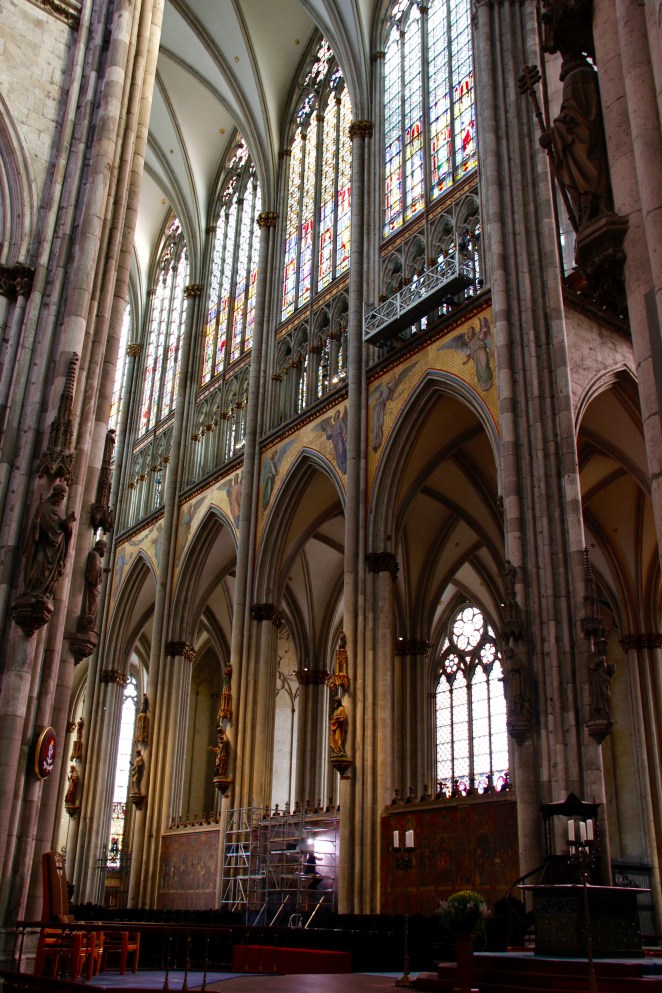
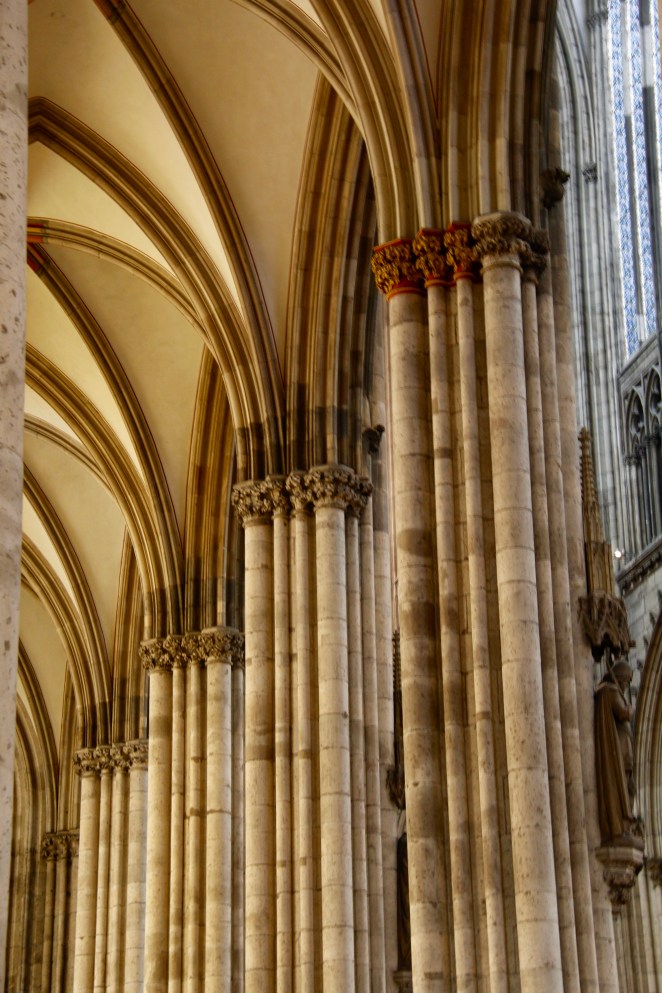
The Kolner Dom (Cologne Cathedral).  Everyone you ever meet in your life could tell you how big this building is and it still would not prepare for its gargantuan size.  The Dom was started in the 1200s, took 700 workers and 36 years.  What I was most excited to hear about  was it contains 3 football field lengths of stained glass.

_mg_6565

_mg_6569_mg_6576_mg_6582

The Dom, like 95% of Koln was badly damaged by Allied bombs in WWII but because the frame was so strong, it was able to retain most of its structure.

The inside of the Dom became a pilgrimage site for two reasons – there was a statue of Madonna of Milan and the cathedral contained the bones of the (alleged) three magi (of ‘We Three Kings of Orient Are’ fame).  The bones are housed in a huge gold and silver box by the alter.

_mg_6589_mg_6601_mg_6612

After we finished gawking at the Dom, there was a second priority in Koln that we needed to take care of – kolsch beer.  Kolsch is a style of beer that originates from Koln and is served in a tall, slim glass.  It’s a lighter, pils-style and apparently one of the best places to get it is an old brauhaus (brew house) called Peter’s Brauhaus, a block over from the Cathedral.  The Brauhaus looked exactly like you would expect it to – low ceilings, dark woods, big long tables.  Pa and I ordered bratwurst and kolsch, Ma had goulash (and water).  6 kolsch beers and a few apple strudels later we were completely full and ready to head back to Cochem for our last night spent in the Mosel Valley.


Germany, Day 3: I’m So Fancy

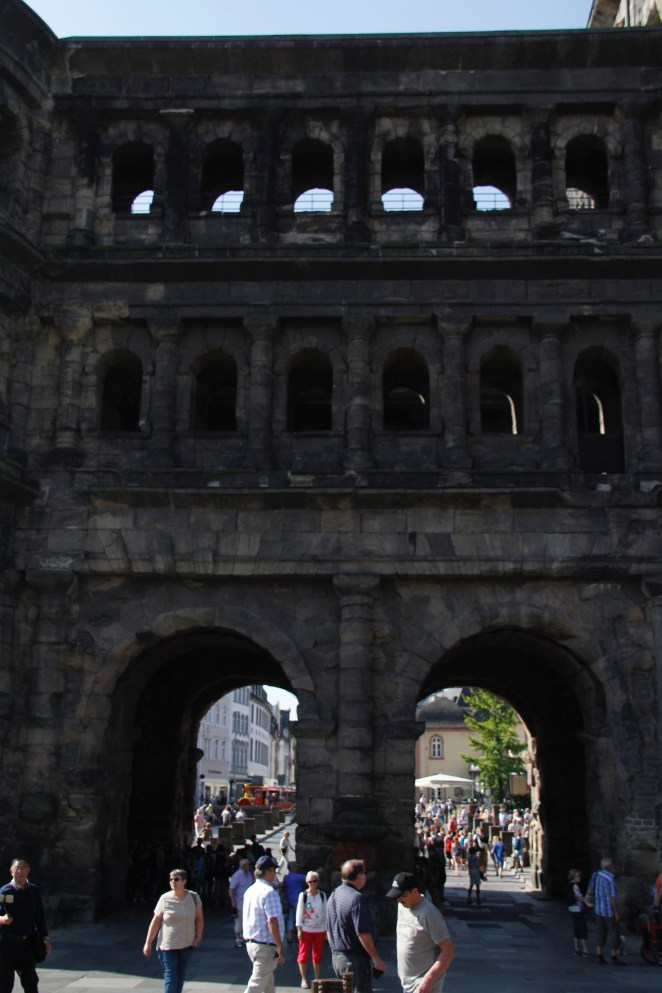
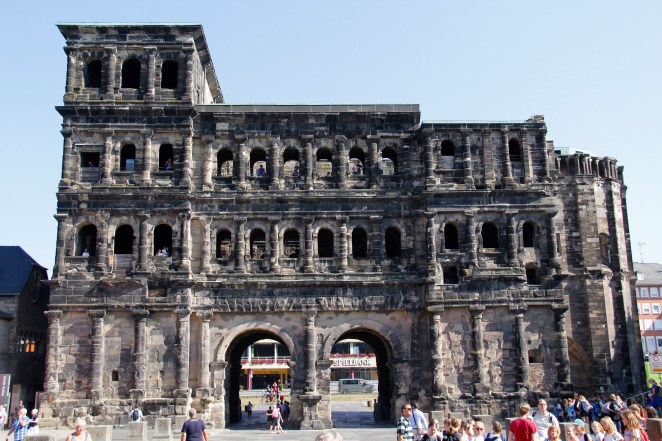
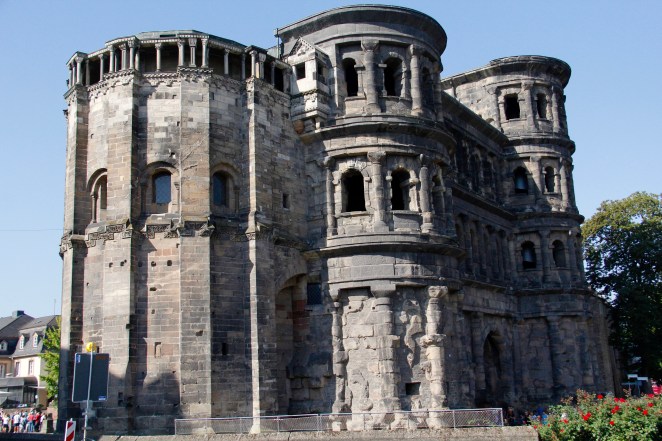
Today was a busy day, but we started off at a leisurely pace, finding a nice river-side cafe where we slowly enjoyed our coffee and croissants.  We then hopped on the train heading westbound to Germany’s oldest city, Trier.  Trier was founded in the late 4th century BC by the Celts and later conquered by the Romans under the guidance of Emperor Augustus.  The city is littered with ancient Roman structures and ruins, including an amphitheatre, imperial baths and the one remaining gate to the city (there used to be four):

_mg_6191

_mg_6197

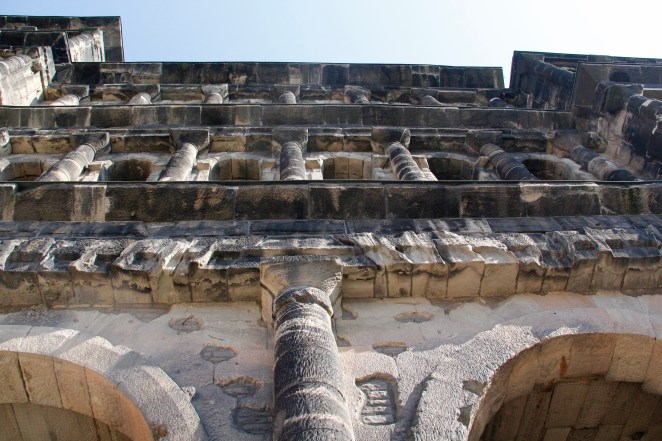
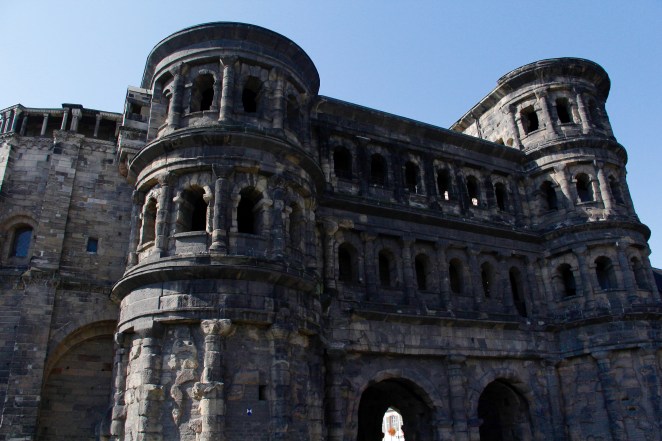
Porta Nigra (which is Latin for Black Gate) was completed in 200AD and served as an entrance to the city.  It was left undamaged by World War II (thankfully) and now stands as one of the best preserved Roman gates north of Italy.

_mg_6199_mg_6202

The Porta was originally grey, but time has made it black, giving it its name.  It was pretty cool to be able to go right up to it and touch it, walk through, take a million pictures of it.  It was also our first sighting of my favourite travel contraption, the selfie stick.
_mg_6207_mg_6215_mg_6229_mg_6237

Trier is rife with tourists from regular folk like us, to the umbrella-led Asian groups, to the school groups, to the aforementioned elderly shuffler group.

We crossed through the gate and started ambling down the main stretch of the old town, with interesting tidbits along the way, including one of Karl Marx’s former residences:

_mg_6240

And this neat old Venetian building where we stopped for coffee (when I told the barista I actually ordered my coffee iced, they just dumped the hot coffee into a cup of ice) and we engaged in one of my all time favourite activities: people watching.  There is definitely more of a younger set in Trier than in Cochem, and some of the older ladies are far more glamorous (not quite as many striped t-shirts with some sort of flower print and gems).  One thing to notice about this cool building is the floating door on the second floor.  There would have been a wooden staircase leading up to it that the homeowner could push over to avoid intruders.

_mg_6247_mg_6250

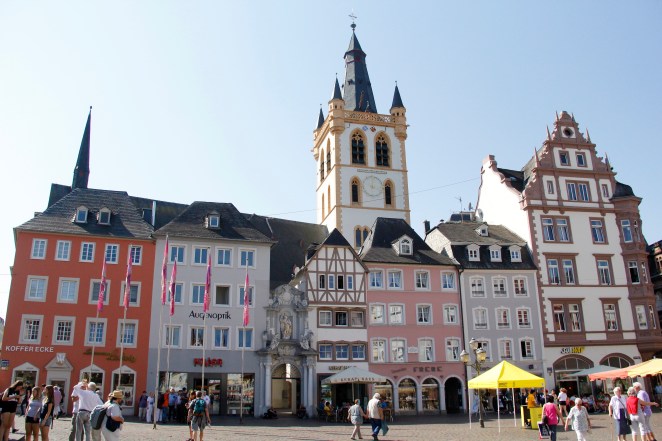
There are all sorts of reminders not only of Trier’s ancient Roman history, but also of its growing pains as a city as there seemed to be a lot of tension between the city-folk and the ruling clergy.

_mg_6251_mg_6253

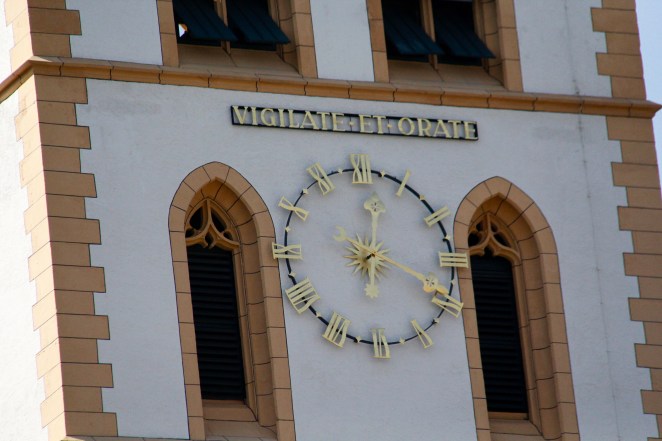
For example, the villagers built their own church  with the spire higher than on the bishop’s St. Peter’s Cathedral and the Latin words below, which mean “Watch and Pray”…
_mg_6257

…so the Bishop built an even higher spire on his Cathedral with the Latin phrase “You Do Not Know At What Hour the Lord Will Come”.

_mg_6259

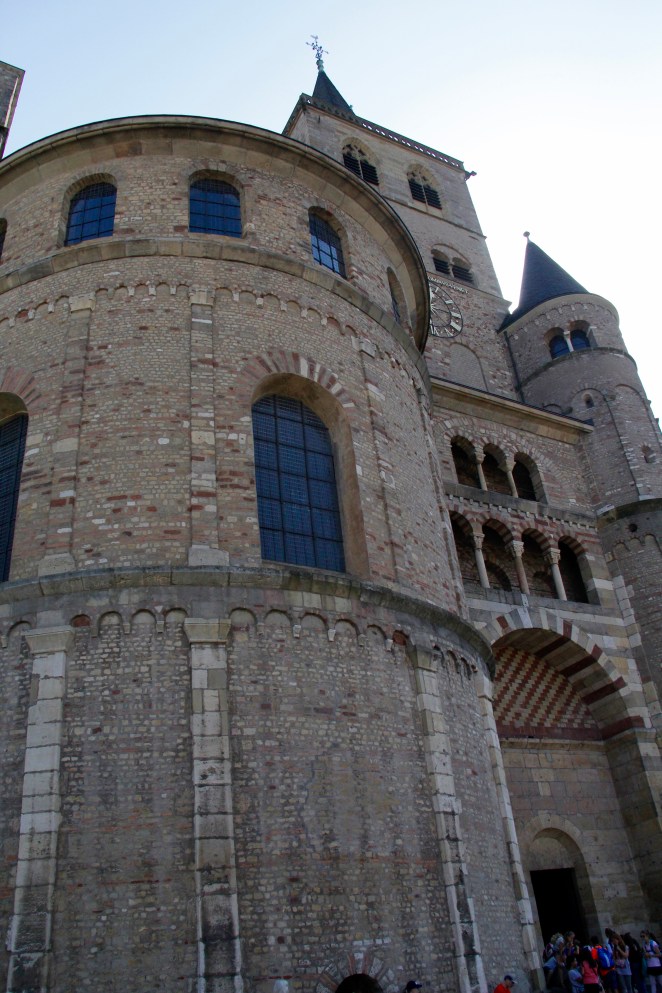
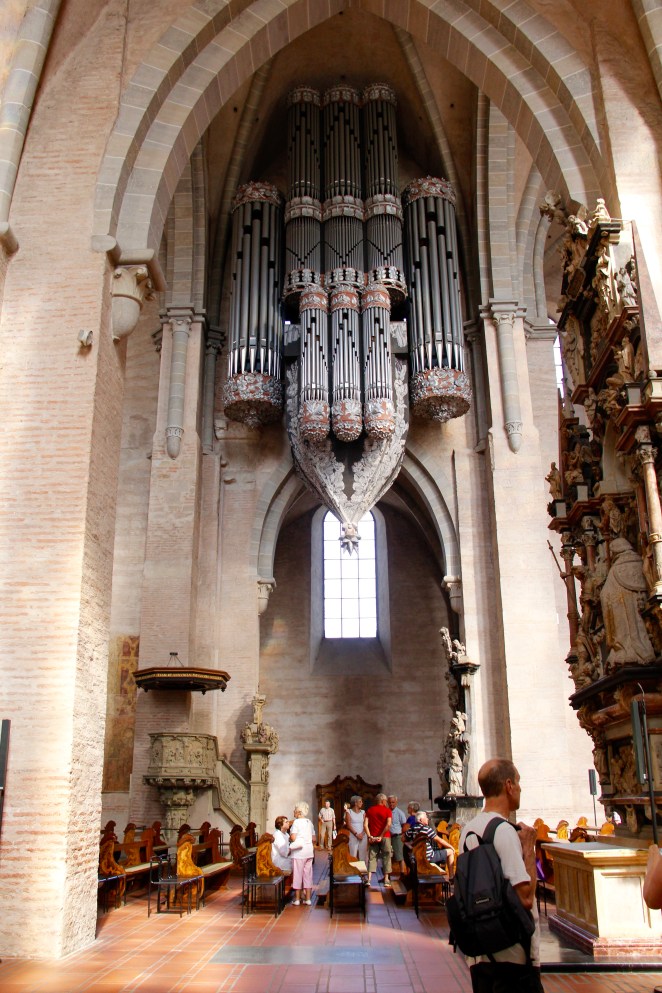
St Peter’s Cathedral was built at the same time as St Peter’s in Rome was by Emperor Constantine in memory of his mother Helena who was a profoundly devout woman.  This is the oldest church in Germany and was at one point apparently twice and large and tall.

_mg_6264_mg_6267_mg_6269

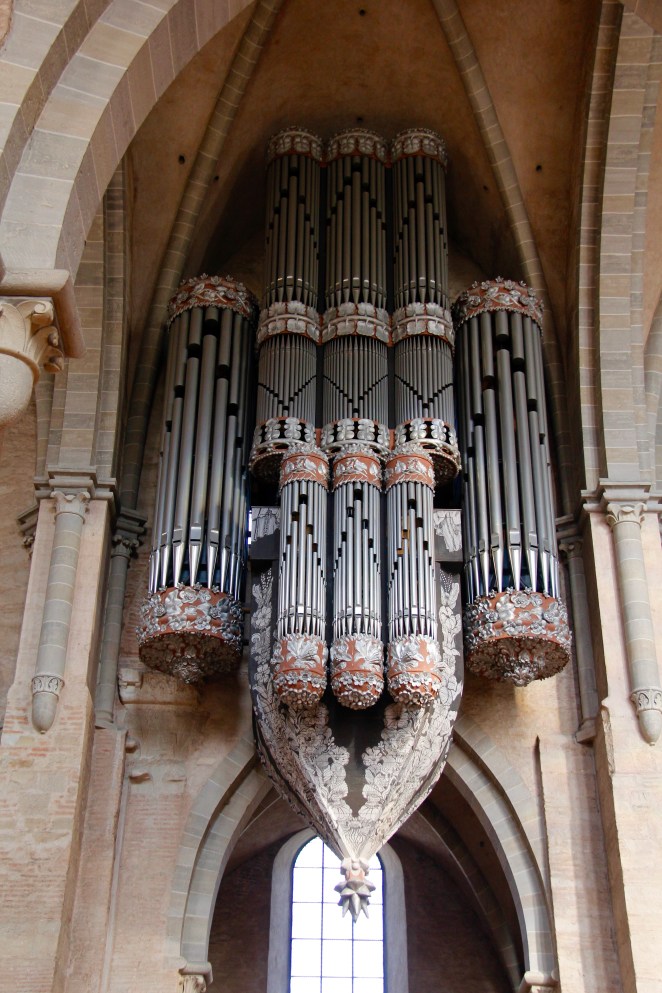
After cooking in the hot sun (only 29 degrees today…) we decided to take a gander inside the Basilica.  Although I am not a religious person, I am still awe-struck by beautiful churches, and I uttered and audible ‘wow!’ when we entered.

_mg_6271_mg_6276_mg_6277_mg_6281

There’s no stained glass, which is usually one of my favourite parts of a church, but here it didn’t seem to bother me.

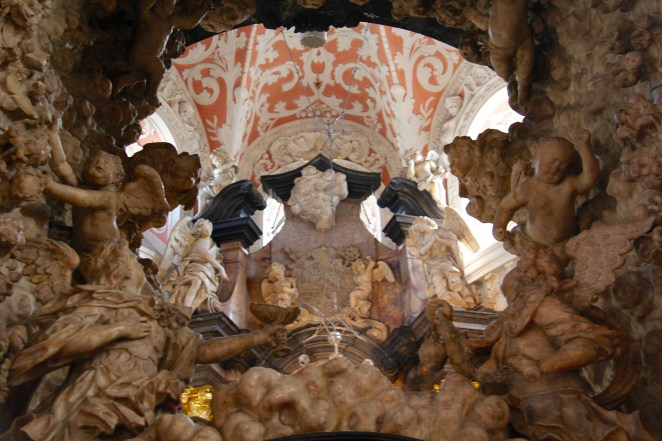
Thought this window (and not photographed door) is the alleged robe of Christ, which is rarely on display.
_mg_6283_mg_6286

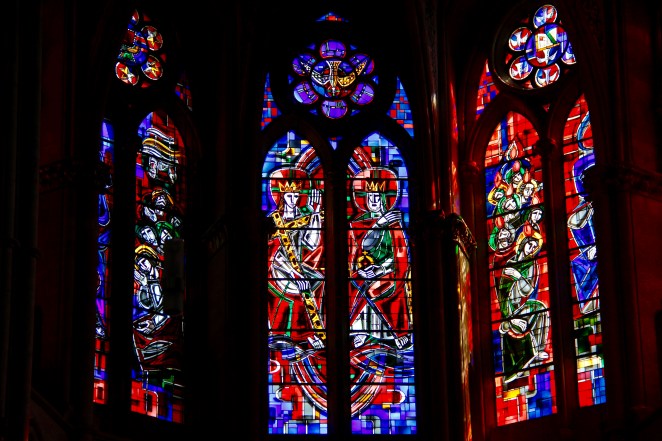
Right beside St Peter’s is the Liebfrauenkirche (Church of Our Dear Lady) which was completed in 1260, so much newer than St Peter’s.  This church was built in the gothic style (my favourite style of church) and sadly the roof was badly damaged in World War II and needed to be replaced.

_mg_6289_mg_6290_mg_6292

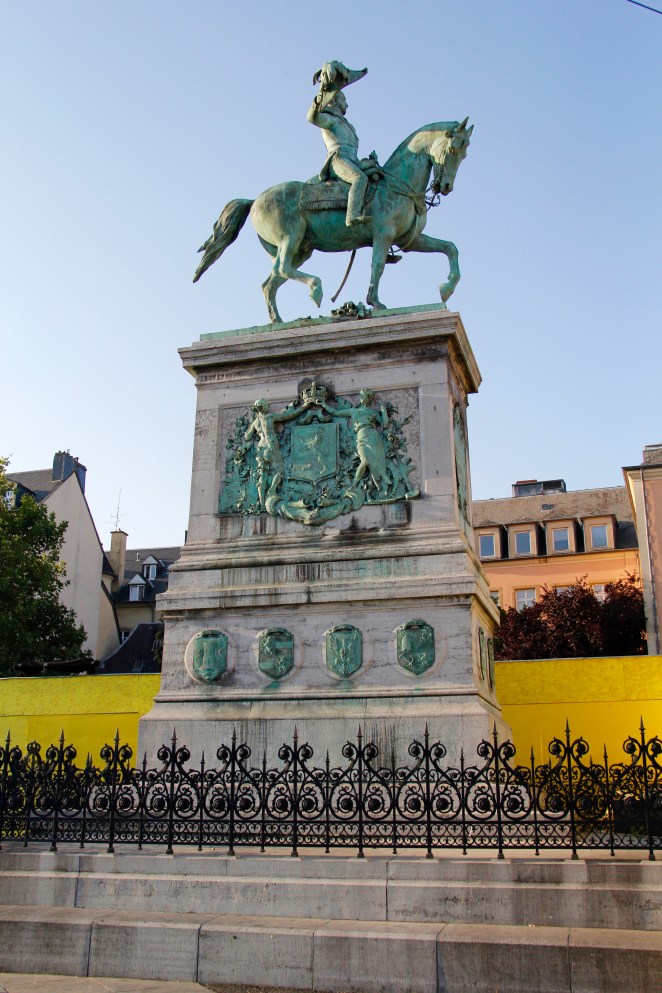
We decided we had seen all we wanted to see in Trier and grabbed the next train westbound, across international lines into the Grand Duchy of Luxembourg.  Things I learned about Luxembourg today: they are a Duchy (ruler is a Duke), you have to be born in Luxembourg to be a citizen (you can’t marry in or take a citizenship test), and Luxembourg has money and lots of it.  We noticed it as soon as we got off the train at the very swanky train station.  Everything was clean and grand, exactly how you would imagine it to be in a tiny country perched on hills and connected by bridges, ruled by a Duke Henri.  Another thing I noticed is that I could suddenly understand most people – I had forgotten they speak French there!  The official language of Luxembourg is Luxembourgian, but part of me thinks it’s just French.

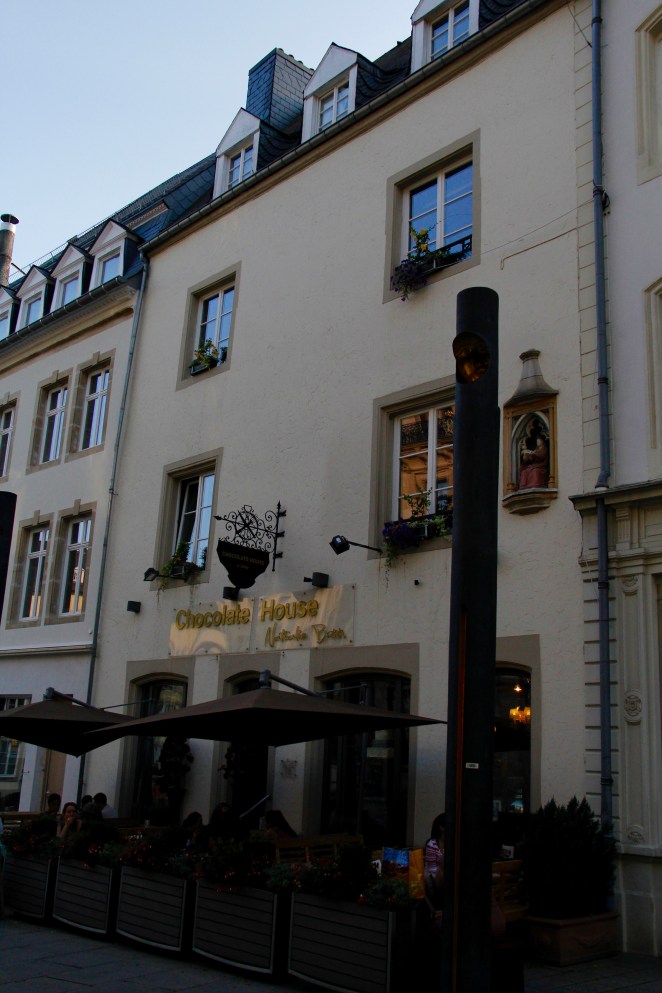
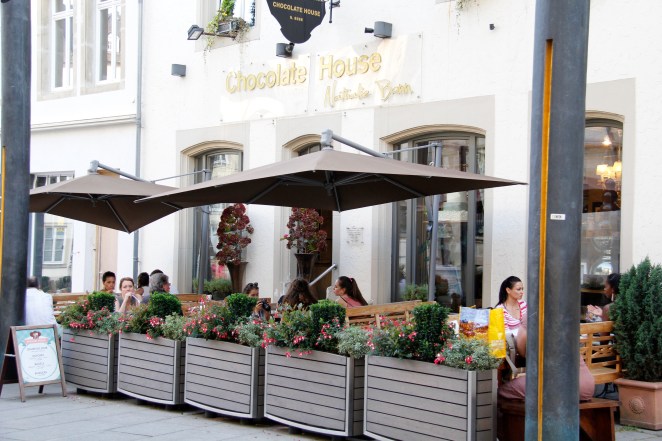
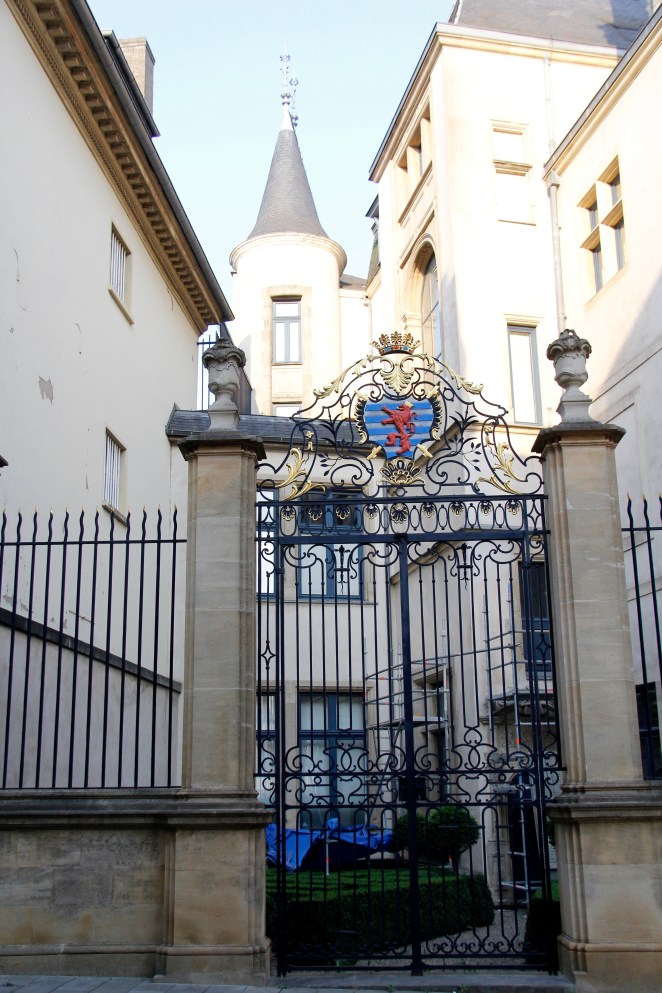
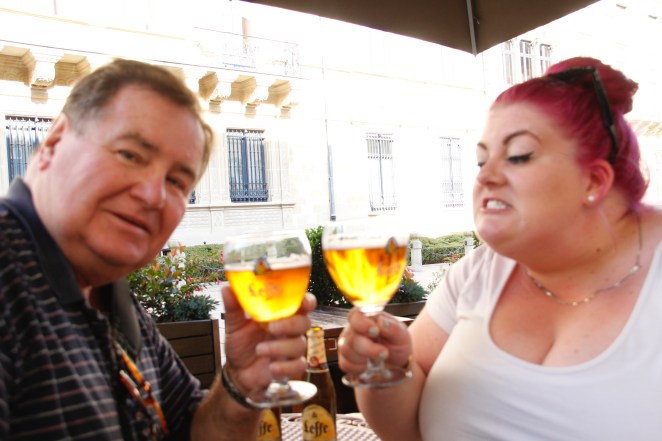
We didn’t have a lot of plans for Luxembourg except for one priority – visit a restaurant called Chocolate House.  Ma and I stumbled across it while researching Luxembourg and decided we absolutely wanted to go there as their cakes and hot chocolate look divine.  I asked a couple of not awful looking customs guards how to get into town, so they pointed us in the direction we needed to go and soon ferreted down Chocolate House.  One of the older houses in Luxembourg, Chocolate House is in prime location – on a shady cobblestoned street directly across from the Duke’s Grand Palace.  Pa and I ordered some Leffe and what we thought was a light dinner prior to our cake.
_mg_6298

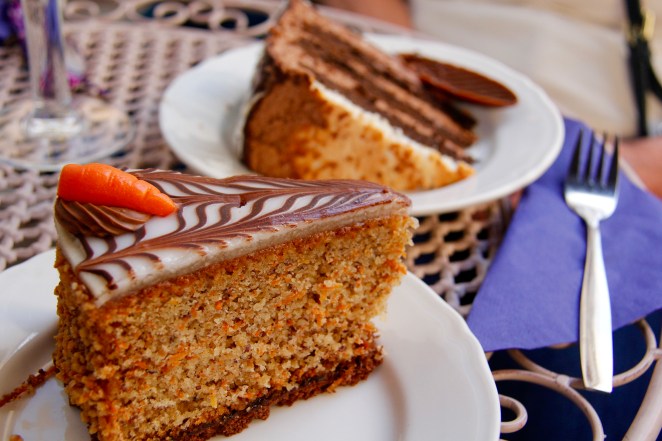
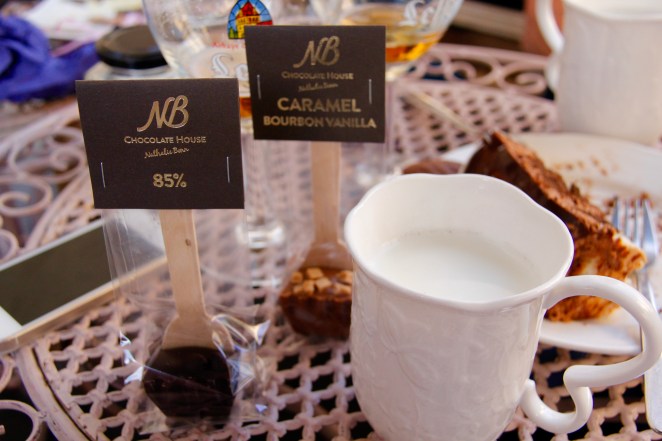
After dinner it was cake and hot chocolate time.  Pa had carrot cake (whyyyyy) and mom and I split a classic chocolate cake.  I also ordered a caramel bourbon vanilla chocospoon and mom ordered an 85% chocolate one.  The chocospoon is their way of doing hot chocolate – they give you steamed whole milk and you decide what flavour spoon you want.  The chocolate is in solid form on the end of the spoon, so you just stir your spoon into the milk and it turns into a divine creation.
_mg_6299_mg_6302

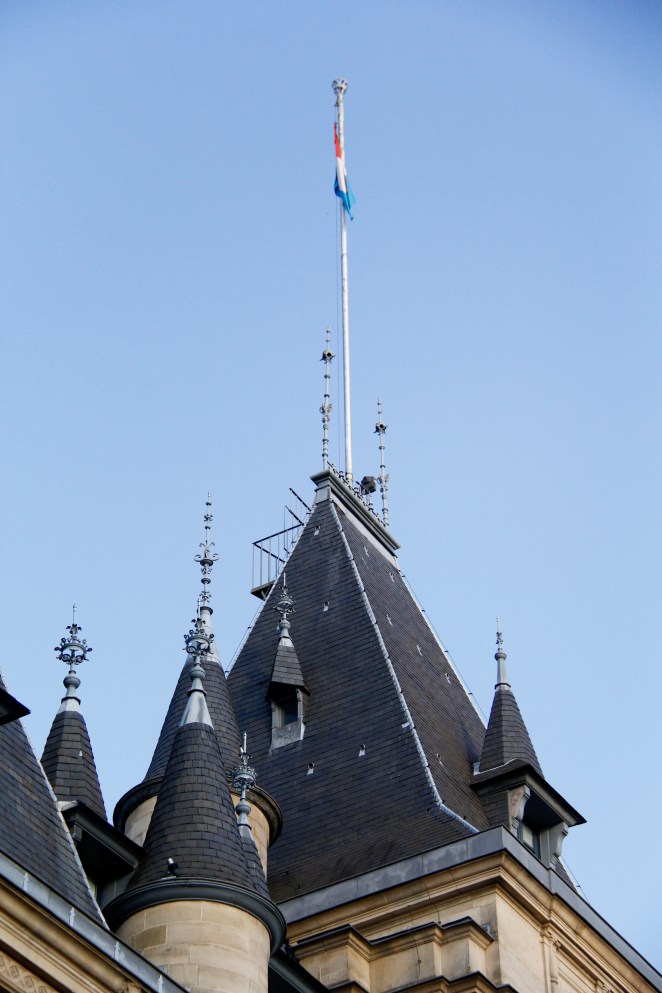
Sitting across from the Palace was a bit of a treat.  We got to watch the changing of the guard (which is exchanging one 20 year old with a rifle for another) and learned that because the flag of Luxembourg was up, the Duke was in his residence.

_mg_6304_mg_6306_mg_6308_mg_6310_mg_6312_mg_6317

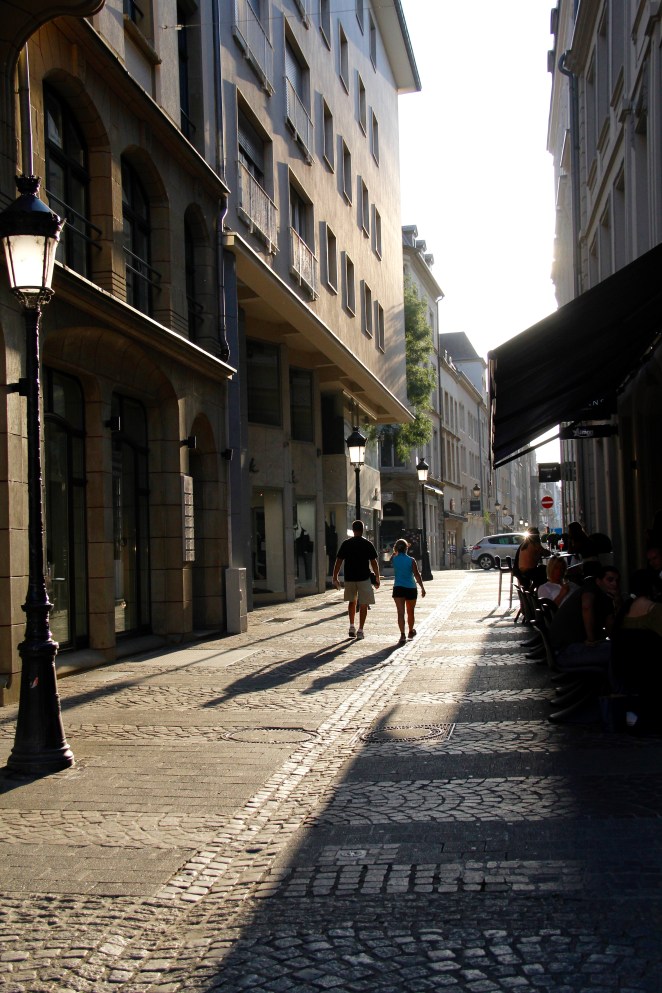
After our sweet feast, we rolled out of our booths and just ambled around the streets for a bit, noticing all of the posh women with their small dogs and impeccably dressed men.  It’s like a combination of Paris and Vienna.
_mg_6319_mg_6325

We sat in the square of Hotel de la Cite and watched a little bit of Surrey unfold before us:

3 girls, all between about 8 – 10 years old were in the square unattended, feeding pigeons and then kicking them as they got near.  The oldest girl made contact several times, feathers flying everywhere and earning a few shocked gasps from Ma and I.  I don’t care for pigeons, but I’m not going to be cruel to an animal (unless it’s a spider).  We sat wondering where these kids’ parents were and Ma contemplated if she should step in as the future serial killer didn’t seem to tire of kicking birds.  A man enjoying his ice cream then approached them, scolding, ‘Arrete.  C’est les animaux que tu ce fait mal.  Vous ecoutez?’  The man walked away but still watched from a distance.  Main bird-kicker stopped kicking birds for about 4 seconds and then went right back to it.  Minutes later 2 women, who I assume are the girls’ moms exited a restaurant and seemed to ask what happened.  The man explained that the girls were kicking birds.  What I expected to happen was the opposite of what actually happened.  I had thought that the moms would have been like, ‘oh my god, that’s awful!  Thank you for letting me know.  Child, we will talk about this when we get home’.  But no.  Both moms immediately got the backs up and started berating the man for parenting their children, saying that what their kids do is not his problem.  This went back and forth for several minutes and ended with the man saying that he was going to get the police, and the mothers of the year returning to their patio table with their hellions in tow.  Sadly, we had to leave before we could witness the stunning conclusion of this disturbance.

_mg_6327_mg_6329_mg_6332_mg_6336

We hired a cab and headed back to the train station and made the 2 hour journey east, back to Germany and to Cochem to turn in for the night.
_mg_6338

Germany, Day 2: Oh I Wish I Had A River…

_mg_5953

Cochem Train Station

Today we had to get up bright and early to catch the train to a remote location.  We hoofed it down to the train station, bought our tickets from possibly the most disinterested man in Germany and hopped on the train eastbound, our destination: Moselkern.  Moselkern isn’t really notable for anything, except for its proximity to our destination this morning.  We were met at the train station by Taxi Charly who charged us an unreasonable amount of Euros to take us inland, about 3 km from the river, up the terraced vineyard-riddled valley walls to a plateau, into a forest and dropped us off at a car-park.  Following the marked, steep, paved path, we walked down until the forest revealed to us its treasure:

_mg_5963

Burg Eltz

Burg Eltz.  Burg (castle) Eltz has been in existence since the year 1157, was never destroyed by war or invaders and is still maintained and sometimes lived in by the Eltz family, the current Count and Countess being in its 33rd known generation.  We took a tour with the very  knowledgeable Lisa who told us much of the history of the castle including armour, decorations and practicalities (all the staircases are counterclockwise spirals so that attackers going up the stairs would struggle swinging their sword in their right hand).

_mg_6006

_mg_6020

After our excellent tour we decided the castle would be an excellent place to have our first beer of the trip.

_mg_6022

We headed to the marked muster point for people taking the shuttle up the mountain and encountered a rather large queue: as it turns out, the castle’s regular 20 person shuttle had broken down that morning so everyone was stuck with the 8-seater van.  In the line in front of us were about a billion senior citizens, all of us baking together in the 30 degree heat, waiting for the van.  The castle staff were lovely and brought umbrellas to shade us all from the sun and crates of cool mineral water to quench our parched mouths.  After about an hour, it was our turn to board the van and we zipped back up to the car-park where we met our cabby, sped down the valley, hopped the train in Moselkern back to Cochem, just in time to grab another beer at a bustling city centre cafe.

_mg_6025

The beer was delicious and our waiter looked like Sir Ben Kingsley.  He also told me my German accent was perfect (what).

We had heard that taking a Mosel River cruise was highly recommended so we had planned to take one westbound and get off at the tiny TINY village of Beilstein.  So at 1500hrs we shuffled aboard a boat with many of the same elderly tourists we had waited in line with at the castle (ah!  Die burg fraulein!).  We were able to snag a table on the upper deck where we ordered some drinks and drank in the scenery.

_mg_6047

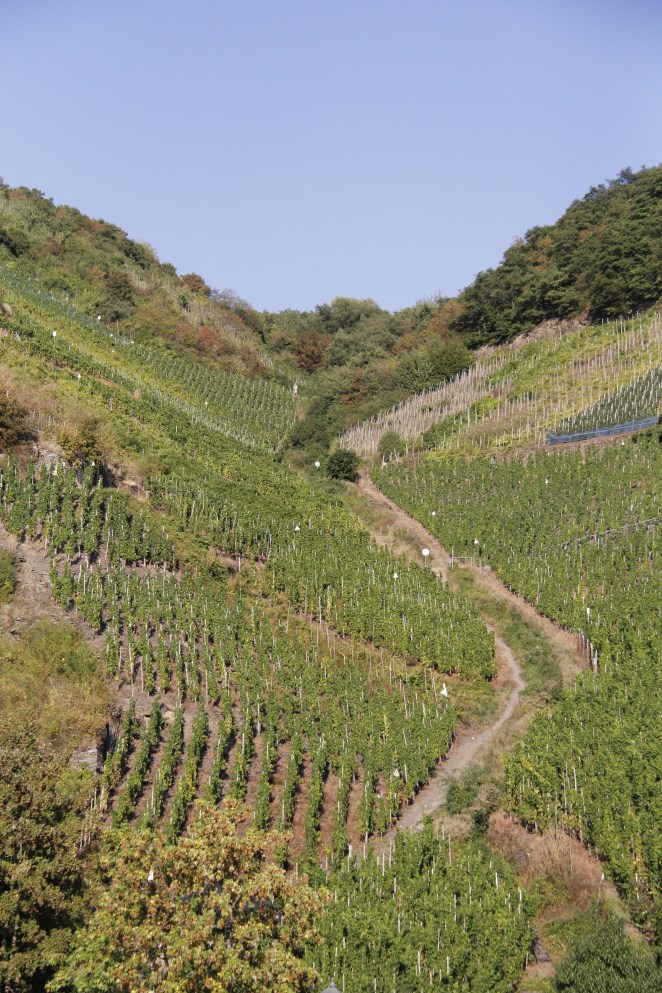
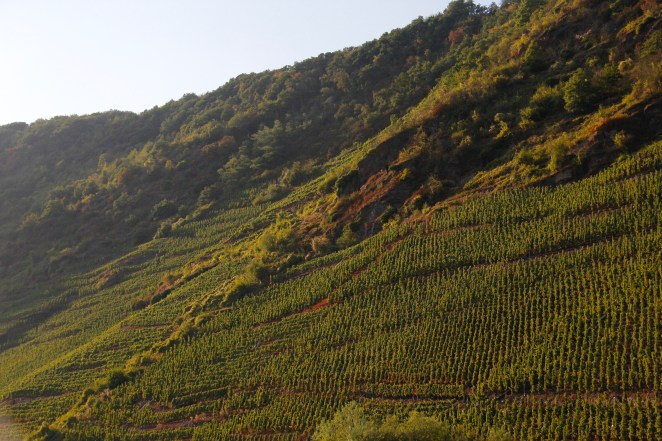
It’s difficult to describe how many vineyards line the Mosel River.  Not just the sheer number of them is astounding, but also how they are laid out. From river bank to valley-wall peak, steep rows of grapes flourish on the sunny hill sides.
_mg_6075

At 1600hrs we docked at Beilstein, and right away we were smitten at how charming this tiny hamlet is.  It was nearly inaccessible for hundreds of years which left it pristine and untouched by more modern architecture.  These days it features mostly inns and cafes, with a ruined castle and now decommissioned monastery thrown in for good measure.  Ma was jonesing for some apfelstreudel which we quickly located at one of the bistros.

_mg_6080

We then had about 20 minutes to explore Beilstein before the last boat left, and honestly it was just about enough time.  The town is so small, there are no ATMS and probably not much to do, but I could honestly picture myself there for about a week just drinking wine and beer, reading, writing and pretending the rest of the world doesn’t exist as the peaceful Mosel ambles by.

_mg_6084

_mg_6086

_mg_6090

_mg_6093_mg_6099_mg_6102_mg_6112

_mg_6119_mg_6121

We caught our boat back and enjoyed some mineral water as the sun started the set and the valley cooled.

_mg_6132_mg_6138_mg_6145

We got back into Cochem at around 1830hrs where we headed back to our in and shared a sweet riesling on the shady terrace.

_mg_6164

Cochem

_mg_6178_mg_6183


Germany, Day 1: Looks Like We Made It

Today we left YVR for Germany for 25 days of beer, Bauhaus, Bavaria and burgs (castles).  We decided to fly with KLM because they’re clean, efficient and friendly (and the meals come in little Delft boxes).  The nine hour flight was relatively non-eventful and we landed in Amsterdam at 1000hrs.  Then began our train saga.  We took a train from Amsterdam to Utrecht, then an ICE train from Utrecht to Koln (Cologne to us Anglos, station seen below.  More in a later post as we will be visiting Koln in a few days.), Koln to Koblenz and finally Koblenz to Cochem, which is our home base for the next few days.

_mg_5913

_mg_5925

Cochem is a darling little town in the middle of the Moselle Valley, Riesling wine country.  The train from Koblenz to Cochem was definitely the most picturesque part of the journey, following along the Mosel River, flanked by vineyards, sleepy towns and castles perched on hills (more photos on a later day).  We checked into our inn, Weingut Haxel at around 1830 and admired the shady patio of the inn’s adjoining wine space.

_mg_5926

_mg_5928

_mg_5931

We crossed the street to a sunny patio to fill our very empty bellies and sample a glass (or 2.  Or 4, in my case) of some of the local Riesling, enjoyed the setting sun and cooling off and headed back to our inn so we can be fully charged for our first full day of sight seeing.

_mg_5937

Summer Daze

It’s been hot in Vancouver lately.  Like, unbearably hot.  I’m not one of these people who thrives in the heat.   I melt into a miserable little puddle, waiting for the chill of the fall air to move in.  The other day, we had a beautifully cloudy respite:

_MG_5265

_MG_5270

_MG_5274

_MG_5281

_MG_5287

_MG_5310