Day 8: I Know I’m Awake But I feel like I’m in a Dream

This morning we got up at a decent time and hit up an adorable little bakery around the corner for breakfast. At Julie’s we had iced lattes, cuberdon steamed milk, cinnamon buns and scones with jam and cream. Feeling satisfied we hopped a train northbound to the fairytale town of Bruges (or Brugge). Bruges was a sleepier town until the 2008 hit movie “In Bruges” (highly recommend, unless you’re offended by the word “fuck”) came out and tourism has skyrocketed. Apparently Ghent and Bruges are bitter rivals.

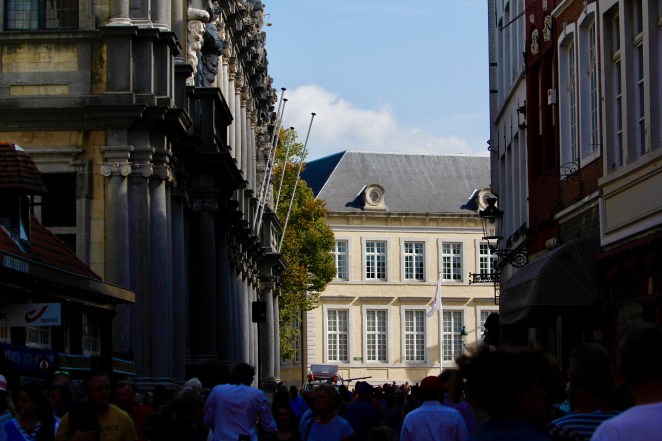
We walked the kilometre from the train station to the main market square – along with gobs of other tourists and travelers, some stopping right in front of you and blocking the entire narrow sidewalk to get the perfect shot.

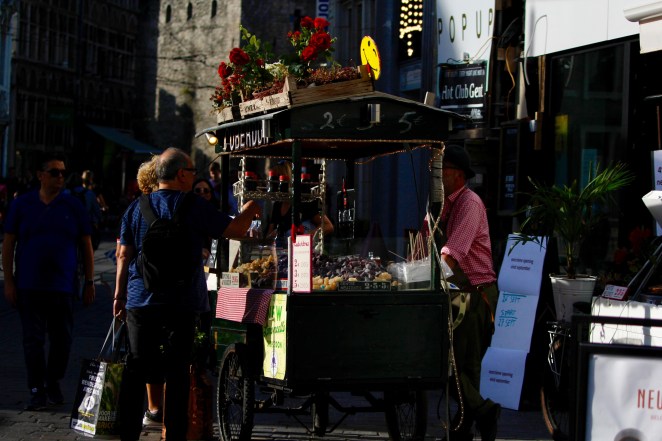
We got to the busy market square and things were hoppin’ – tourists, waiters, horse drawn buggies and food carts crammed every corner. We were feeling a little overwhelmed and a little disoriented, so we stopped for a beer.

After some beers in some pretty ridiculous bar ware, we started our Rick Steves walking tour, starting at the belfry (as seen in In Bruges).
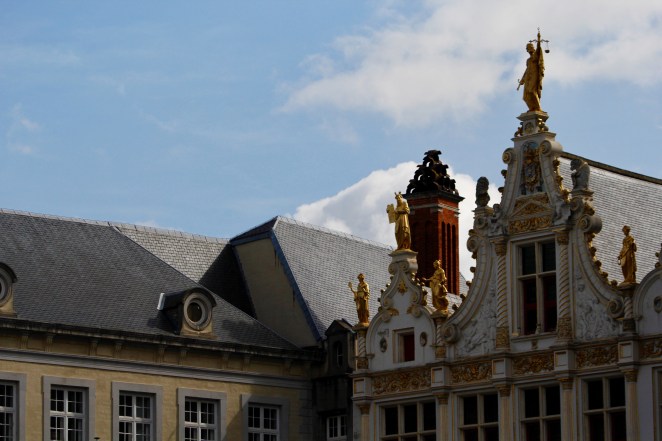
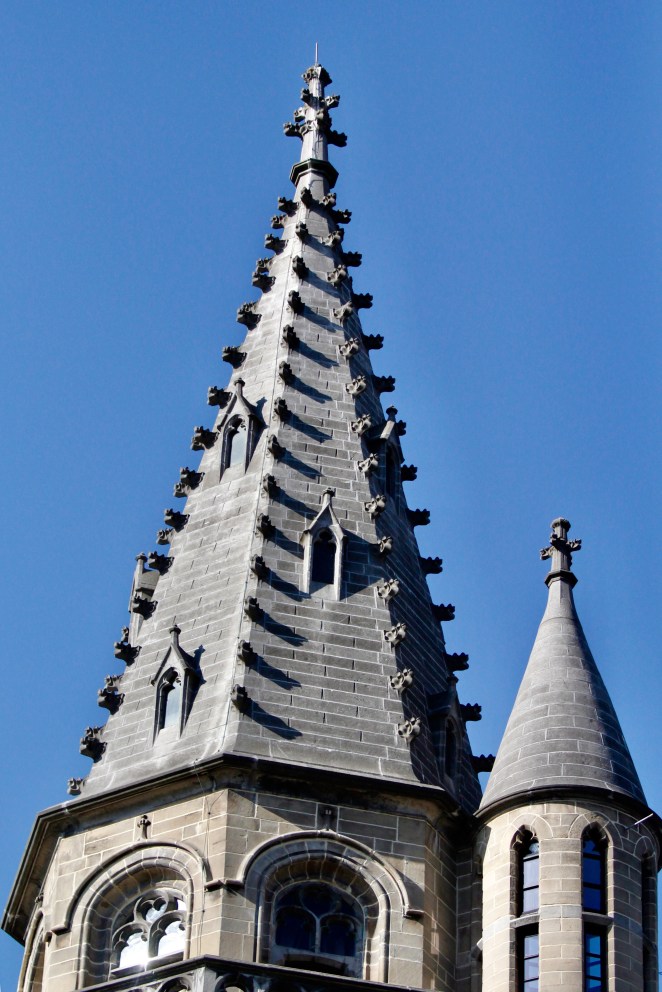
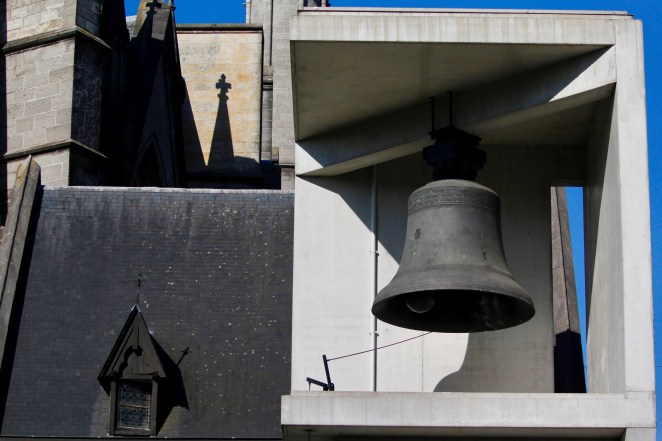
They’ve boarded up some of the viewing points on the upper part of the Belfry, thanks to a particular scene from the movie. Bruges is capital of West Flanders and is encircled and connected by waterways, where swans and tour boats are king.

Ma didn’t get a waffle the last time she and Pa were in Bruges, so we stopped by Fred’s and each had a delicious Liege-style waffle.

After our sweet treats, we wandered around the old squares, ancient houses, former markets, breweries and abbeys.

Everywhere we turned there were people. And not just people, but tourists (like us). We decided that we wanted to do my favourite thing – boat tour!

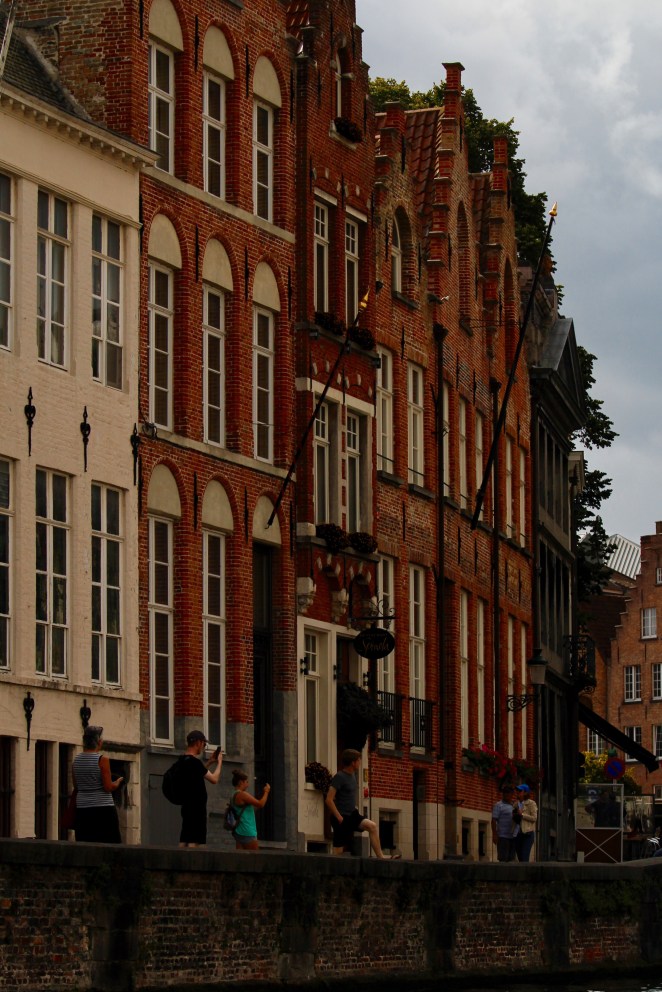
Our boat captain/tour guide was hilarious, with a dry sense of humour and cracking wise in 3 different languages (I’m assuming he was funny in Dutch, I can only vouch for English and French).

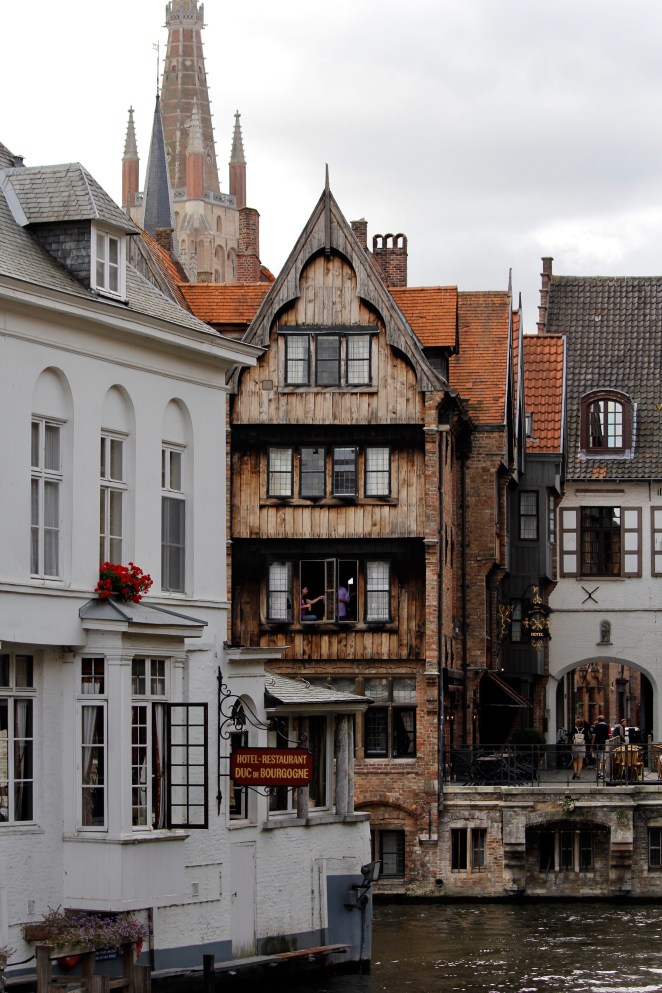
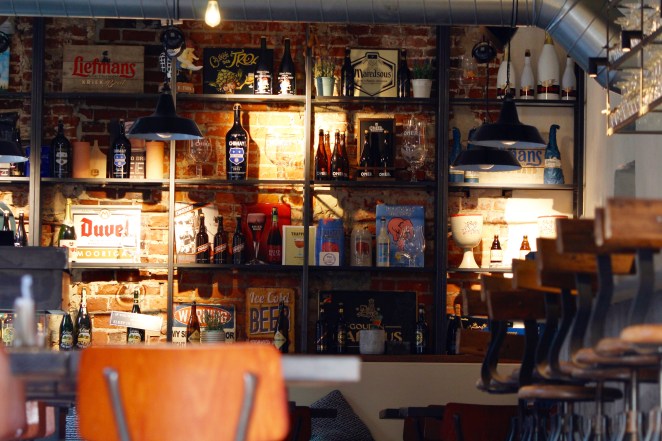
After 30 minutes of putting around the moat, Pa and I decided we were thirsty and had noticed a neat looking brewery on our boat trip – Bourgogne de Flanders – so we tracked it down, each got a flight of 6 beers and grabbed a table at the hip brewery (some hits, some weird misses).

We were almost Bruges’d out, but Pa had something to show me – the Bottle Shop.

This shop is like Mecca for good beer fans – ceiling to floor, wall to wall of brews, including a whole section of krieks. Truly breath taking!

We headed back to the square and grabbed a cab back to the train station and trained back to Ghent, where we had some delicious pizza and pasta for dinner and headed back to the hotel.
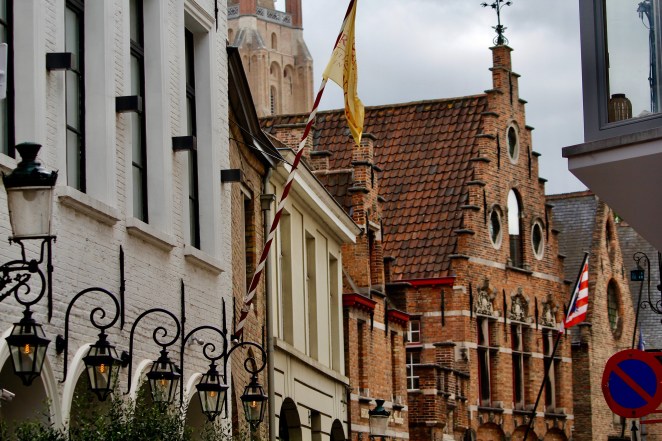
There are quite a few articles on the internet about Bruges vs Ghent and here is my opinion – Bruges is beautiful and cute and it is a fairytale town for a lot to see and a fun boat tour, but I got the sense that the town itself is disingenuous – like it existed solely as a tourist town. I don’t know how many Belgians actually live there. Ghent is also beautiful and interesting, but it just seems like it’s more of an authentic Belgian experience, because so many of the people there are native Gentenaars and the town doesn’t feel like it exists for tourism, which is how I felt about Bruges. Bruges is not a fucking shit hole, but if it came down to the 2 towns, I’m on team Ghent.

Day 7: It Simply Isn’t An Adventure Worth Telling if There Aren’t Any Dragons

So Ghent apparently hasn’t gotten the memo that September is here and it’s time to cool off – we woke up to blue skies and an already warm sun. Today we wanted to do a Rick Steves walking tour where we download his guidebook and follow the tour he outlines, with plenty of stops for photos and beers.

We breakfasted on croissants and coffee in one of the many old squares and then popped into a mustard shop next door – the shop’s recipe is heavy on horseradish and the mustard is put together in the cool basement and pumped into a barrel on the shop floor, where they put it in whatever sized jar you’d like.

We started our walk in the Korenmarkt Square where you can see Ghent’s “three main buildings” – church of St Nicholas, the belfry, and St. Bavo’s Cathedral.

We first peeked down at the St Michael’s bridge, which offers stunning views of a lot of the old town. This used to be the bustling city centre at the confluence of 2 rivers, a fish market and a nearby meat hall.

We headed back over to St Nicholas church and strolled around inside. I’ve been in many a European church on my sojourns and this one was sadly nothing to write home about. It was built mostly in the 13th century and was stripped of the fancy catholic accoutrements by the Calvinists during the Reformations (they also destroyed almost all of the medieval glass in the city).

Leaving the church we took a look at the Mason’s Guildhouse with its 6 dancers, only discovers in the 1970s after having been hidden behind a wall for ages.

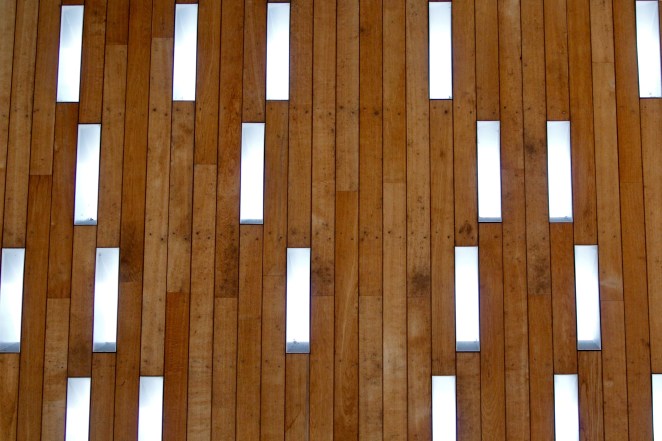
We crossed the street to the City Market Hall, a newer wooden roof structure with panels missing for the light to shine through.

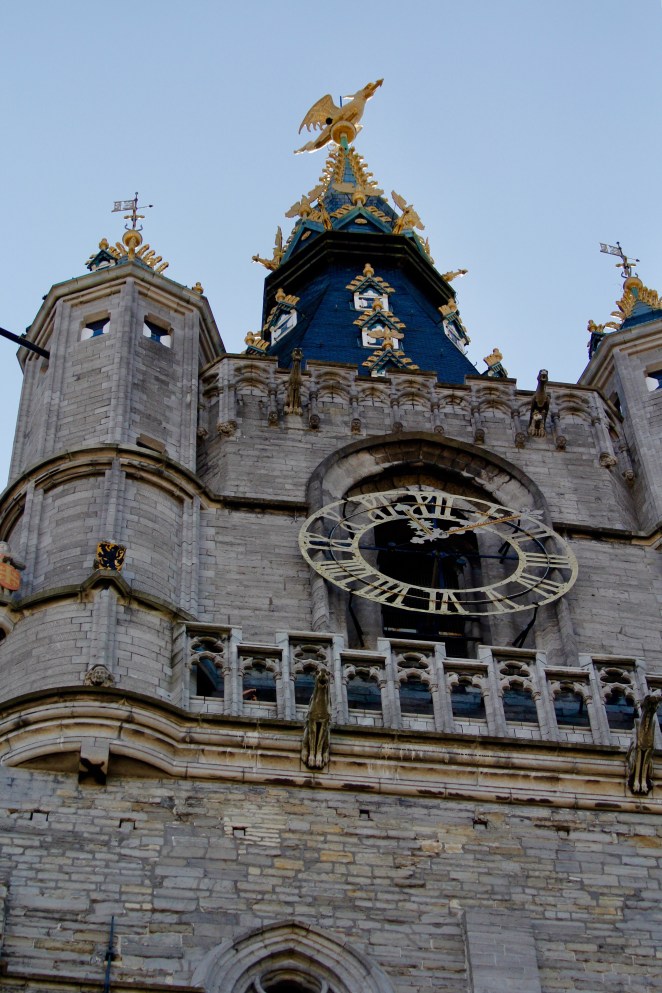
We continued on to the Belfry, part of the UNESCO World Heritage Site of belfries of East Flanders. On the hour the carillon plays the anthem of Ghent and the dragon sits atop is to represent defence.

Leaving the cloth hall of the belfry (Pa climbed all the stairs to the top – Ma and I did not) we walked into St. Bavo’s Square, where stands St. Bavo’s Cathedral. The square houses a few restaurants, a theatre and a statue representing Dutch revival in a once French controlled area. We took a quick sneak into a nearby chocolate shop Chocolatier Van Hoorebeke and just HAD to purchase a few samples (I had caramel and creme caramel and they were UNBELIEVABLE).

We turned to St Bavo’s Cathedral, a gothic church that houses a very often stolen alter piece of Jan van Eyck – The Adoration of the Mystic Lamb. The piece was finished in 1432 and is important in the art world as it is one representing the more humanist style of the Renaissance. The piece was stolen many times throughout history, most notably by Hitler and recovered by the “monuments men”. It’s made up of 12 panels, one of which was stolen by a local and never recovered. The thief who took the panel essentially on his deathbed said “you’ll never find it”. It’s been replaced by a very accurate replica. We paid out 4€ and went in for a look – it was a very “Mona Lisa”-like experience, with people crowded around, elbow to elbow and all the tall people in the front. We badgered our way up to catch a glimpse. Impressive in size, but otherwise I felt very little.

The cathedral itself is very large, and feels like it’s been stuffed with a hodgepodge of different catholic trinkets and things.

After the Cathedral we decided to take a beer and frites break on the square.

We walked towards the area of Hoogeport, where the old city hall sits, dating from the 16th century.

We then took a step back into the 21st century and turned down Werregarenstraat, also known as “Graffiti Street”. Belgian police have, instead of busting people on graffiti altogether, designated this long alley to street artists who can paint without getting in trouble.

We then decided to take another beer break in a square dedicated to a Ghent wool trader. The square also houses the House of the People, headquarters for the area’s socialist movement (Belgium is apparently very left-leaning).

Our walking tour ended in the Patershol area where our hotel is, so we decided we wanted to do one of my favourite things – take a boat tour!

On the 45 minute tour we learned a little more about local trade, history, beer and Ghent University, with 75,000 students enrolled. Ghent, like Delft, is a university town so there’s always a bunch of young people hanging about.

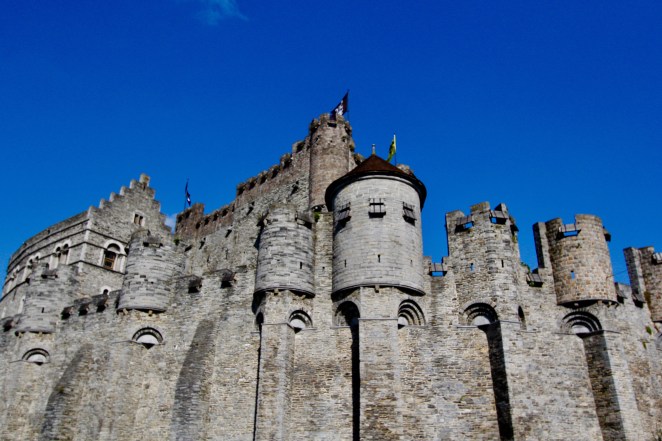
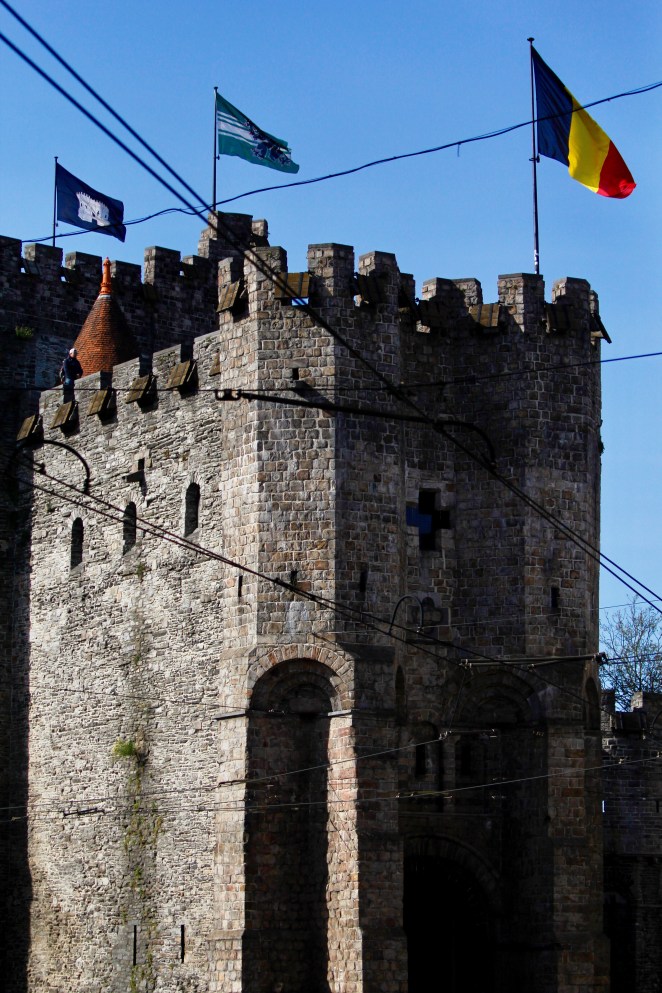
Another building we learned about is the “Castle of the Counts”, or Castle Gravensteen. The Castle was built in 1180 to intimidate the locals against any sort of rebellion, and was only conquered twice – the second time being in 1949 when the city hiked the price of beer which enraged the local student body, so the students overtook the castle and pelted surrounding police and fire crew with potatoes and onions. The students were never arrested because the locals sided with them and the price of beer was brought back to normal.

For dinner we went to a frites place that’s locally famous – Peter’s – a little hut attached to the old meat hall. Peter double fries his frites in ox fat and has a variety of toppings (I stuck with mayonnaise). It was fucking delicious. After a quick ice cream for dessert, we slowly wandered back to the Patershol for the night.

Day 6: She’s Leavin’

This morning we leisurely got ready and ate our breakfast, as we were leaving not only Delft but also the Netherlands for the next leg of our trip. I wrote a whole mess of postcards and we checked out, sad to say goodbye to our 400 year old hotel room, delicious breakfasts and quaint surroundings. Today was definitely our most complicated travel day, with 3 trains (and one dicey connection time) taking us from the heart of the Netherlands to East Flanders. Ghent (or Gand in French and Gent in Dutch) is our first stop in Belgium on this trip, and I was VERY excited, half expecting to see groups of short little curvy people who look vaguely like me and Pa guzzling brews and cramming waffles and frites into their faces.

Our first train trip took us out of Delft and eventually into a Dutch city called Breda, and because we were on a Dutch train and not a German one, the train was late and we missed our connection. We waited around Breda for an hour and hopped the next train, this time into Antwerp (also late). We huffed it from track 23 to track 1 (the Antwerp train station is a beautiful Art Deco behemoth) and made our final train from Antwerp to Ghent.

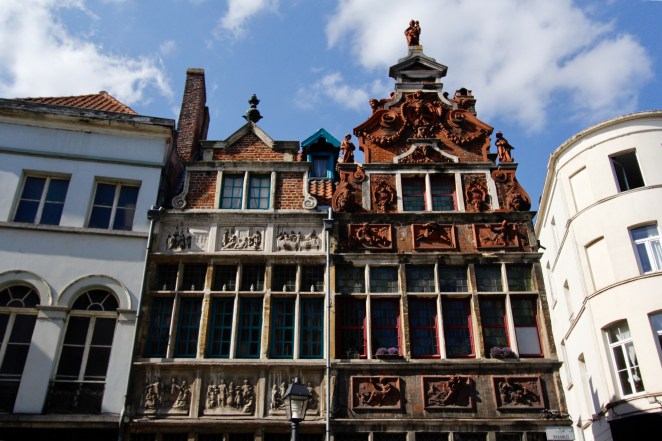
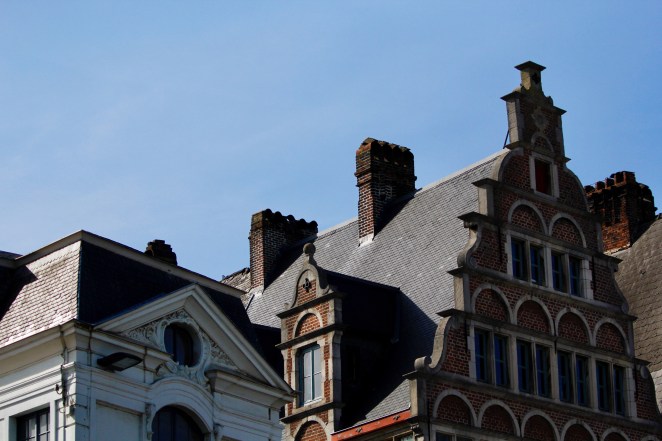
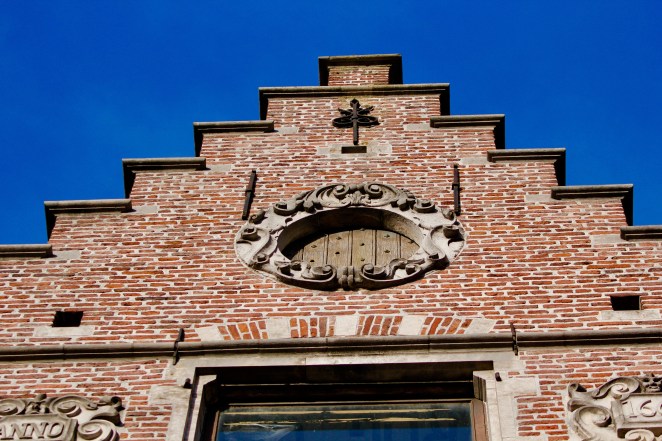
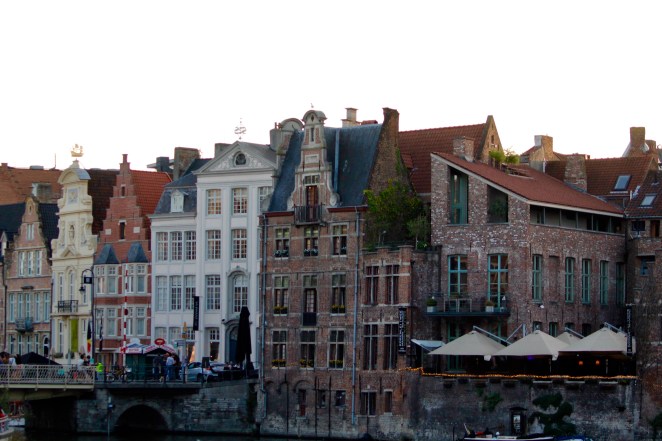
Right away you could tell the difference in the Dutch architecture from the Belgian – Belgian buildings in Ghent are taller and broader, less big windowed facades, but still ornate and beautiful.

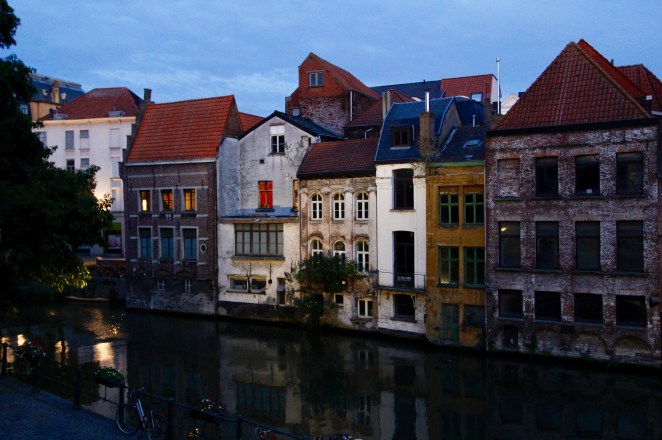
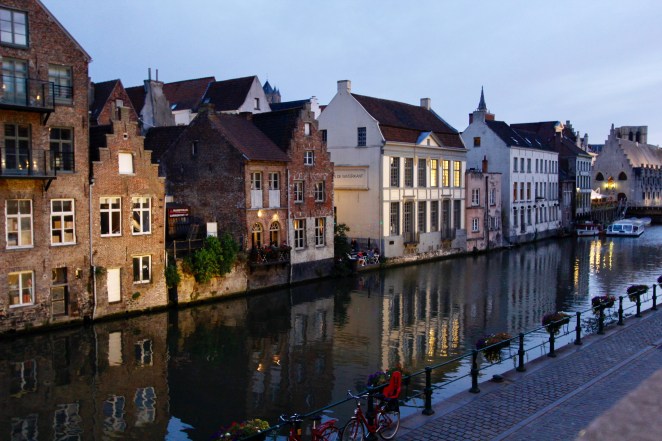
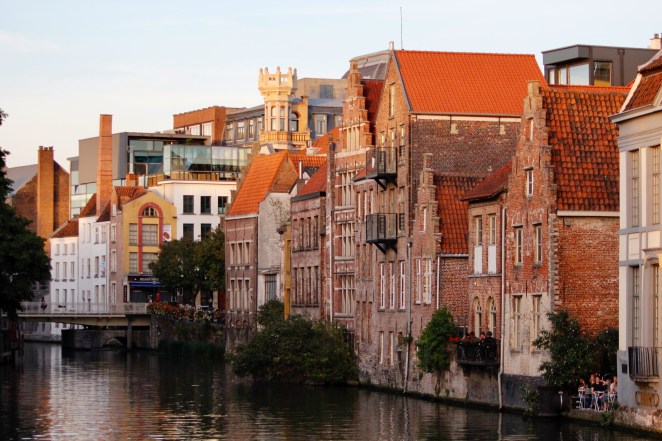
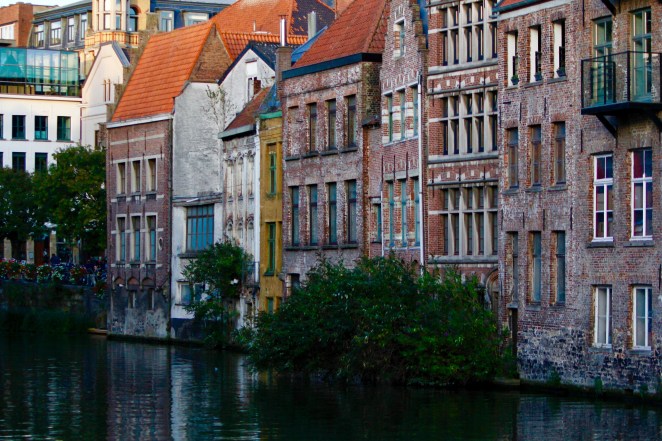
We grabbed a cab at the Gent-Sint-Pietrs train station and headed into the old town, winding down streets lined by cafes, bars, restaurants, and galleries. We’re staying in the historic Patershol neighbourhood, which was in years past a working and warehouse quarter (Vancouverites, think Yaletown) and is now very trendy.

Our hotel is right on the canal and is actually 2 rooms let out by an enthusiastic Argentinian artist who has a gallery and her own housing on the main floor and the rooms to let above.

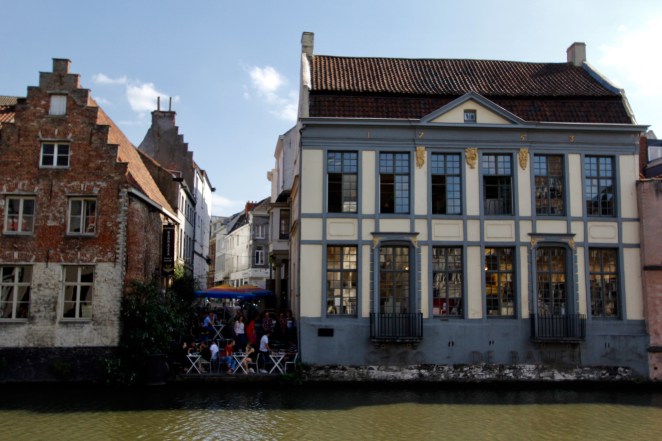
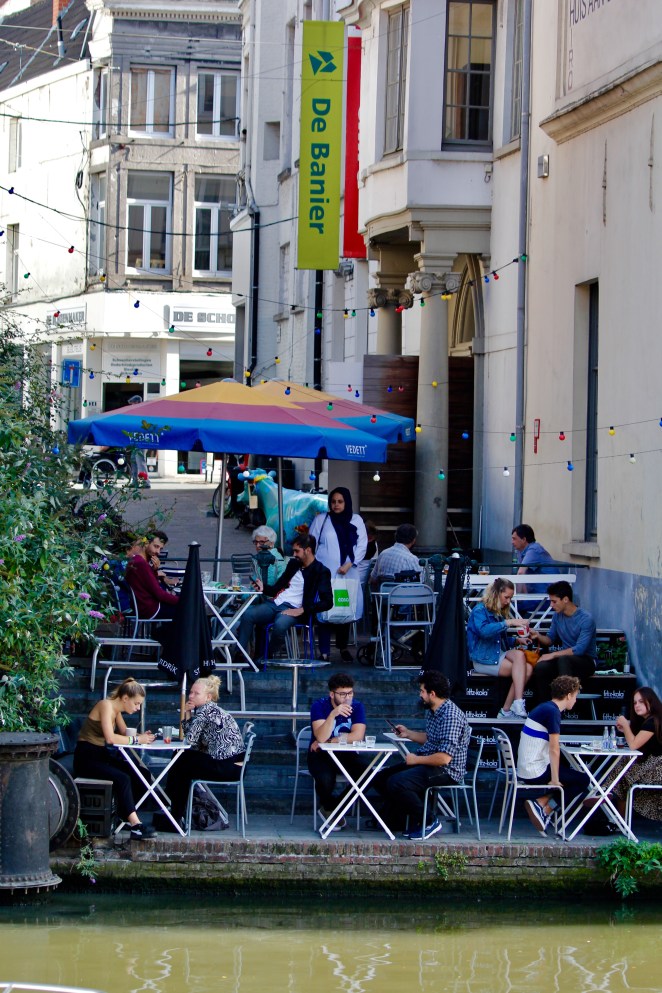
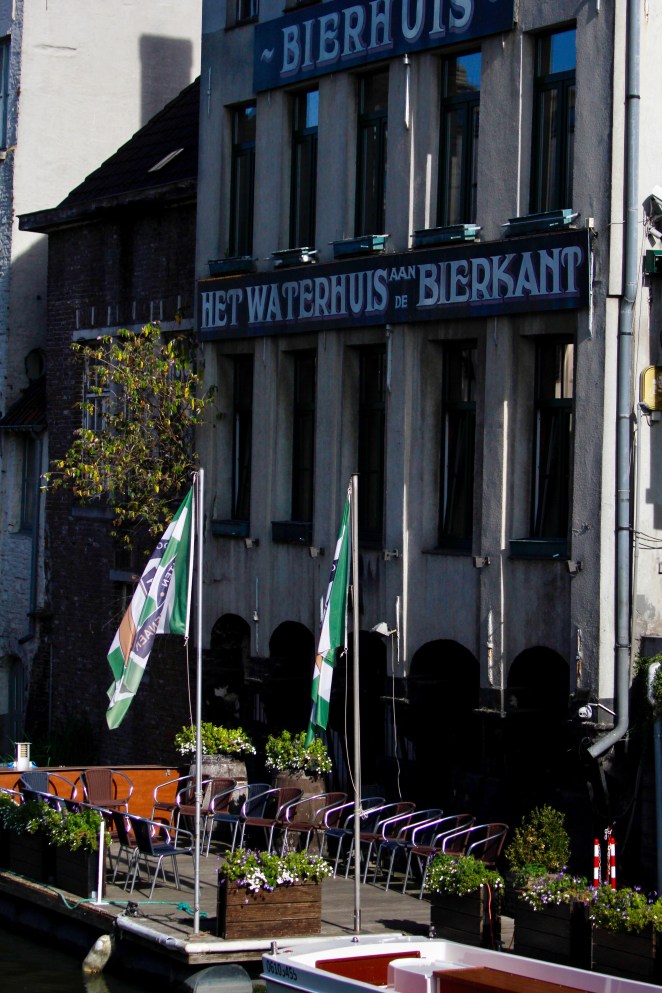
We dropped our luggage and hit the town, thirsty for our first taste of real Belgian beer. I had seen in photos a place called Her Waterhuis aan de Bierkant which is right on the canal and right over the bridge from our hotel, so we headed there. We found a table on the canal, Pa ordered a blonde on tap called Augustijn and I ordered the kriek on tap and we were in Belgian heaven.

At the table next to us sat 4 Americans who all work for Pepsi and are on their 7th annual Belgian beer sojourn. They get together, tour around and drink and take photos of all the beers, which sounds like the dream.

We polished off our second beers and ambled off in search of actual sustenance and happened upon a cuberdon stand that I had read about in my trip research.

Cuberdons are a Ghent candy, also known as “Ghent noses” because of their conical shape. The original flavour is raspberry, and they’re chewy on the outside and liquid in the middle. There are 2 cuberdons hawkers in the main square and apparently they are bitter rivals – apparently one gives you a better deal than the other. We decided to get a 3€ bag (he just grabs a handful and puts it in a bag) and move on…right next door to a waffle place. The last time Ma and Pa were in Belgium they didn’t get to have real Belgian waffles, so we made sure we took care of that on the first day here – so we each ordered one, crispy and covered in caramel.

A small waffle wasn’t quite enough food (seeing as we had all missed out on lunch) so we walked around in search of more substantial food, which isn’t hard to find in Ghent as there are restaurants and cafes tucked around every corner.

We settled on a restaurant, sat outside in the sunshine and had some more beer (quelle surprise) frites and mayonnaise. Thoroughly stuffed, we waddled back to the hotel to relax for the night.

Day 5: Baby You Can Drive My Car

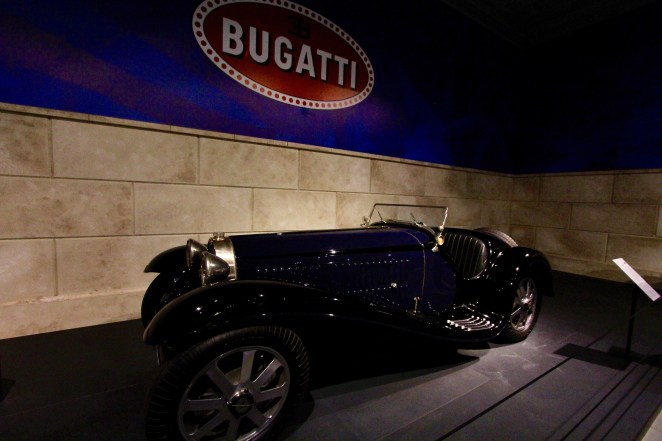
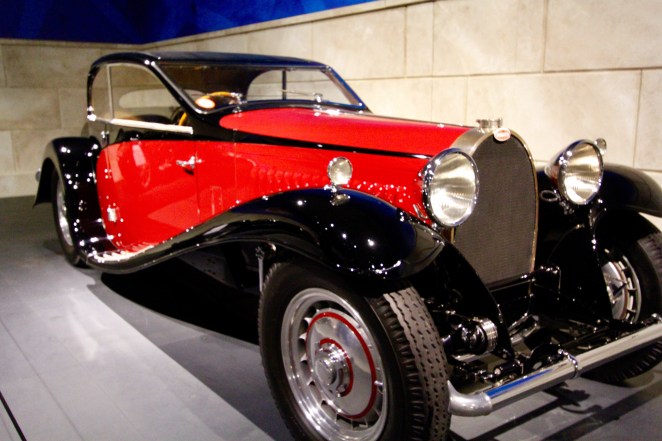
This morning was yet another beautiful, clear morning in Delft, and sadly our last full day in the Netherlands. Today Ma and I decided to take one for the team and go with Pa to the Louwman Museum at The Hague. The museum is Europe’s oldest and one of the largest and most varied classic car (and automobile art) collections.

The Hague is not far from Delft at all, so we got a cab driver to drive us the whole whopping 15 minute drive there.

The museum itself is a work of art – modern, classy and spotlessly clean. We paid the entry fee and started at the very beginning – the oldest cars in the collection, dating as far back as around the 1890s.

The way the museum was set up was also very well done – period music and art to accompany the vehicles. It was also divided up into different sections – early cars, race and sport cars, French cars, Dutch cars, famous cars, etc.

The red Cadillac pictured here had the highest tail fins ever put on a car. To me this car screams “American Graffiti”, with some Del Shannon blasting from the speakers.

They had the actual Aston Martin used in one of the better and more famous James Bond movies, Goldfinger, still equipped with all its gadgets.

Another famous movie car was the Lincoln Continental used in The Godfather, most notably in the scene where Sonny Corleone is ambushed and shot about a billion times.

This next red Cadillac is Elvis Presley’s custom Caddy and it is fantastically ugly.

As many of you know, I drive a little mint coloured ’95 Toyota Corolla named Minty and she’s great. At the museum I got to see her grandmother, a 1978 Corolla. The museum also housed Dr. Toyoda’s desk from where he worked as well as one of the earliest surviving Toyota’s, an AA which was found on a farm in Vladivostok.

Probably my favourite car in the collection was this cool old Duesenberg, the same model owned by many old movie stars and celebrities.

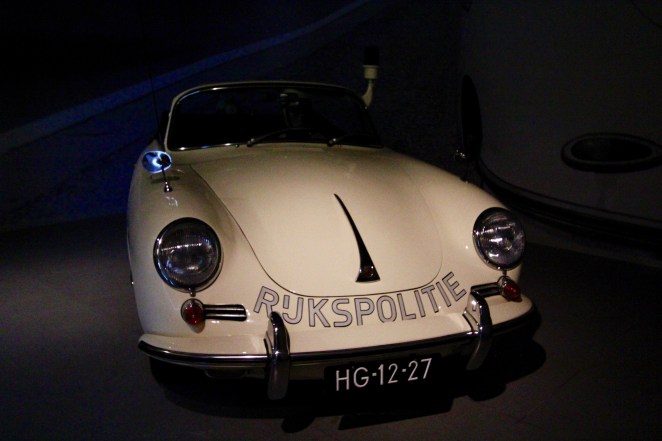
This next one is just kind of cool – a police Porsche. I know a lot of my member friends would really enjoy going code to calls in this number!

The museum opened at 1000hrs, and we were there right at opening, so by 1300hrs we were hungry and thirsty, so we stopped at the museum’s cafe, done up like a turn of the century courtyard.

We devoured frites, mayo, beers and Apple cake and were back on the concourse, Pa like a kid in a candy shop explaining why some of the cars were so special and Ma and I like the patient parents, nodding and smiling.

By 1530 hours we had looked at all 200 something cars in the collection, made our way to the gift shop and cabbed back to Delft.

In Delft we sat in the old Market square and enjoyed the cool drinks, sunshine and beautiful surroundings until dinner time, and bed. All three of us really loved Delft and will be sad to leave it behind.

Day 4: Obviously You Don’t Know Much About Adventures

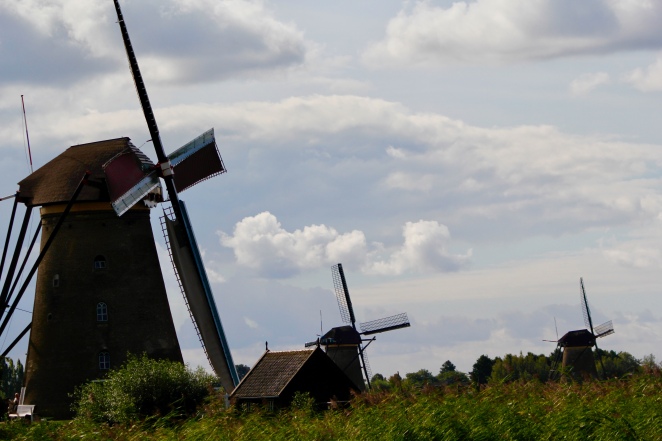
Another day, another delicious breakfast at our hotel.  Today we set out to two very different Dutch landmarks – the windmills at the Kinderdijk and the Port of Rotterdam.  We grabbed a cab to the Delft train station (our home away from home) and took the 10 minute train ride to the ultra modern port city of Rotterdam.  We had read that a fun way to get to the Kinderdijk was to take a water bus from Rotterdam to the windmills.  We grabbed what was probably the smelliest cab driver with the most dubious comb-over at the BEAUTIFUL Rotterdam Centraal station and headed towards the waterfront.  We waited for the water bus and chatted with a friendly couple from Hong Kong until the boat arrived.  There isn’t as much of a queue as there is a mass rush to board.  When I travel I sometimes forget that I need to drop my friendly Canadian sensibilities and be a little more aggressive.  But thus I digress.
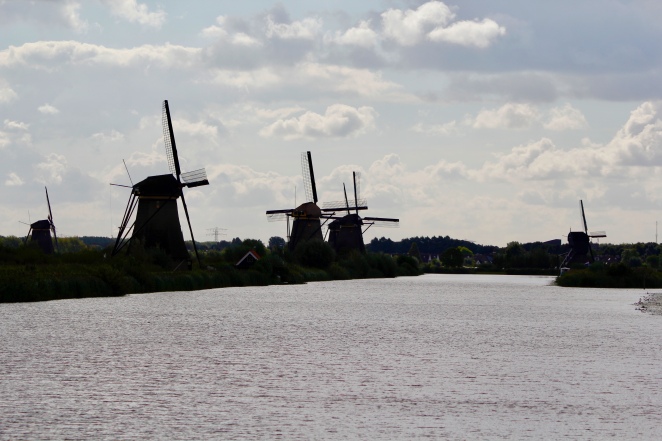
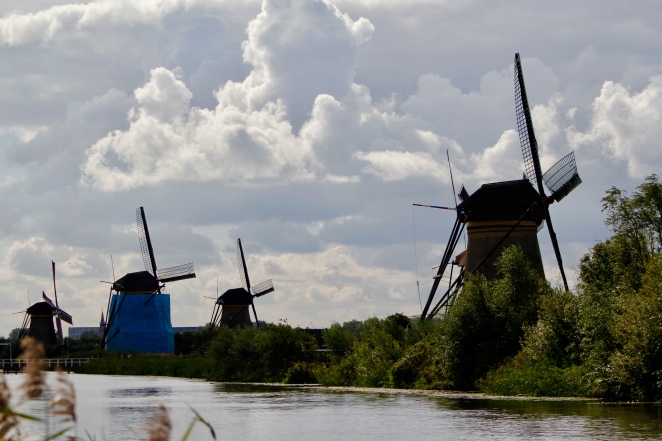
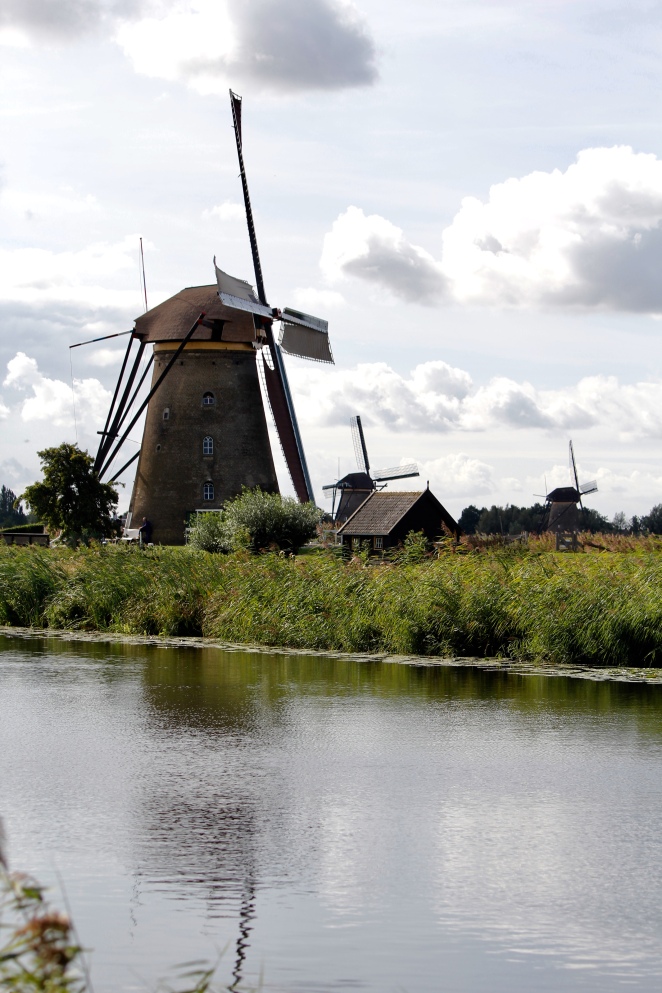
The water bus zipped us under the Erasmus Bridge and up the waterway for 30 minutes, and we moored at a very bucolic Dutch scene – farm animals, fields, dykes and, of course, windmills.

8C8BD266-B012-42EF-9F3F-337BE8BA7A2F37F1218F-A2CD-4DFD-B437-6401CCC2E3F3

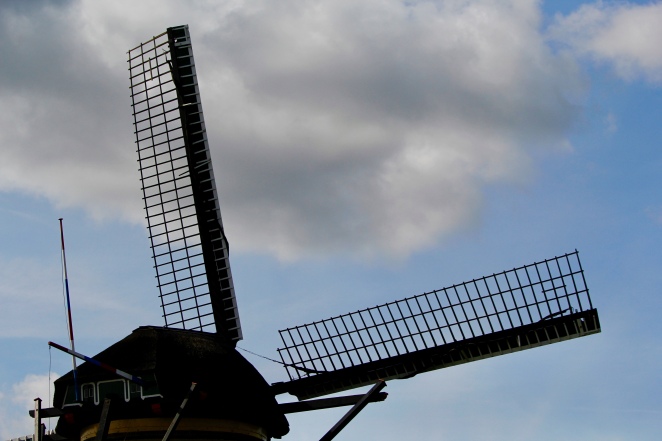
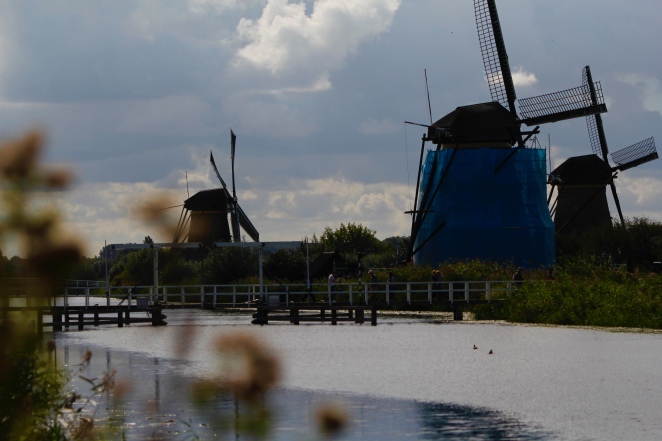
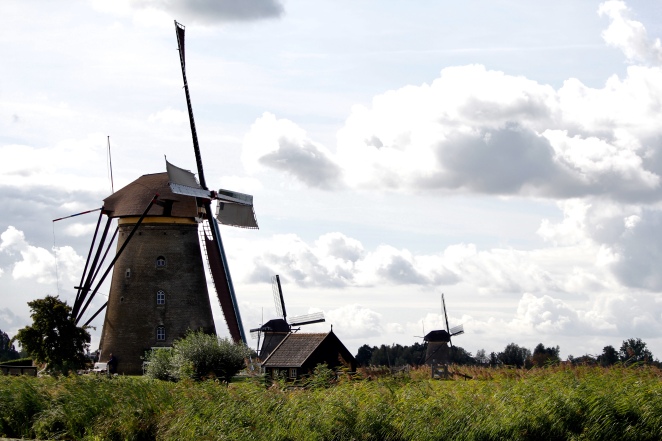
The Kinderdijk is a village of 18th century windmills, 19 in number.  The windmills were installed to keep water levels along the dyke even, and some are still in use, although there are a few diesel pumping stations to help out just in case.

C2D0505D-2D14-4C23-B75E-6AE21E4EFAD613103700-6C7E-4B0A-9F97-D543D1207FB7

We crossed the street and were among the mills, but also a load of other tourist, travelers, and cycle tour groups (again, dodging cyclists).

08A95132-EDEF-485A-A484-9502D1085F10EB056BC1-C116-4A54-8095-94E4BCCCEDB340398A9E-1805-45E5-9A12-6F4DD64F86B6F8FACFFF-B8E6-4FB5-B63F-10881992649D4FFFCF88-9C48-4F22-AB2F-FB3796731B10

After walking along the path, taking many photos of the windmills and hitting up the gift shop for the obligatory fridge magnets and post cards, we headed back to the water bus stop.  There were plenty of other tourists waiting there as well, complete with their face masks and taking smart phone photos of any barge or boat that crossed our water path, jostling each other about.  It made me wonder how many smart phones end up in the water every year.

We hopped back on the water bus and ended up back at the port in Rotterdam.  Because, as you all know by now, I love a good boat tour, and what better way to see a world famous port than to do it by water?  Especially with beer being served.

BA8CB110-29B7-4ED3-A99E-AB11751247F3640E6BC6-4025-4C20-8B36-C966399B2F26

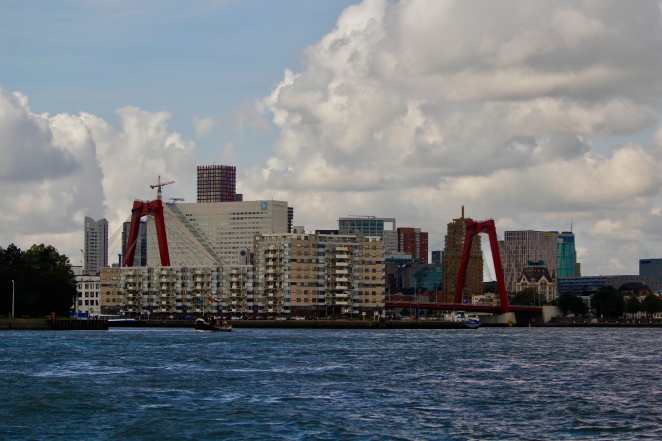
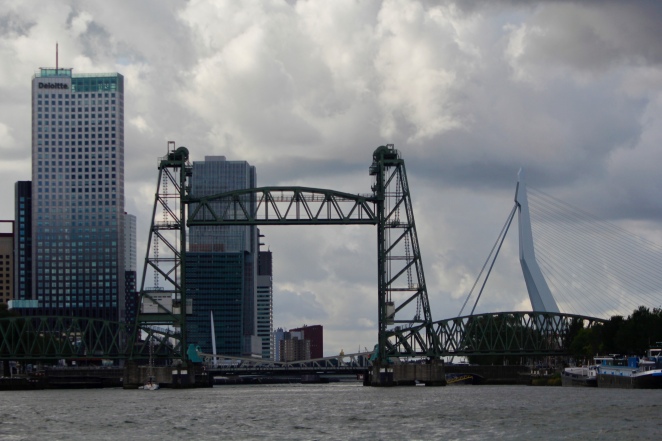
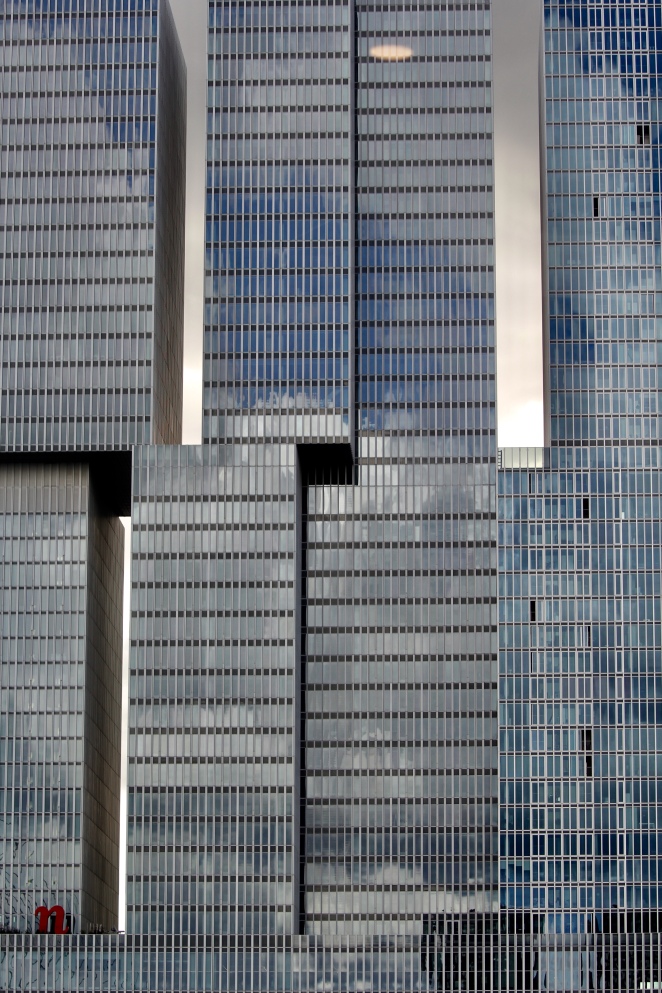
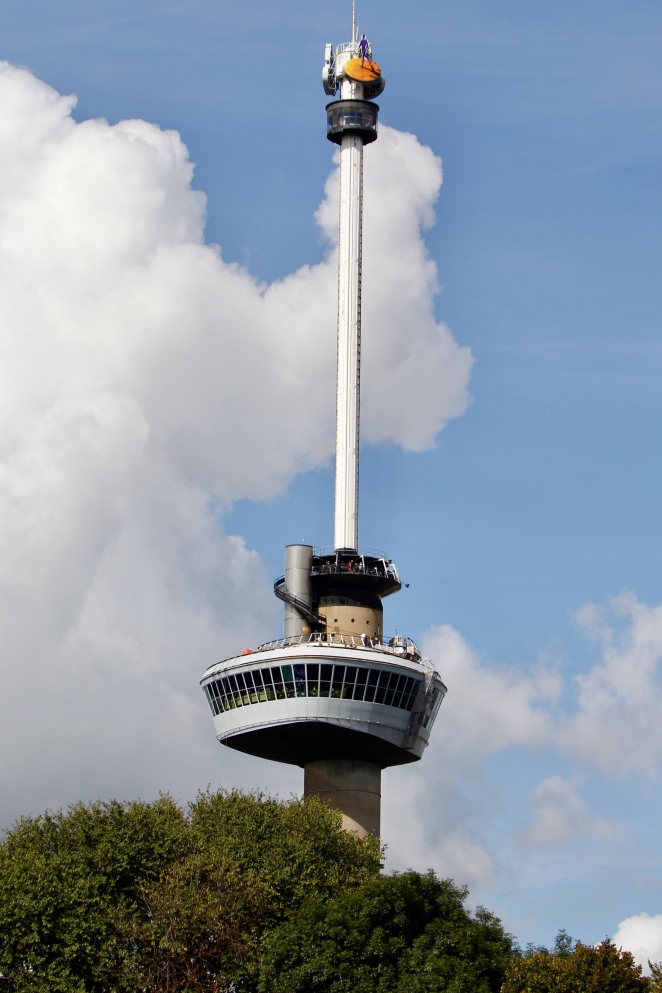
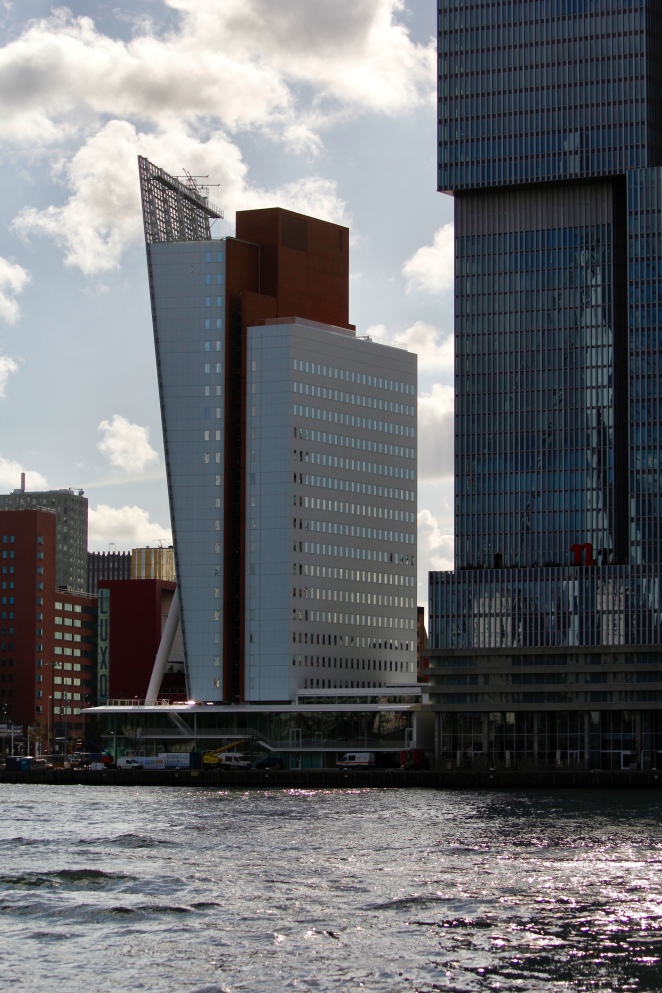
Rotterdam was completely flattened by the Germans in WWII, and rather than reconstruct what once was, the Dutch decided to modernize the city and Europe’s largest port, which  made for a very interesting architectural skyline.

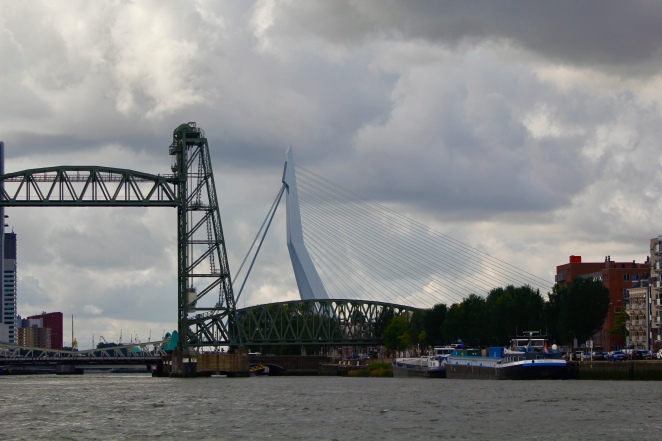
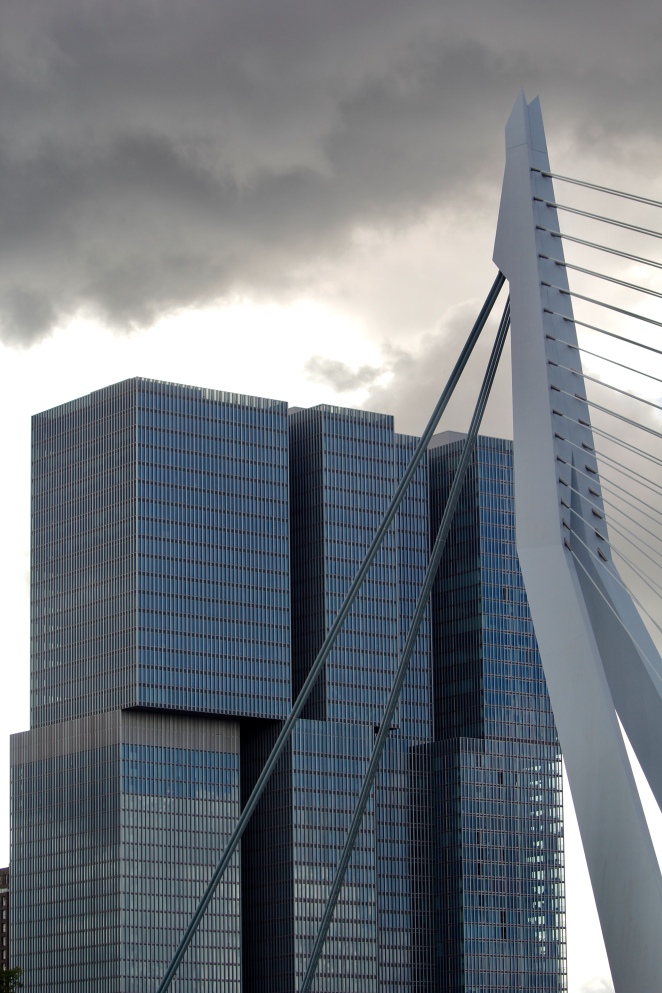
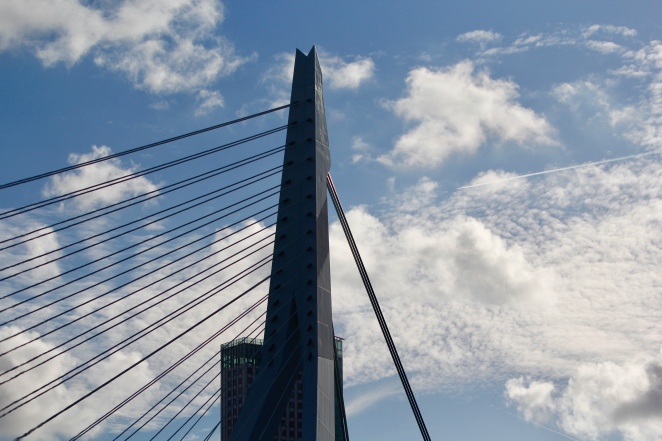
One of the more interesting visuals of the port was the Erasmus Bridge, also known as the Swan.  I liked the way it looked in front of the glassy rectangle building and the moody sky.  It’s also the tallest structure in the Netherlands.

755C05CA-6BE1-4809-9379-A6CA21EC1FD56F9AF980-E120-4B84-9F24-DF2E4522D455709ADE17-5946-4994-8415-D5B9BAFE93F5

4416ABA0-6809-4533-B764-287F1E4C2E46A75C5B5B-B9E5-471B-9F6A-D2099AC9E74CD771B417-047E-4A4C-9800-56B3AB5E9FCF

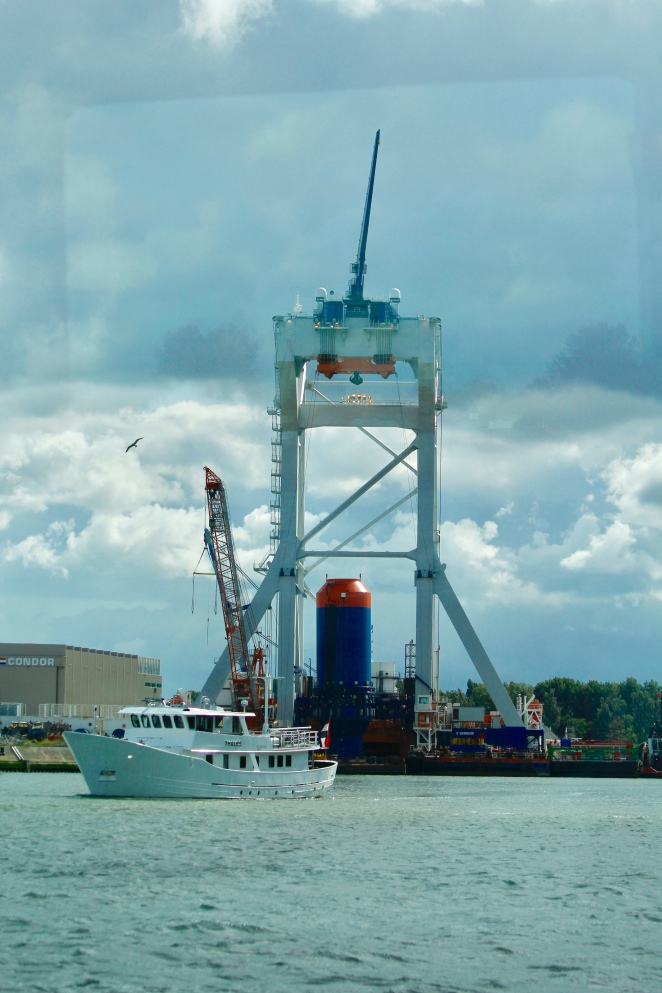
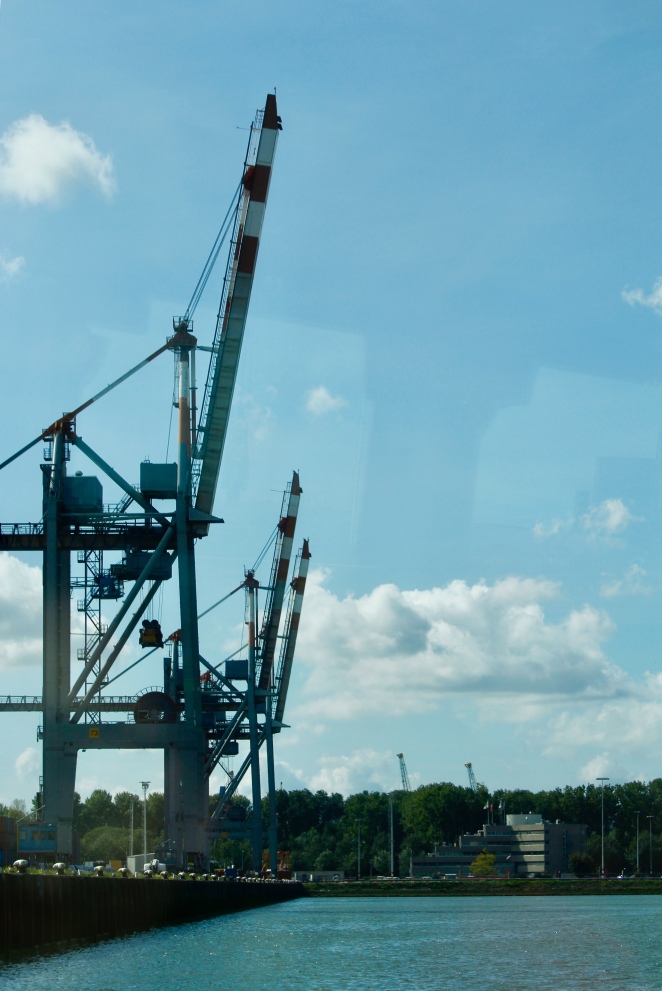
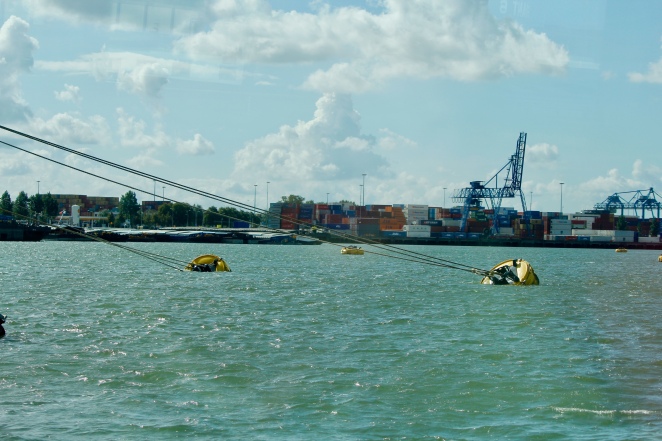
The port mostly deals with containers and petro-chemicals.  It was really cool being able to watch the huge cranes move about and pick up and drop containers.

372361DB-BF86-4E1C-A595-6E11F092266CBA1A1768-6D34-4691-A6DC-4E9B9D72DA59

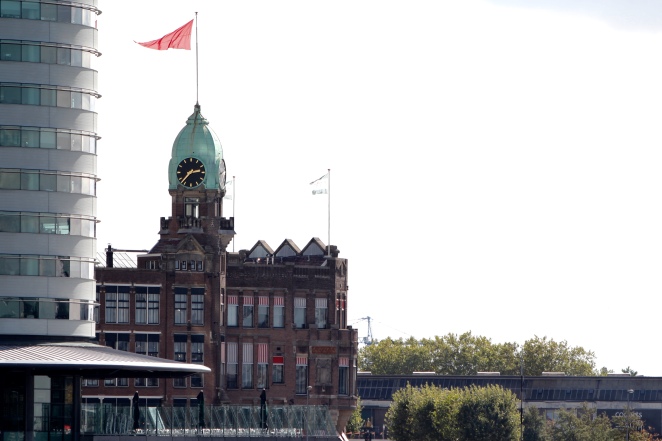
One of the more interesting older buildings was the old Holland America building, now the Hotel New York.  The cool old Art Deco style building was nestled among the ultra modern architecture of the port.

6B58AFEC-53E9-4B0C-93E0-B5BECBC75462E7AD918C-EDF8-485C-B6C3-74DEA8D1B7EA4F38D136-2689-4352-B17A-621EA8D020FC

After the 75 minute tour we disembarked, waited around for a cab and headed back on the train towards Delft for an evening of Belgian beers and frites with mayonnaise.

99A49C12-6D72-4F3F-9BA5-0E3F9791B18D

Day 3: The World Was Never Meant for One as Beautiful as You

Another day, another beautiful crisp morning in Delft.

This morning we got up early in order to hop on a train and maximize our time in the Dutch capital city of Amsterdam.  Getting up early was pretty easy as we’re still pretty jet lagged, so we were up, dressed, coiffed, breakfasted and at the train station by 0900hrs.  The Dutch train system is relatively user friendly (not as good as the German system.  That one is the best) so we bought our tickets and hopped on the train for our 1 hour trip due north west.

487D2D4C-E2A5-4D79-960A-6CFFD00FB12B13E4431D-BA84-4EAE-BD6F-746738E15D9A

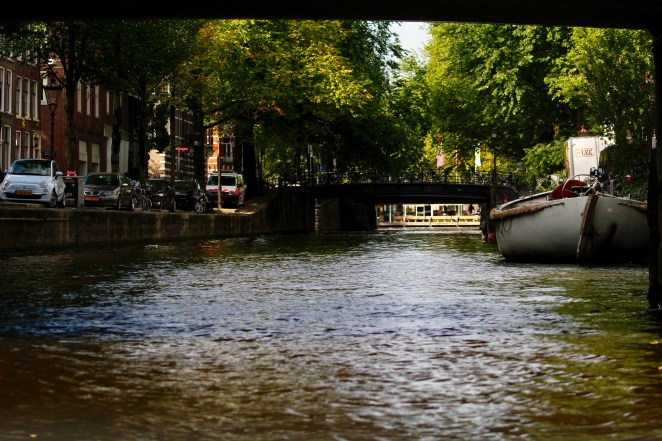
We had decided that we wanted to buy tickets to the hop on hop off canal tour, as not only would it take us everywhere we needed to go, but we would learn about the city and it’s a good way to see the canals.  We embarked right outside of the main train station and headed out to the old harbour.

DFDBE949-340C-4F46-B484-6AA5A07FBCBB

Across the harbour houses Amsterdam’s tallest building.  It’s difficult to build up in Amsterdam as the ground is very soft, so pile driving is a big industry there.

8C2EA709-6C5D-4B36-AE70-33D50B796048DC39E154-6776-4359-8B70-BF4B07FA70D7

We wound through rows of canals lined with the beautiful old canal houses, donning gables and beams with hooks.  At first we thought the beams and hooks were remnants of the old days (Dutch staircases are very steep and very narrow), but they’re still used today to help people move in and out of the suites.

A563A16F-6867-4319-8D3A-FBBF35C1EDE9DC3B51FC-E787-41BB-BD8F-1E7104F64EF6020FB057-55D2-4292-8347-899DF1A3ABDB

C0A57620-2E6C-416F-B59F-0A754548DED6

We puttered past Anne Frank house with a long line up outside and learned more about the city (It’s about 1000 years old, it used to be a great naval and trading power, the canal houses were build to tilt forward to give the appearance that they are larger).

A6E2316A-9073-490E-88CF-7C78AABD53FC70B28BD3-ED16-4A66-B406-5136F8603275

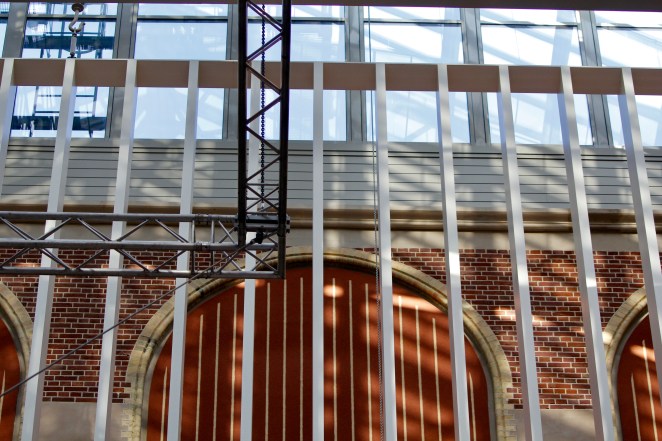
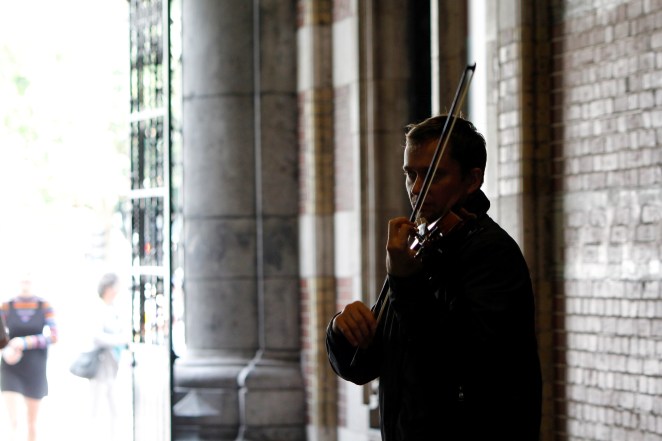
We decided to disembark at the Rijksmuseum stop.  We had to decide early on if we wanted to go to the Rijksmuseum or the Van Gogh Museum, as they are both expensive.  The Rijksmuseum primarily houses Dutch masters such as Rembrandt and Vermeer, and the Van Gogh Museum is pretty self explanitory.  I don’t love the style of the Dutch masters but I do love Van Gogh, and Ma and Pa felt the same way, so Van Gogh Museum was unanimous.  To get to the Van Gogh Museum, you have to walk through a tunnel in the Rijksmuseum and into a courtyard with more museums, a reflecting pool and the “iamsterdam” sign.  The tunnel was actually really cool and held a few buskers (violin, accordion and giant balalaika) playing the Largo from the Four Season by Vivaldi.  The tunnel also allowed you access to the gift shop and a cafe, so we went in to grab postcards, fridge magnets and some other trinkets.

FA1B88B2-404F-4388-B676-F17C6B5BB50E3241FDC1-4623-41EB-A3D6-0E7F3FE45304CD197238-A498-4AFB-8D53-9683B3C92E610E5A744F-D07A-425E-8138-E9FEE7CE5F2C

BCF9A31C-45C8-45DD-9353-B22CC88879C3

The courtyard also houses a Banksy Museum.

0EFA8B26-E617-4077-A5EA-6A59CDBA9110

We got to the Van Gogh Museum and to our chagrin, the next available tour was at 1800hrs, and it was currently 1100hrs.  None of us wanted to wait around that long and decided that since we all had seen some authentic Van Gogh works at the Musee D’Orsay in Paris, it wouldn’t be too much of a tragedy if we didn’t go in.   It was nearing lunch time, so we found a little restaurant in the courtyard and dined on croquettes, croissants, frites with mayo and Heineken (on tap).  We ambled back towards the Rijksmuseum tunnel and decided to divert to a beautiful little garden for a beautiful little detour.

EB2BA472-73E7-4395-AF81-1600F640D7EC1A01663C-C5C6-4752-8952-AC622BC35EA0

Back into the tunnel and our buskers had changed  – a violinist, 3 accordions and a tuba plater.  I overheard an older American guy say ‘I know what this is.  This is Bach in G minor or some shit”, when it was famously Pachebel’s Canon in D.   They then launched into their own version of Vivaldi’s Four Seasons.

127B583B-90CF-4F4A-9D96-F608FE852E31D77DF6AF-3A36-42EC-B71D-A02E002F63B2

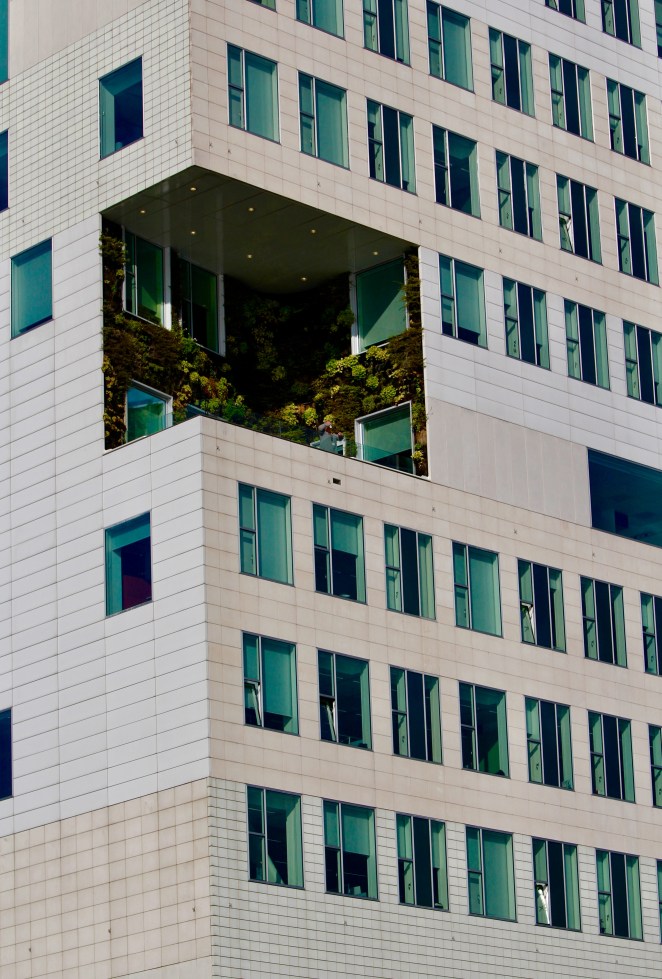
Back on the boat, we decided to get off at the next stop, City Hall.  In front of the city hall is a big white and tiled monstrosity, the Dutch Opera and Ballet.  It reminded me of the Opera Bastille in Paris.  We wondered around the neighbourhood, admiring the beautiful buildings and dodging the most aggressive cyclists I’ve ever seen.  I would jaywalk every day in Richmond before I would step off the curb without looking both ways in Amsterdam.


1D94F20E-85AF-4D95-A4A6-6DD9C9B73908E12187FA-4799-4E49-BA1D-003B583744237672A22A-0D58-43DB-AE84-362C04E9E055ACBFE911-08D7-47A1-A464-0B4449899DD28C34E558-A005-419A-ADD0-9C7F7E50E596

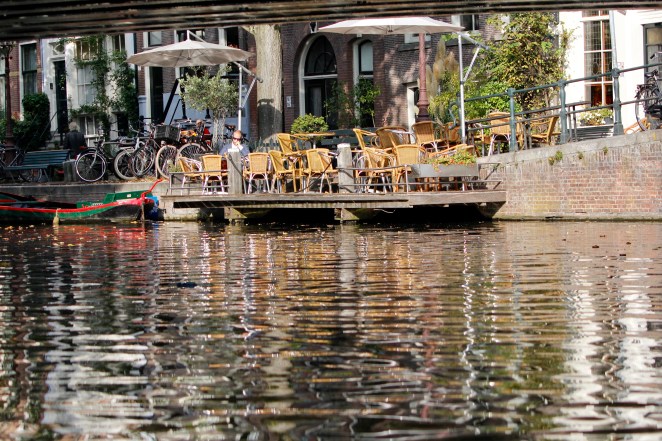
We picked a cute little canal-side cafe and ordered some beers and chocolate milk and watched all the canalboat tours putter by.

C3BC93A4-1808-464F-A816-08DDDAF83C78AAA30DE8-4C8D-4E92-A4BC-A4EA1D41867E

As it turns out, the neighbourhood used to be the Jewish quarter.  Our first clue was a similar sight to what we saw in Germany – little brass cobblestones in front of the buildings listing the the names of the former residents, the date they died and which concentration camp they died in.  Our canal boat guide stated that because so much of the Jewish population didn’t come back, their homes remained empty and fell into disrepair.  The city decided to demolish the houses and built city hall.

C601FD69-A035-40F2-AFE9-CEB737E39BB46B788136-FB6A-4759-8DBD-7F0640C7F759

E8ADA498-556B-4D8A-9CD3-D070D26834D80956CF12-4DA0-412F-BE20-440EAC6714683AAF710A-F238-406B-808E-86026DA659713AF24E81-CA15-4865-AEEB-BC306B2ADE62BACABB63-198E-4230-ACB8-67B008FC1F19

We mozied along the Gentleman’s canal and ended up in a minor boat MVI – a smaller boat was not paying attention and lightly collided with our tour boat.  A lady in the smaller boat, champagne in hand literally clutched her pearls.  Our guide said this kind of thing happens all the time, but the greatest hazard in Amsterdam (as we had already glommed) were the cyclists.  In the Netherlands if you are driving a car and hit a cyclist, the car driver is always 100% at fault.

855656D1-1C0B-4FA2-B56E-D9AB4185FFD774D6AE86-8470-445C-B3DE-142F859B06BDBC9175E8-D342-49D8-8EF9-74DC2EA2664CBFA8DBCB-5FF1-436D-AD19-569A03FB5B934E43D42D-8973-4E8F-9669-3086E0AD810CFD904CAD-17F7-4E51-9087-FD9544A9FCE11A36E0BA-C9D2-4119-A947-276707BDD669DFA3FB99-555C-458C-AD75-FCA27F3E920E

Our tour sadly came to an end as we returned to the Amsterdam Central station, so we found our train and headed back to Delft for a casual dinner, hot shower and early night.

C1154476-0775-4C35-8D2B-FB55CA8B2FFF

Day 2: Golden Age

This morning we knew we would not need alarm clocks because the same jet-lagged sleep happens to us every year – in bed super early, awake super early.  This morning I was awake by 0430hrs and Ma and Pa were already awake.  We decided to get up and leisurely get ready for breakfast (served at 0700hrs) and the day exploring Delft. The breakfast served by our hotel was delightful and everything we would ever need – strong coffee, Dutch pancakes and fresh, buttery croissants.  We finished by about 0745hrs and hit the town.

EFB9A1BA-40FD-4C09-916F-F5B4F491829E96A682C4-8506-4D37-9342-32F4E6206EA918B74862-1829-4BF4-8652-3402D8A54A40550FAA11-E02F-431B-B180-953A3FDC082259389628-21D1-4378-8BFF-AF7EB956DD0288A2C759-AF12-4B5B-B8D3-0C011703EB733F29CE1C-4CB9-4033-A13F-103AEAAFE386

Because we were up and about so early, we had a lot of the old town to ourselves as well as beautiful early morning light.  It’s definitely autumn in Delft as there is a chill in the air, but the sun is still warm.

D2D44890-95ED-4022-8700-9E4CB69ADD0902F91B78-AEEE-48DB-8EBF-D01E72C2DEFE82CE55F2-A4E3-4C96-A1BA-0436C3C693A129B4AE2E-5134-474D-902C-51D6FA4D4110

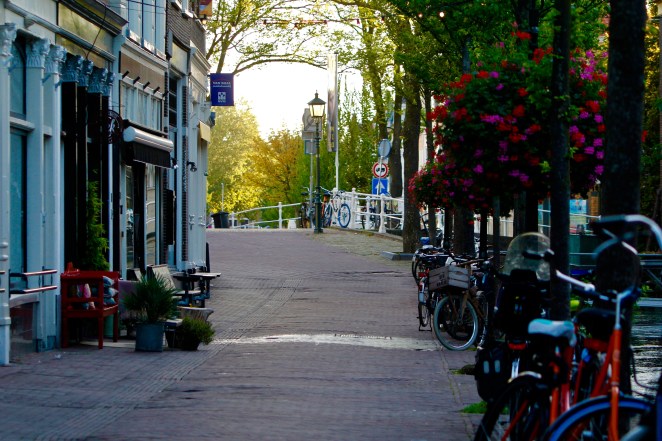
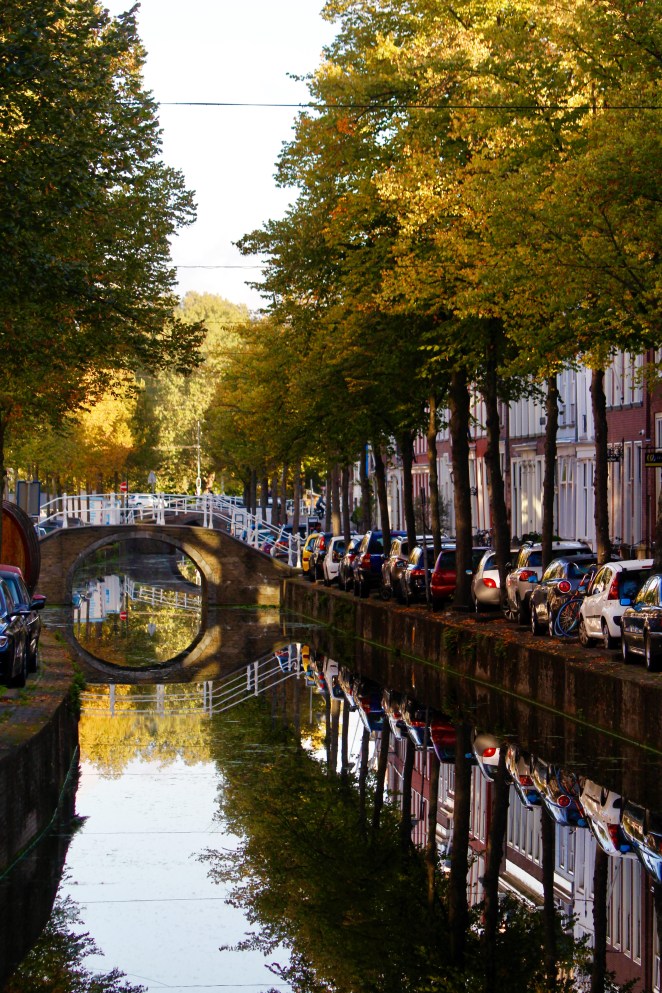
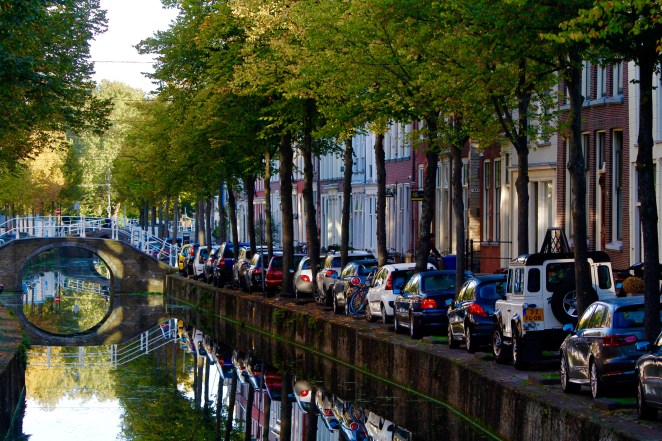
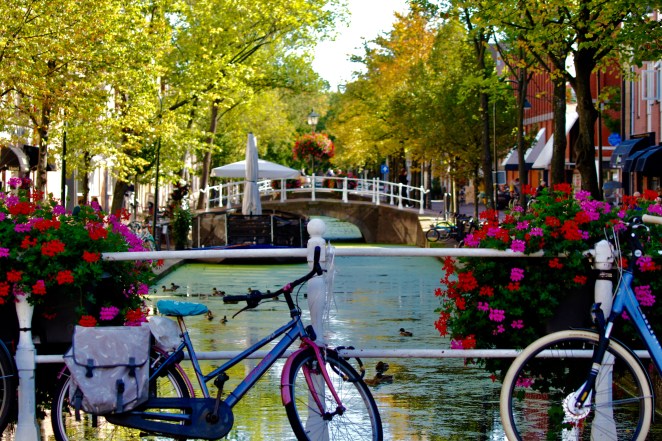
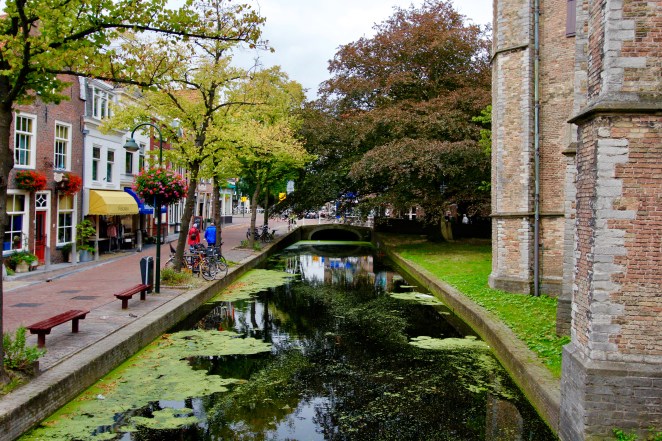
Delft is such an adorable town.  Around every corner is another canal, another flowered storefront, another cafe.

As 0900hrs neared, the city started to come alive with bicycle traffic picking up, and people whipping through the streets on their velocipeds, taking kids to school, heading to school, or heading to work.

2B452C56-5DDF-4BF3-9B3C-C60920AC096B7C72207A-0F96-4C7A-8FAC-3B37E1B7FC9FA16A2243-85DE-46CA-9E81-BF5664C400C4839A2D5C-BE83-4537-BE0A-DCE7622461BE92C3ED16-2C53-43CE-9CB3-79F675F47B6452658D14-DDB9-496F-BD09-69F5205D3B4D26A913F0-4B73-45B5-BFCD-1B1943D0D217.

3E093DFD-C0FF-4C72-B231-56D383E8E3480CB2C5BF-8E90-4D11-9C1D-704AE0D21FC7B514C925-4CED-40A6-82E0-36A8E834C85195AFB684-4BB7-4651-8722-3C26DF83E48A395341A7-EF7C-4A20-8416-99CC1EA7CA2BD9F4DA96-34F9-41B4-BD7D-9753998F607A1047AF12-ADF8-42FC-AEBB-F10293B12DA42D16E84B-6B21-4B6A-B541-897CAFEDE8CDF08AB9A6-0A85-499D-A7F0-D0BEE55D20A5154F10E9-0596-4CD1-9BCF-902BE658A0F724E61814-916C-4B67-B3D8-0984F283E89D

The first thing that we wanted to see this morning was the Oude Kerk, or Old Church.  The Oude Kerk is a large, brick, pre-Reformation structure with construction beginning in 1239 and lasting 400 years.  One of the biggest draws of the church is it is the final resting place of Delft’s native son, Johannes Vermeer (remember, of Girl with the Pearl Earring fame).  Apparently Vermeer died very poor and left his wife with a lot of debt, but she still wanted to bury him in the Oude Kerk, so they originally buried him vertically.  Later, when Delft decided that Vermeer was in fact, a big deal, they dug him up and gave him a proper burial.

28F493EE-90DB-4E29-9CBD-8C940C82D54CDAE0F200-CDBB-4264-988B-2B61F2EB84C2762280BE-3B6D-4578-99DD-407CC8423502D0479247-316F-461D-82D5-63B471C1FBAFF2FBC3CC-12D9-4FF9-BD68-1081CCADFB9DCE9AA02B-95CB-4638-AD77-6969EBC71383

I found the Oude Kerk to be less than impressive – sparse and underwhelming.

6EC4EEE3-7679-4103-8F13-BE76D374B7DB

The next thing we (mostly I) wanted to do was a canal boat tour.  I love boat tours because it’s a great way to see the city from a different perspective and you usually learn a bit from the tour guide.

The first boat tour left at 1100hrs and we had not spent a lot of time in the Oude Kerk, so we had more time to kill.  By this time we were gingerly dodging cyclists left and right.  The cyclist culture here is quite different from what I’m used to in the Lower Mainland (either super aggressive Vancouver cyclists, or scabby homeless people who you know damn well didn’t pay for that bike that they’re riding around that residential neighbourhood).

0035AD79-1B50-40A9-8747-A56803A79DDC

In order to pass more time, we went to the market square and grabbed a delicious coffee at a cute little shop called Bagels and Beans.  We sipped our drinks and watched vendors set up their stalls for the day in the square.


E107FEE9-2737-491E-94E4-0C675E7829AF

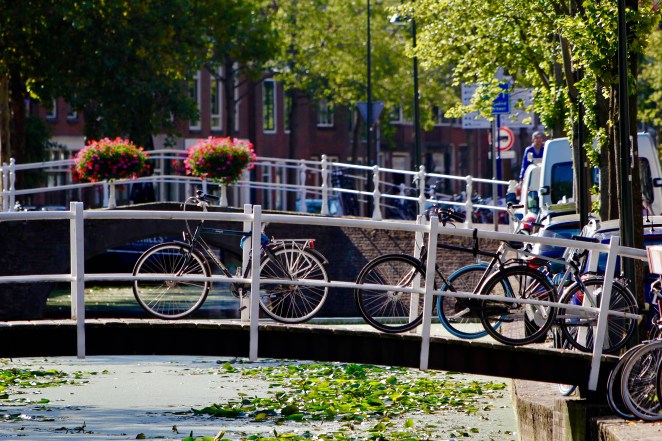
We finished up and settled up and slowly walked towards the boat moorage.  I just couldn’t get enough photos of canals, bikes on canals, tree-lined canals.

We got to the boat, paid our tickets and climbed aboard, a 45 minute jaunt through the canal system.  Our tour guide’s name was Ellen and she was graduating from the University of Delft in Engineering and Policy.  Delft is actually a university town as 1 out of 5 residents in the city are students.  We passed by beautiful buildings of brick facade, windows and shutters and learned that many of them were actually student housing.  It made me think fondly of some of my lodging when I attended the University of British Columbia – damp, partially-carpeted hovels barely legal suites boasting hot plates and 30 year old microwaves, deep in the heart of Point Grey.

Other fun facts we learned from Ellen:

• Many of the canals are lined with ropes.  Why?  Not to help people who have drunkenly fallen into the canals, but to assist cats that fall in.

• The residents of Delft used to be charged more taxes if you have more windows in your front facade.  Many wealthy people would install more windows to show off how rich they are.

• Students who graduate from Engineering often have their bicycles tossed into the canal by fellow students as a way of signifying that they will be making more money and can therefore afford a car.  The city fishes out 300-400 bikes every year and resells them to make money for the city.

After the tour was over and I had shot enough smouldering glares to the dumb old men who talked/laughed through the English part of the tour, we found we were a bit peckish.  Ma wanted to try and restaurant we had read about in Lonely Planet called Kek, which offers up fresh and healthy fare.  This place was everything that a hipster would love – lots of kitsch, lots of avocado on the menu, and lots of young people with questionable fashion.  I ended up having a BLTA and a delightful blood orange lemonade.

EB88E70D-D02A-44CE-BF2A-9AAFE52CE96A

Our afternoon plan was to head to the Royal Delft Factory and do the tour, followed by copious coin dropping at the gift shop.  The only problem is that we were losing steam so by the time we got a cab there, saw two huge tour busses in front, we decided to forego the tour and instead go straight to the gift shop.  The shop was an enormous 2-room operation, filled wall to wall and ceiling to floor with white and blue porcelain.  Ma and I both picked out a few items, paid, and the PAID for them to be shipped back home to Canada, as we didn’t want to haul around delicate porcelain items for the rest of our trip.

B5420522-841A-4A24-BE9A-9C501CED9ED6

We discovered that the factory had an adorable little cafe that served Delft Blue’s own beer called Delft Brew, so of course we had to try some (it was pretty good!).

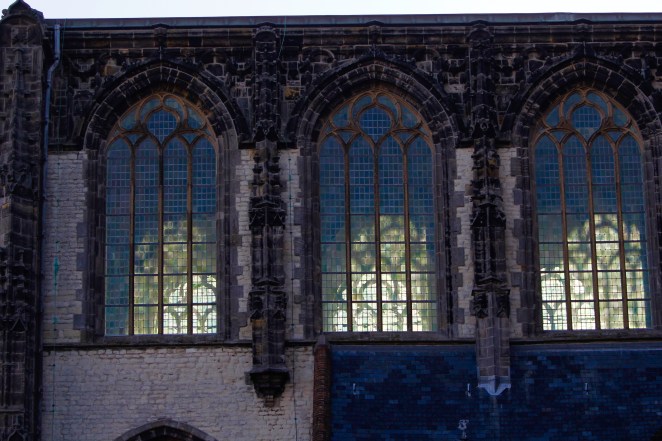
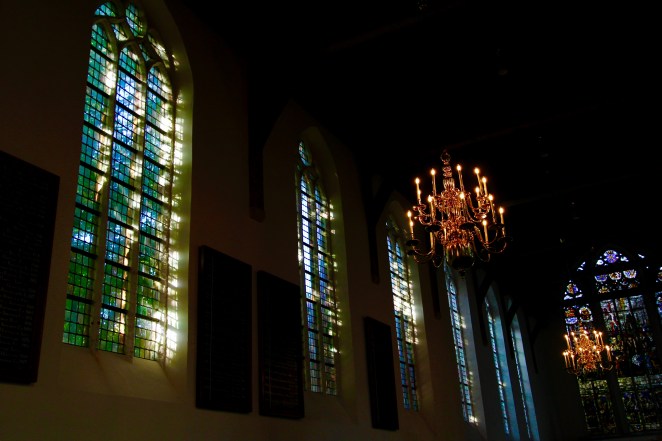
We headed back to our hotel for a siesta as we were all pretty low on energy.  An hour later we headed literally across the canal from our hotel to the Nieuwe Kerk (New Church) to check it out as well.  This church was built in 1351, so not so much ‘new church’ as it is ‘newer than the Old Church’.

5F627355-54B9-44D0-B028-0B34606CBB20

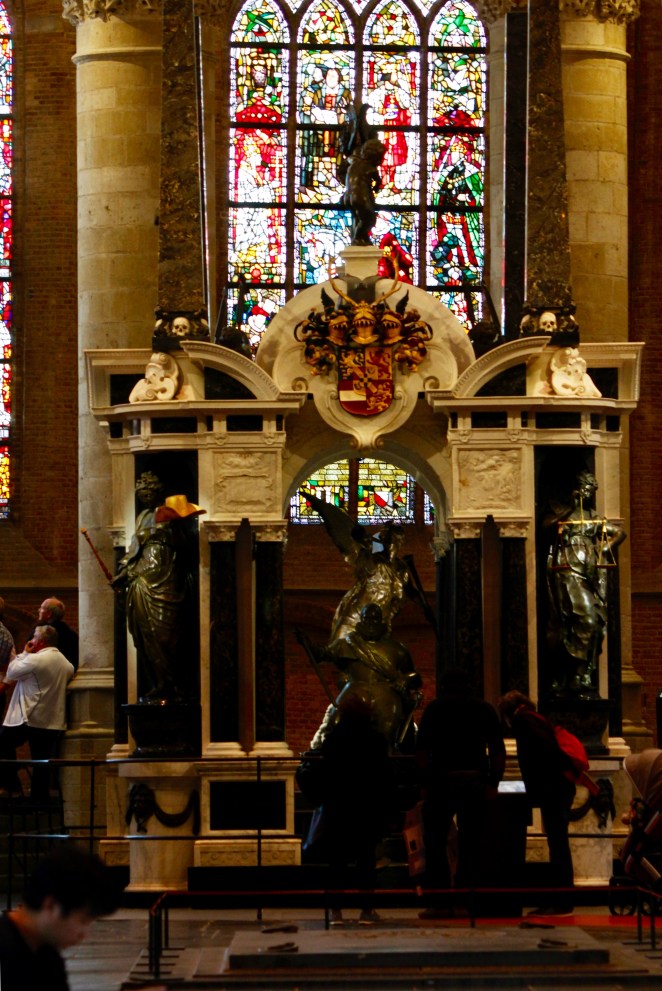
The church again was underwhelming, but its claim to fame is that it is the final resting place of William of Orange, who is seen as the father of the nation.  The tomb is quite garish and ugly, but the people decide they couldn’t have a plain burial for the Founder of the Netherlands, unlike all the chumps buried in the floor.

B04C5E38-AA0D-4C60-8C15-054B10E65738

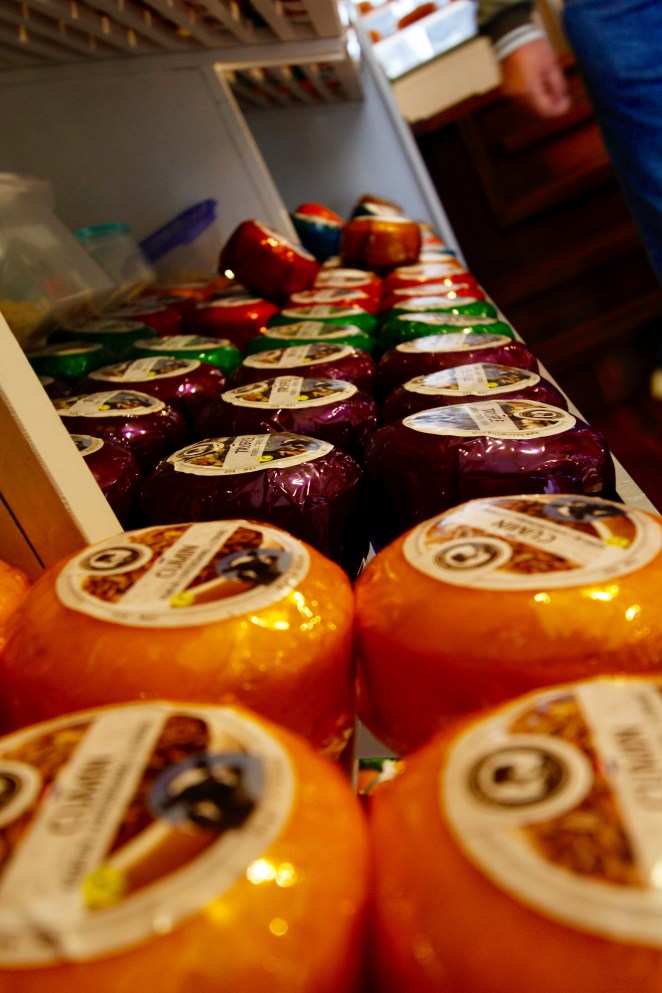
After we spent maybe 15 minutes in the church, we hit the square again to revisit the cheese shop we popped into yesterday.  The shop keep was so eager and flirtatious that I couldn’t even say no to all the goat cheese samples he was offering me, and I HATE goat cheese.  After learning that you can bring the cheese back to Canada and it can be unrefridgerated for a month, we bought a couple of wheels of Gouda and went and found a brasserie that has Grolsh on tap, where we ate, drank, and headed home to bed, in a valiant attempt to stay up past 2100hrs.

Day 1: Leaving on a Jet Plane

Welcome to the DeCaigny Abroad trip blog for 2018: Windmills, Wallonia, World Wars and Waffles!  This year is a very special trip for me because I get to visit the land where the DeCaigny’s come from – Normandy and Flanders – and we get to meet some relatives.

Our trip started off pretty easily – got the YVR with plenty of time, breezed through check in and security, had some late lunch and a coffee, then found our gate with a myriad of other silver haired folks (I joked with Ma and Pa that they must feel like they’re flying with their people).  At one point and woman approached me and asked ‘Are you Kelly?’  As it turns out, one of my girlfriends at work has a friend who was taking the flight, and told her to ‘look for the girl with the blue hair’.  We chatted with Anya for a bit and then it was time to board.  The flight was pretty uneventful and after 8 1/2 hours and 2 subpar meals for what we’re used to from KLM, we landed at Amsterdam Schiphol Airport at noon.  We did the usual airport stuff – disembarked, went through customs (‘you’re here for a month?  You’re going to be here for your birthday!’) grabbed our luggage and bought our train tickets for our first home base – Delft.  When we started planning this trip, we quickly discovered that staying in Amsterdam would cost a small fortune, so we chose to stay in Delft – known as “Little Amsterdam” – it has all the charm and canals of the big city, just smaller, less busy and much less expensive.

The trains in the Netherlands are plentiful and efficient – like those in Germany.  Our jaunt to Delft took about 45 minutes and we even spied a beautiful old windmill!  We grabbed a taxi and told him the name of our hotel – De Emauspoort.  The first thing he said was ‘Perfect location!’  We drove past old brick houses and snaking canals and took a turn down an absolutely adorable street:

9CD330C3-4EDC-46EB-92DD-AF57C7CBBBC0

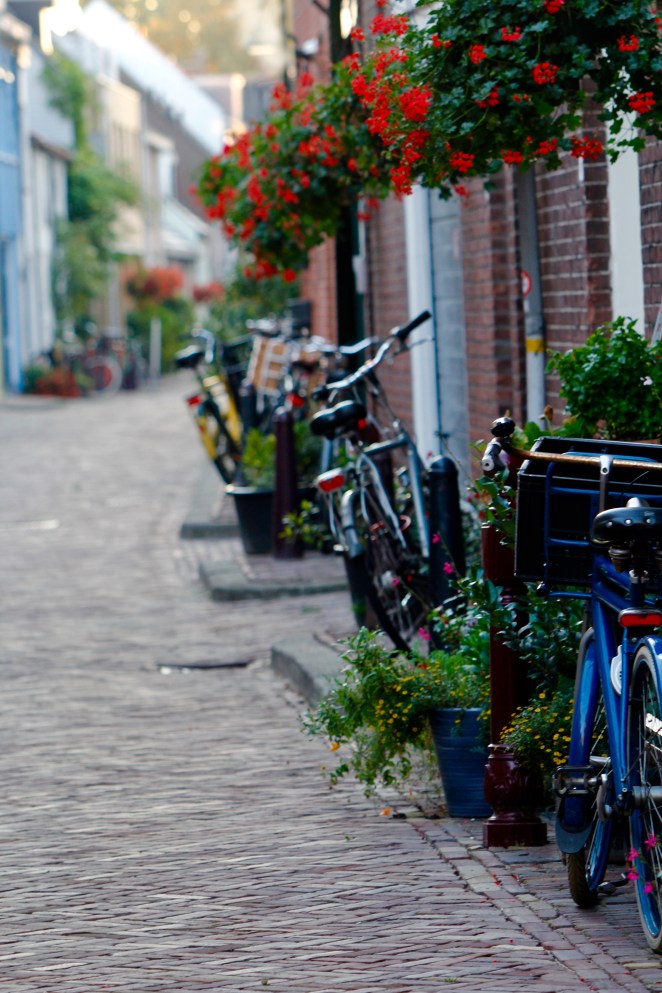
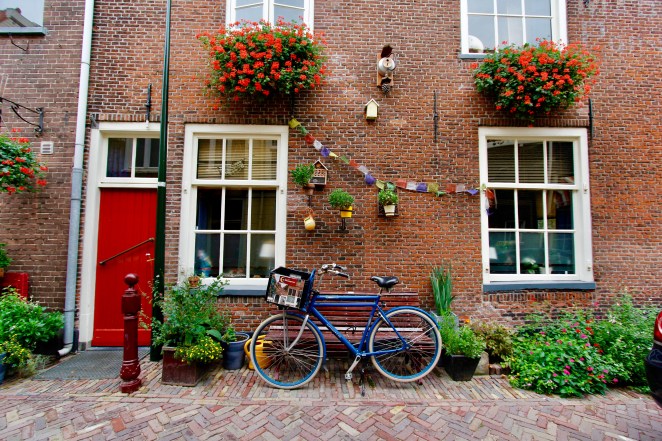
This is the street our hotel is on and it was everything I was hoping and dreaming it would be = quaint, with bikes and flowers everywhere you looked.

34B5219B-A348-4AA0-BC28-D38A2D7A9EC5

We checked in and found that we were staying in the ‘Vermeer Suite’.  One of the things that Delft is famous for is the birthplace (and famous resting place) of painter Johannes Vermeer, whose greatest hit is probably The Girl with the Pearl Earring.  The room is decorated in the old Dutch style, up a flight of very challenging stairs, and adorned with prints by the Dutch master himself.  We dropped our gear and hit the town in a attempt to stay vertical for as long as possible.

CC9D2DB7-B0B7-416E-ACAB-A852E848D3CF4983A9D5-DDD2-4871-BBA3-613239BAF716C8370A7C-BFA2-4340-A75B-FB5649371EE6

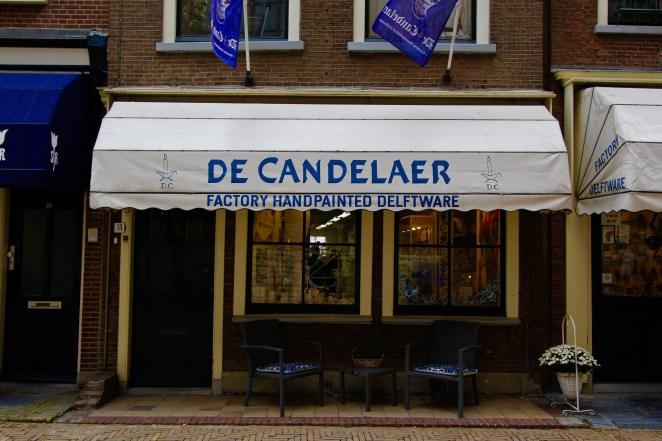
The other thing that Delft is famous for is ‘Delft Blue’ or ‘Royal Delft’ – a style of pottery characterized by blue ink on white porcelain.  There were shops all around the main square (or Markt) filled to the brim with dishes, tiles and other trinkets depicting very Dutch scenes (windmills, row houses, clogs).

1094CFC7-0DFA-45E5-A923-EAA7267EF550529C9C8D-B1CE-4FF4-8B3F-EAB3905A0B057FDD38CE-ED4A-4C41-8821-CD0EA8D26548754EA736-CFC4-4350-AC97-085E2F47044A823A5DD7-8DE3-41B6-9AE5-DB33406D5E392CA76F25-8276-4227-B0E0-05D02F405B9E

We picked a little restaurant and Pa and decided to indulge in our first brews (of what will be many, many brews) on the square.

A note about Dutch people so far – I was nervous because I had read a BBC article about how the Dutch are known for being very direct, and I’m very sensitive, but so far the Dutch people we’ve met have been very friendly, eager to chat and interested in Canada.

8288004F-EE10-4218-9B04-6D5A8E19DEAA5FB4E2D8-644E-4983-8B6E-622D923C1651

We finished our drinks and took a brief walk around the square.  Pa and I decided we wanted to check out a cheese shop, because we both really enjoy Gouda.  As it turns out, this cheese shop was the place to be, the Baskin Robbins of cheese as they had 31 different flavours of Gouda, all available to sample.

F40E1858-4F36-47B4-B2F1-52FDD2695C044BBF425E-83C2-4EFB-ADB9-03BAE3997E75

After sampling some delicious Gouda (we’ll be back there) I bought some postcards from a Delft Blue shop and we tucked in for some dinner, which I could barely stay awake through.  After a 2 minute walk back to our hotel, I uploaded some photos to instagram between nodding off and hitting my head on the table.  I gave up on the idea of a blog post for that night, and apparently climbed into bed (which I don’t remember doing).

C673D831-08F3-4728-B1F3-E572BBD209FB

Day 22: The Final Countdown

Well folks, this is it – the last day our the DeCaigny Abroad Trip 2017.  Today we only had a few last things to wrap up in Sofia, including the inside of Alexander Nevsky Cathedral, and Pa wanted to get a Harley-Davidson Sofia t-shirt.  We slept in, did a bit of housekeeping for our travel tomorrow, had a leisurely breakfast and headed out towards the Cathedral.

fullsizeoutput_1a7bfullsizeoutput_1a83

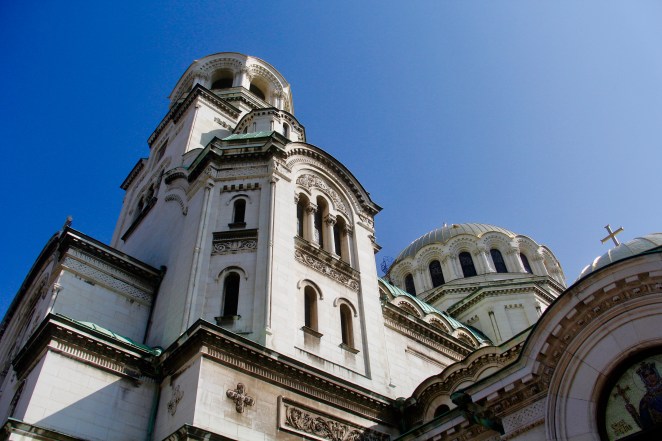
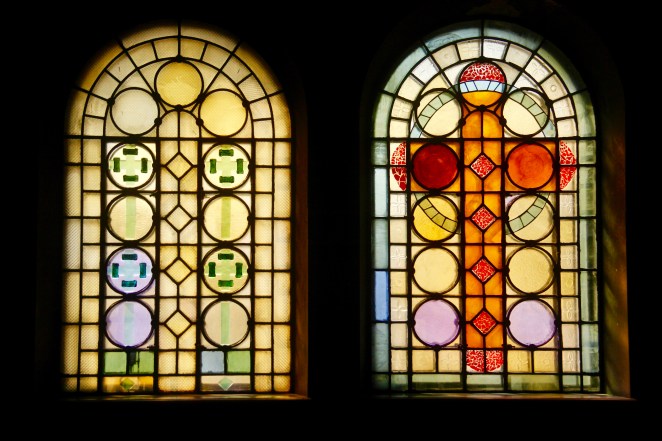
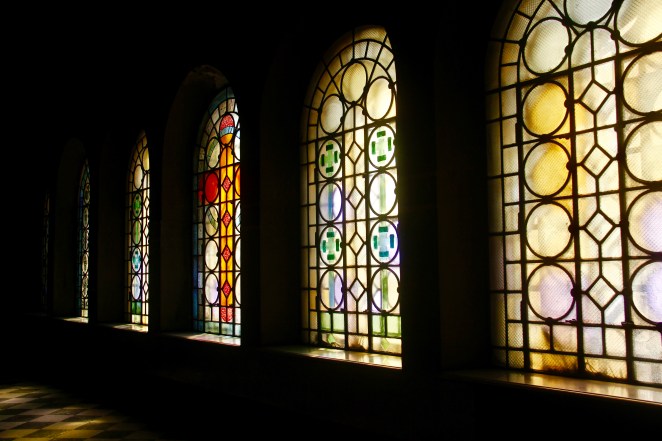
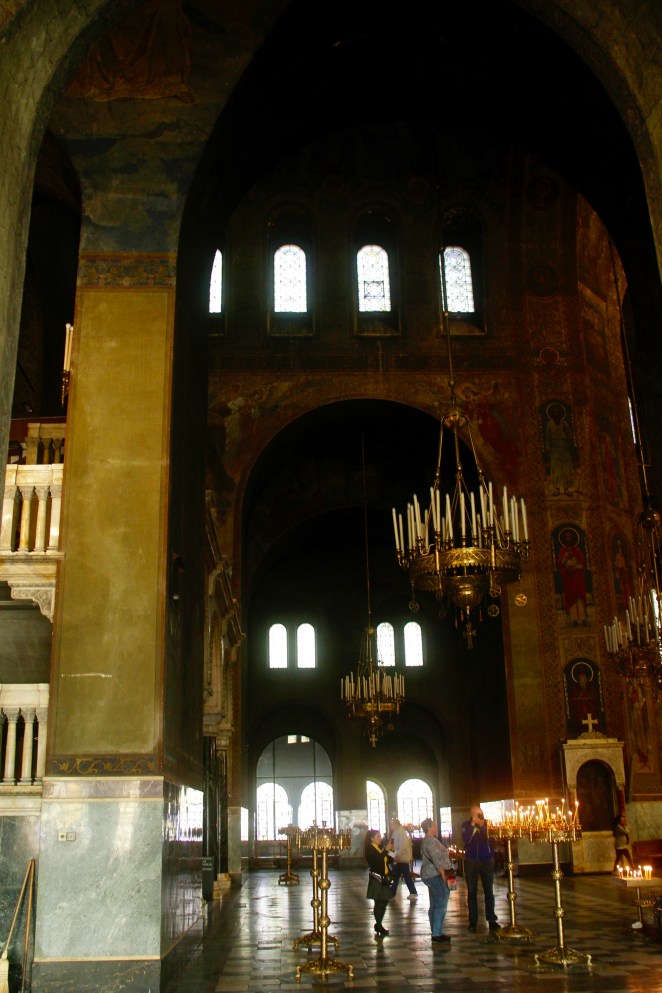
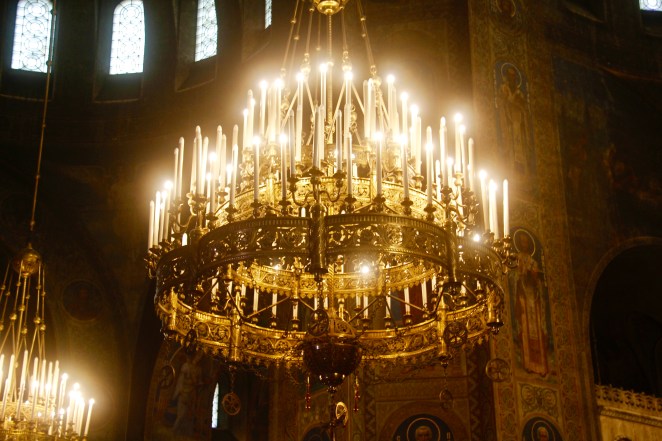
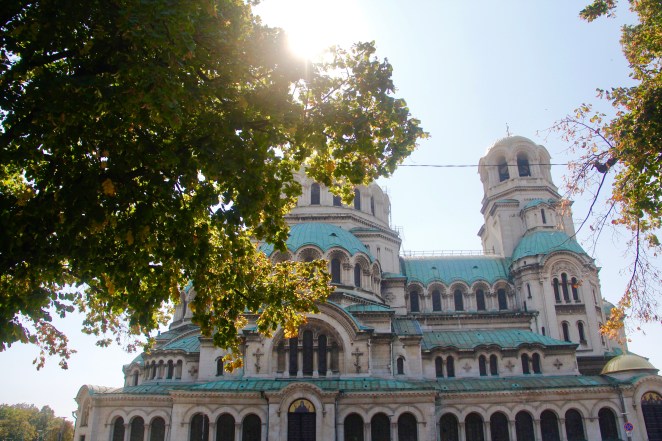
Alexander Nevsky Cathedral is an Orthodox Cathedral, one of the largest in the world, built in the Neo-Byzantine style.  It’s also known as the main tourist attraction in Sofia.  Alexander Nevsky was not Bulgarian, but a Russian Prince of Novgorod who in the 13th century led a Russian army to defeat the Teutonic army (you can see the dramatization of this in Sergei Eisenstein’s masterpiece “Alexander Nevsky”, with the score written by Sergei Prokofiev).  It was named after a Russian prince as opposed to a Bulgarian one, because it was built in memory of the Russian soldiers who died during the Russo-Turkish War (liberating Bulgaria from the Ottomans).  Anyhow, the name of the Cathedral was changed between 1912 – 1916 to St Cyril and Methodius as Russia and Bulgaria were on opposite sides in WWI.

fullsizeoutput_1a8afullsizeoutput_1a90fullsizeoutput_1a9afullsizeoutput_1a9b

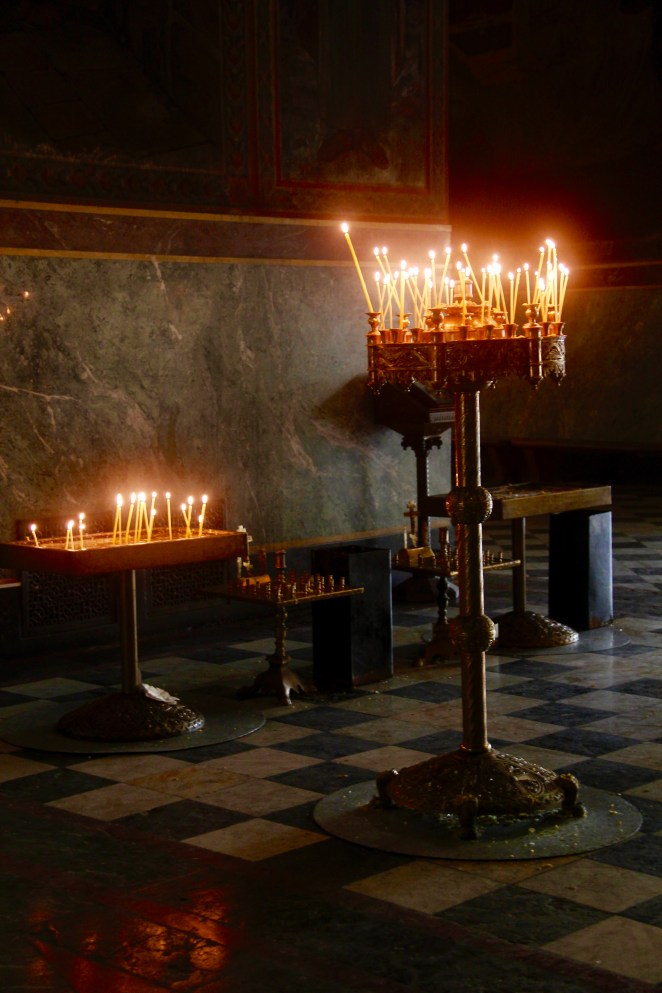
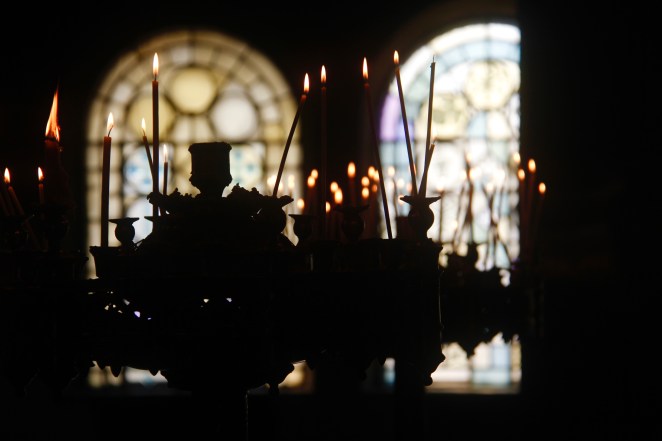
There is no entry fee to the Cathedral, but you do have to pay 10 LEV ($7.50 CAD) to take photos.  I paid and the lady at the desk gave me a piece of paper with some Cyrillic written on it, and a little man in black robes approached me as I entered, gave my paper a little tear, and said “safe photo”.  There is little to no talking in the Cathedral, so the silence was deafening.  I definitely could have done with some orthodox chant.  We quietly walked about, watching the faithful light candles, pray to the saints, and line up and pray to the alter.
fullsizeoutput_1a9cfullsizeoutput_1a9dfullsizeoutput_1a9efullsizeoutput_1a9f

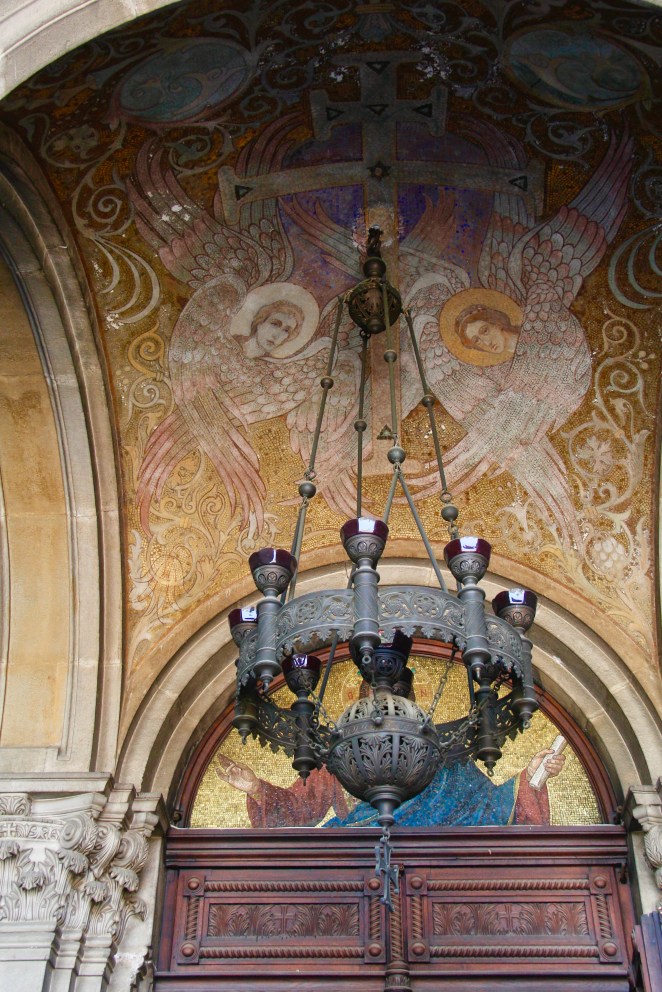
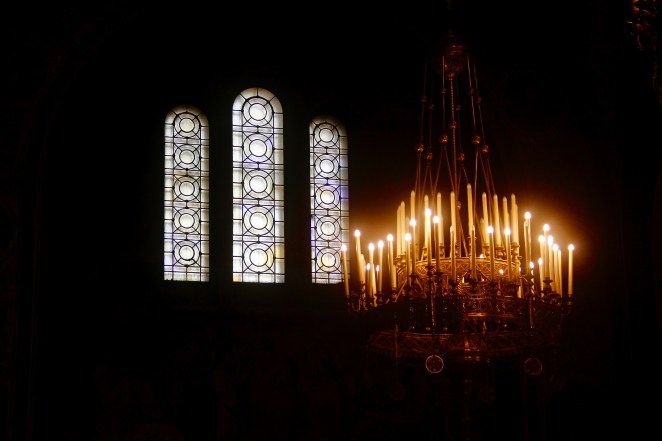
Like many of the Orthodox churches and cathedrals we’ve been to, there is a giant chandelier right above the alter and in front of the iconostasis.  Alexander Nevsky is a really beautiful building, but I would say I have definitely seen more breathtaking Orthodox churches.

fullsizeoutput_1aa1fullsizeoutput_1aa2fullsizeoutput_1aa4fullsizeoutput_1aa5fullsizeoutput_1aa6fullsizeoutput_1aa9fullsizeoutput_1aabfullsizeoutput_1aaefullsizeoutput_1ab2

After we felt like we had spent a sufficient amount of time in the Cathedral, we stepped out into the sun and headed to a nearby restaurant called Cattedral for some lunch – pizza, risotto and Irish breakfast for Pa.  We finished up and ordered a taxi for Pa using this app called Taxi Me.  It’s essentially like Uber, but finds you good and reliable drivers who won’t gouge you.  The driver pulls up and Pa hops in, on his way to Harley Davidson Sofia, so Ma and I walked around the nearby university grounds and sat on a sunny bench and talked about next year’s trip.

fullsizeoutput_1ab5fullsizeoutput_1ab4fullsizeoutput_1ab6

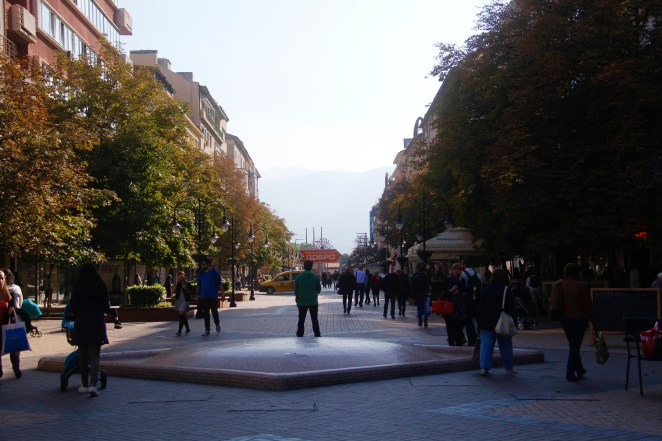
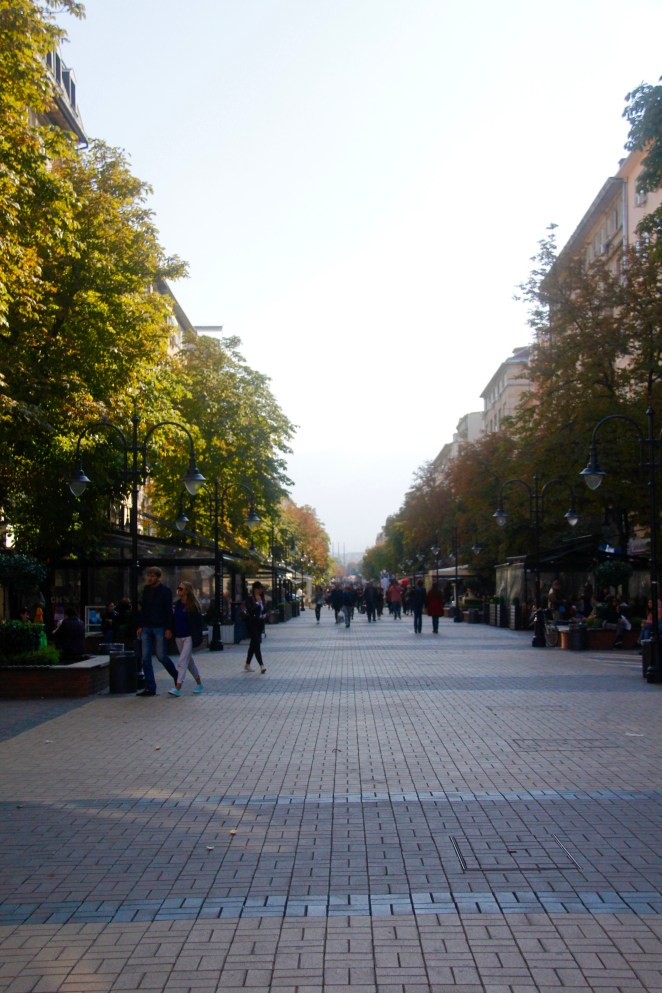
After about 25 minutes or so, Pa returned, purchase in hand.  We had discovered by accident that Sofia actually has a pretty popular pedestrian only boulevard just steps from our shitty apartment called Vitosha Boulevard, lined with shops, bars and cafes.  We decided to do a bit of a cafe crawl, so we started at a place where we got sparkling water and ice cream.

fullsizeoutput_1ab7

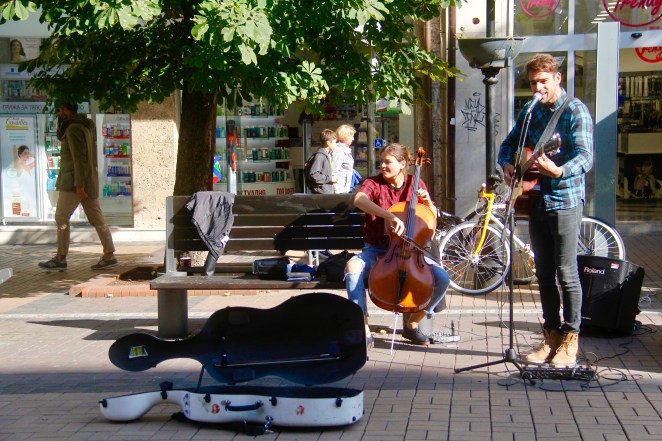
Moving on, we came across a few street musicians, a cellist and a guitarist/vocalist who were playing some original works as well as some covers.  We grabbed a bench and watched for a while.

fullsizeoutput_1abafullsizeoutput_1abcfullsizeoutput_1abdfullsizeoutput_1ac1

After watching the musicians, we wandered some more and eventually got to the end of the street.  By that time, we decided to find a place for dinner, and had read about a restaurant on the strip called Boom Burger, so we decided to try it.  We had some beers, burgers and onion rings and it reminded us of Cannibal Cafe in Vancouver.  We settled up and headed back down the boulevard, looking for a good place for Ma to get some dessert and Pa and I to get some rakia.  Rakia is a liqueur in the region, usually made from grape or plum, and is a lot like brandy (or the Palinka we had in Romania), and Pa and I figured we had to have some before we left.  We found a busy patio and Ma ordered a slice of cheesecake, and Pa and I each ordered a shot of their finest rakia – only burns a little bit going down!  We paid our delightful waiter and waddled back to our apartment, ready to pack for our flight tomorrow and ready to come home.  Until next year, Europe.
fullsizeoutput_1ac4fullsizeoutput_1ac5

Day 17: Oldie But a Goodie

Today we woke up to another grey and blustery day in Sozopol.  We packed our things and headed down for our last breakfast on the Black Sea.  Our wonderful innkeeper (we never did find out his name) gave us a bottle of Bulgarian red wine to take home before handing us over to the capable driving hands of Ivan, the sweet gentleman who had driven us from Veliko Tarnovo to Sozopol (we hired him again because we like him so much).  By 0945hrs we hit the road, the soundtrack from Evita on the car stereo, heading west, towards the city of Plovdiv.  Pa has been really excited to see Plovdiv because it is the oldest continuously inhabited city in Europe, and has evidence of habitation from the 6th millennium BC, and has changed hands between the Romans, Thracians, Ottomans and others plenty of times.  Pa is mostly interested in the ancient Roman ruins.

By 1400hrs and after a boring drive (what do I know, I slept through most of it) we entered the city limits of Plovdiv and found our hotel.  We’re staying in a boutique hotel here, and it looks like the hotel owns most of the street – two hotel buildings, a bakery, and a special relationship with a really good restaurant across the street, Hemingway.  Also across the street from us, is this:

fullsizeoutput_19c2fullsizeoutput_19c4fullsizeoutput_19c6fullsizeoutput_19c7

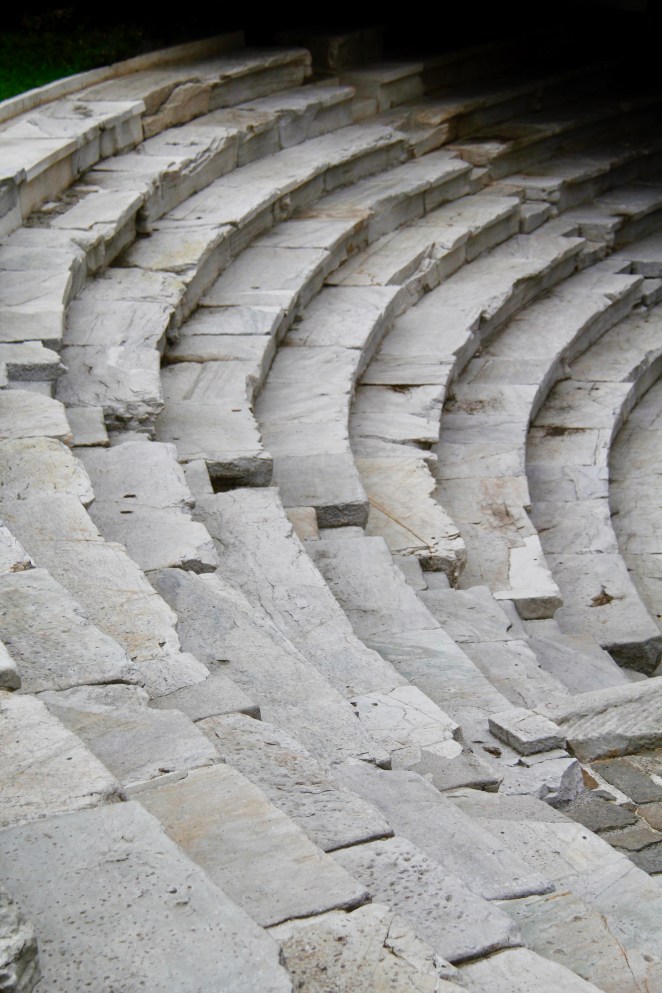
Ruins of a Roman Odeon from the 2nd century AD, also known as the Odeon of Philippopolis (the city was once called Philippopolis as it had been conquered by Philip II of Macedon).  The ruins were uncovered in 1988 and restoration has been somewhat continuous.  The Odeon still houses performances and shows!

There is a lot of old, ancient Roman and Thracian ruins and buildings around the city, including the crown jewel of the ruins, the Roman Amphitheatre, but we wanted to pace ourselves.  We went to Hemingway for a late lunch (more shopska salad for me) as well as bruschetta, spinach salad, beers and cheesecake, probably the best cheesecake Ma and I have ever had.  After lunch we decided to stroll along the main pedestrian street and see what kind of old stuff we would come across.

fullsizeoutput_19c8fullsizeoutput_19c9

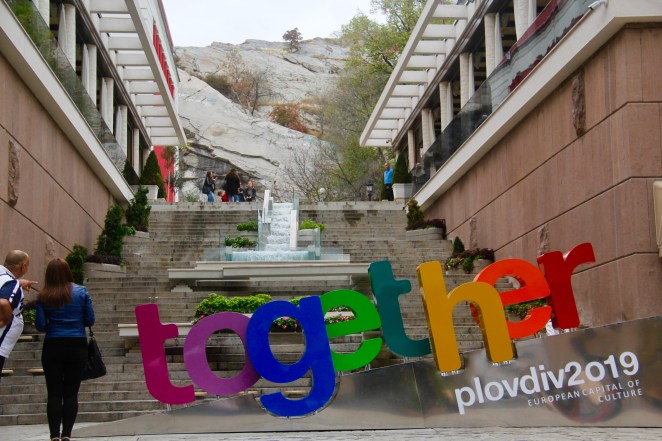
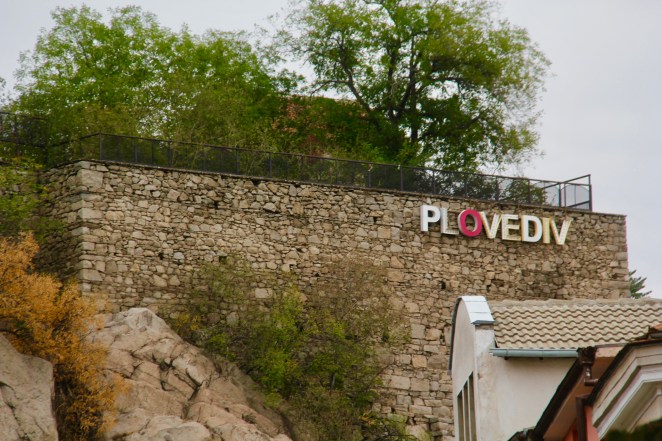
Plovdiv was selected to be the European Cultural Capital in 2019, so they have all sorts of signage and improvement projects around the city.

fullsizeoutput_19cafullsizeoutput_19cb

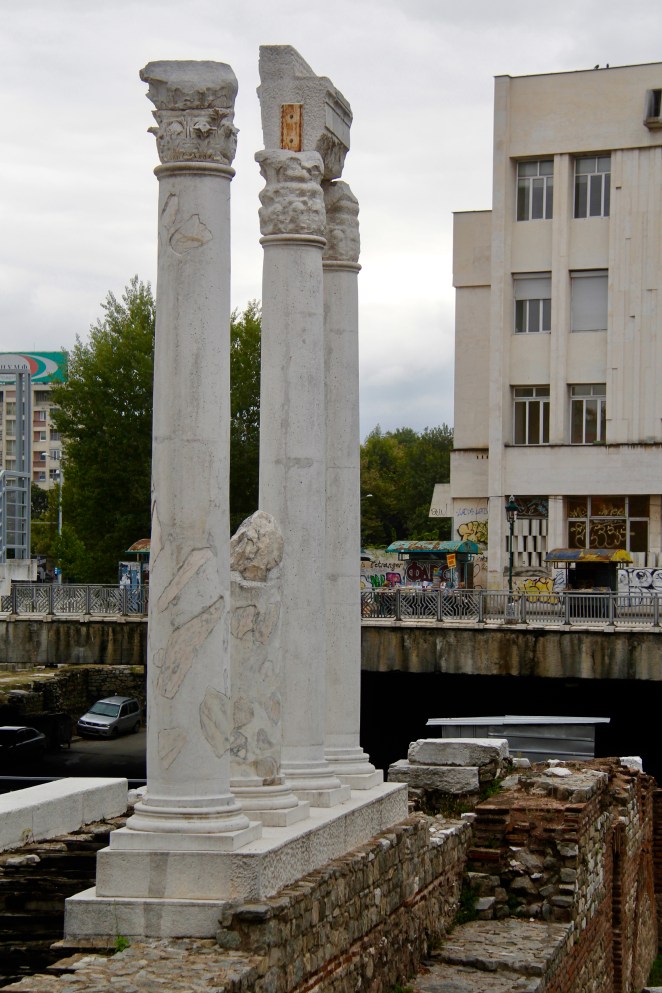
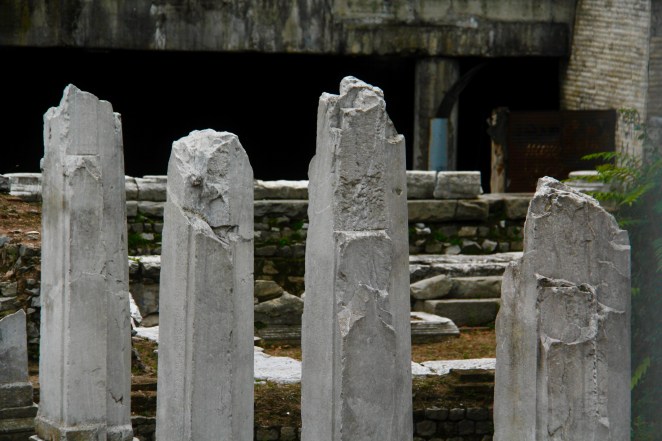
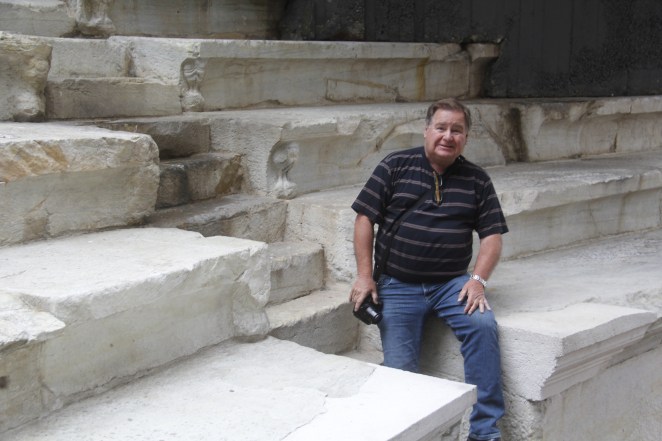
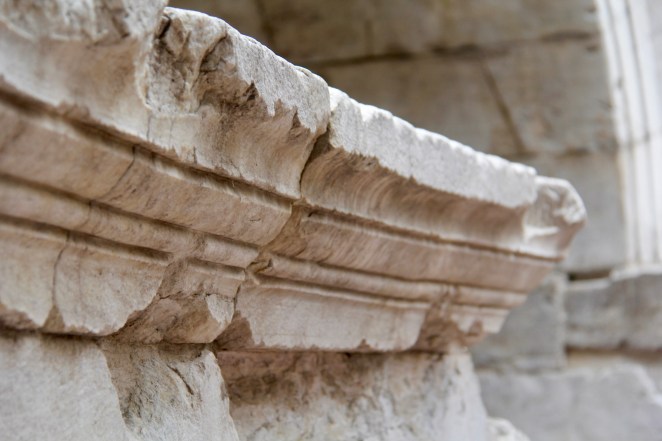
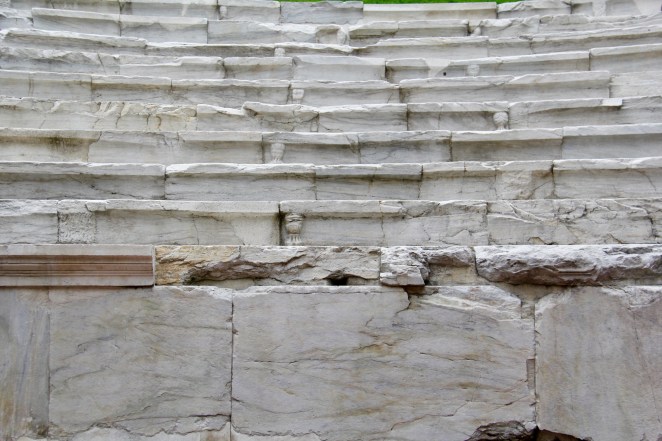
A short amble up the pedestrian street from our hotel we came across uncovered parts of the Plovdiv Roman Stadium, also known as the Stadium of Trimontium.  Again from the 2nd century AD, the stadium (only a part of which can currently be seen) seated 30,000 and housed all sorts of Olympic-type games and spectacles.  Pa was nerding out big time.

fullsizeoutput_19cd_MG_5320fullsizeoutput_19cf

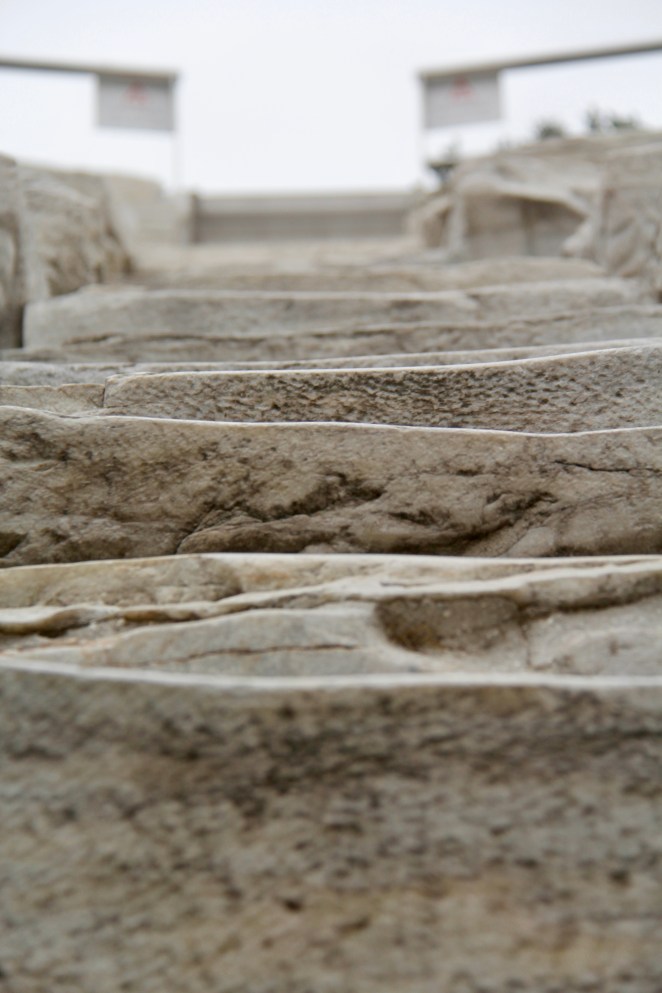
What I like about the ruins is you can walk freely through them, touch them, sit on them.  They are still an interactive yet respected part of the city.

fullsizeoutput_19d0fullsizeoutput_19d1fullsizeoutput_19d2

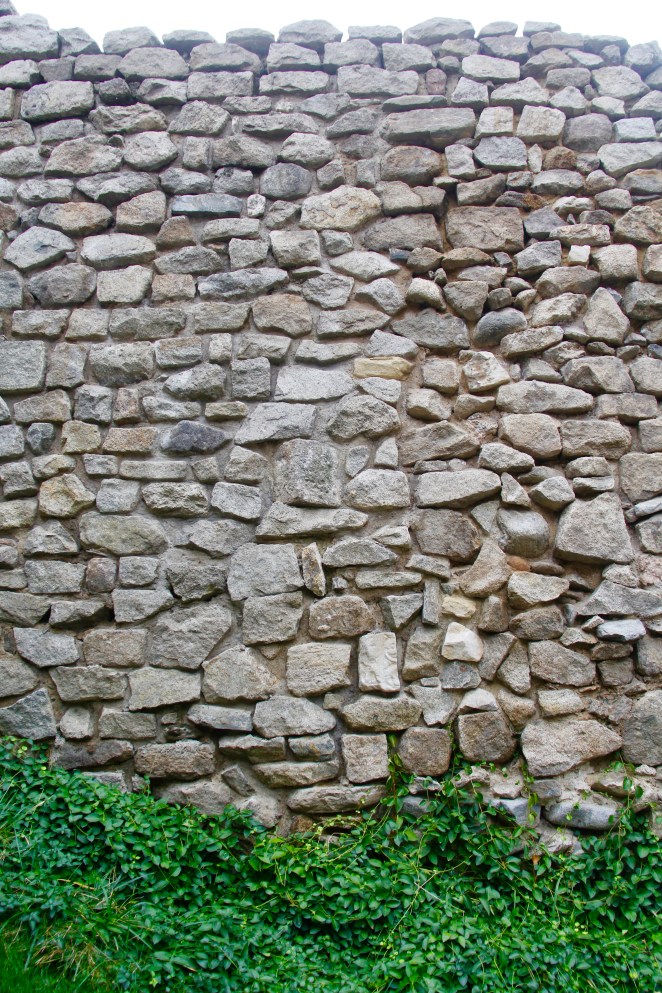
Through the tunnel underpass of the Stadium was a wall built by Hadrian (not Hadrian’s Wall) and the remains of an aqueduct.

fullsizeoutput_19d3fullsizeoutput_19d4

Climbing out of the ruins we came across Dzhumaya Mosque, built by the Ottomans in 1363.  The Mosque marks the start of an artsy and funky district known as Kapana, or in English “The Trap”.  We decided to save Kapana for a later day on our trip.

fullsizeoutput_19d6fullsizeoutput_19d7

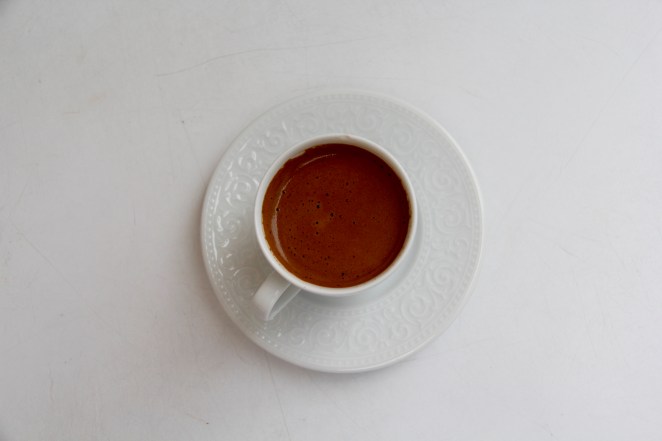
Attached to the Mosque is a Turkish coffee house, and Pa and I can’t say no to that potent, thick sludge.

fullsizeoutput_19d8

We wandered back down the pedestrian street, looking in the shop windows and admiring all the fashion and “fashion”.  There are a lot of menswear shops, some with beautiful suits and jackets (those who know me know how much I loooooove a beautiful coat on a handsome man) and some hawking the worn-and-torn-yet-bejewelled jeans I have seen far too much of on this trip.

fullsizeoutput_19d9fullsizeoutput_19dbfullsizeoutput_19dcfullsizeoutput_19dd_MG_5375fullsizeoutput_19e0

It was dinner time by the time we got back to our hotel, and we weren’t particularly hungry, so we settled for some pastries and coffees and snuggled down for the night.

fullsizeoutput_19e1